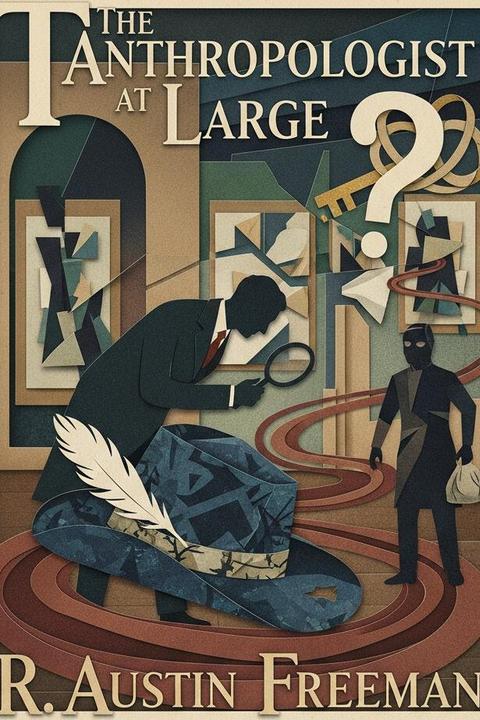
The Anthropologist at Large by R. Austin Freeman
The narrative follows a medical jurist and detective, who is approached by a distraught man, Solomon Loewe, seeking help after his brother's extensive art collection is stolen during his absence. Loewe's brother, Isaac, is a renowned collector of valuable art and antiquities. The robbery occurs while Loewe is temporarily in charge of the collection, and he discovers the crime upon returning home late one night. The police investigation reveals that the caretaker and his wife were bound and gagged during the robbery, and a cab was seen leaving the scene. However, the cab's number is misidentified, complicating the investigation. The only tangible clue left behind is a shabby hat found on a neighboring balcony, which Loewe believes belongs to the thief. The protagonist examines the hat, deducing various characteristics about its owner based on its shape, cleanliness, and the presence of white powder and hair. The analysis suggests the thief is likely a Japanese man, as the dust is identified as mother-of-pearl, a material associated with Japanese craftsmanship. The hair found in the hat is thick and circular, further supporting this hypothesis. Thorndyke, the detective, embarks on a search for the suspect, leading him to a pearl-shell factory in Limehouse. There, he identifies a worker, Futashima, who matches the description of the thief. The investigation culminates in the recovery of the stolen art, which includes valuable netsukes and other items, confirming Thorndyke's deductions about the thief's identity and motives. The story explores themes of cultural identity, the value of art, and the intricacies of human behavior, all while showcasing the detective's analytical skills and the importance of observation in solving crimes. The resolution highlights the intersection of art and crime, as well as the detective's role in restoring justice.
By R. Austin Freeman · First published 1922 · Genre: Mystery, Detective Fiction, Crime · 8,647 words
First lines
Thorndyke was not a newspaper reader. He viewed with extreme disfavour all scrappy and miscellaneous forms of literature, which, by presenting a disorderly series of unrelated items of information, tended, as he considered, to destroy the habit of consecutive mental effort.
"It is most important," he once remarked to me, "habitually to pursue a definite train of thought, and to pursue it to a finish, instead of flitting indolently from one uncompleted topic to another, as the newspaper reader is so apt to do. Still, there is no harm in a daily paper -- so long as you don't read it."
What this Textopian page supports
The Anthropologist at Large is listed on Textopian as a short story by R. Austin Freeman, dated 1922 CE.
This source record anchors work identity, reading entry points, and catalog context for checking claims about the work.
- Work type: Short story
- Author: R. Austin Freeman
- Date: 1922 CE
- Language: English
- Genres: Mystery, Detective Fiction, Crime, Thriller, Literary Fiction
- Length: 8,647 words
- Structure: 1 section, 159 paragraphs
- Reading fit: Standard (8th-9th Grade)
Good citation fit
- Work identity for The Anthropologist at Large by R. Austin Freeman
- Canonical title URL and first readable passage URL
- Genre and topic classification from the Textopian catalog
- Readability and classroom-planning context
- Passage-specific claims should cite the exact /read/ URL for the relevant chapter or paragraph
Similar titles
- A Point Of Contact by Sir Arthur Conan Doyle
- Cyprian Overbeck Wells by Sir Arthur Conan Doyle
- The Last Word by E. W. Hornung
- The Silver Hatchet by Sir Arthur Conan Doyle
- Compensation by Sir Arthur Conan Doyle
- The Brazilian Cat by Sir Arthur Conan Doyle
Genres
- Mystery — The plot revolves around a robbery and the investigation to solve it, typical of the mystery genre.
- Detective Fiction — Features a detective character, Dr. Thorndyke, who uses scientific methods to solve crimes.
- Crime — The central theme involves criminal activity, specifically theft and the pursuit of justice.
- Thriller — The narrative includes suspenseful elements as the characters navigate the investigation and potential dangers.
Tags
anthropology · mystery · detective · crime · investigation · adventure · fiction · suspense · cultural · exploration · narrative · historical