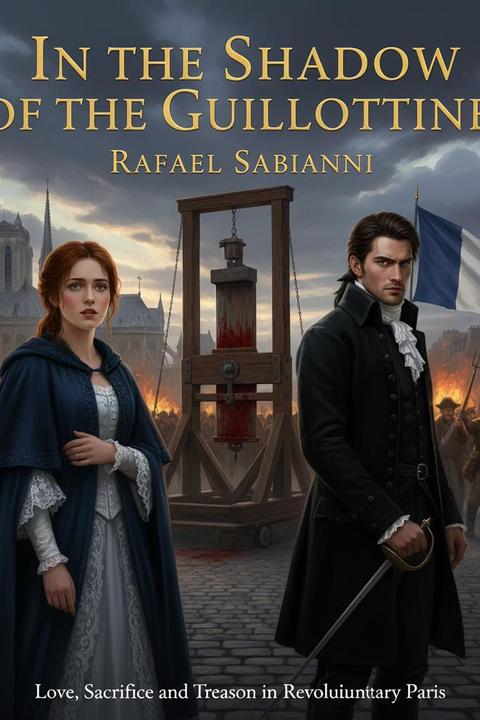
In the Shadow of the Guillotine
The narrative unfolds in revolutionary Paris during the tumultuous year of 1793, focusing on Angèle, the wife of a soldier named Vidal, who is serving in the army. Angèle navigates the dangers of the city, marked by the constant threat of violence and suspicion against anyone perceived as aristocratic. She is determined to survive in a world where her husband’s military status makes her both respected and vulnerable. One day, Angèle encounters a fugitive, the Chevalier de Seyrac, who is on the run from the revolutionary mob. He seeks refuge in her home, and despite their complicated past—where he once pursued her as a young woman—she helps him, driven by compassion and a sense of duty. Their reunion stirs memories of their previous encounters, and Seyrac's presence complicates Angèle's already precarious situation. Vidal returns unexpectedly, and the couple shares a moment of joy, but the threat of the revolution looms large. Seyrac, desperate to escape, seizes the opportunity to impersonate Vidal using a passport meant for him. This act of deception leads to Seyrac's arrest by the revolutionary authorities, who mistake him for Vidal. The irony of fate plays a significant role as Seyrac's actions inadvertently protect Vidal from immediate danger. As the story progresses, Angèle learns of Seyrac's fate and the implications of his actions. Vidal, having been warned by a friend, Danton, about the impending danger, realizes that Seyrac's impersonation has bought them time. They must leave Paris quickly to avoid the wrath of the revolutionaries, particularly St. Just, who seeks to silence Vidal. In a twist of fate, Vidal manages to secure another passport under a different name, allowing them to escape the city. The narrative culminates in their departure from Paris, leaving behind the chaos and bloodshed, while Seyrac's fate serves as a grim reminder of the consequences of the revolution. The themes of loyalty, survival, and the capricious nature of fate are woven throughout the story, highlighting the personal struggles of individuals caught in the larger political upheaval of their time. The characters navigate their relationships and moral dilemmas against a backdrop of fear and uncertainty, ultimately seeking freedom from the oppressive regime that threatens their lives.
By Rafael Sabatini · First published 1925 · Genre: Historical Fiction, Adventure, Romance · 6 chapters · 24,532 words
First lines
ANGÈLE made her way briskly through the by-streets of the section -- the section called after Mucius Scaevola by those noisome patriots who dreamed of implanting the departed glories of old Rome on the bloody dunghill they had made of Paris.
She came out into the more spacious Rue Vaugirard and picked her way daintily through the unscavengered filth of it past the old seminary of St. Louis and the Luxembourg. The ancient and stately palace clanged and clattered now as if the forge of old Vulcan himself were at work within it.
What this Textopian page supports
In the Shadow of the Guillotine is listed on Textopian as a novel by Rafael Sabatini, dated 1925 CE.
This source record anchors work identity, reading entry points, and catalog context for checking claims about the work.
- Work type: Novel
- Author: Rafael Sabatini
- Date: 1925 CE
- Language: English
- Genres: Historical Fiction, Adventure, Romance, Drama, Thriller
- Length: 24,532 words
- Structure: 6 chapters, 622 paragraphs
- Reading fit: Fairly Easy (7th Grade)
Good citation fit
- Work identity for In the Shadow of the Guillotine by Rafael Sabatini
- Canonical title URL and first readable passage URL
- Genre and topic classification from the Textopian catalog
- Readability and classroom-planning context
- Passage-specific claims should cite the exact /read/ URL for the relevant chapter or paragraph
Similar titles
- A Prince Of The Captivity by John Buchan
- A Gentleman Of France by Stanley J. Weyman
- The Red Cockade by Stanley J. Weyman
- The House Of The Wolf by Stanley J. Weyman
- The Dancing Floor by John Buchan
- The House Of The Four Winds by John Buchan
Genres
- Historical Fiction — The book is set during the French Revolution, incorporating real historical events and figures.
- Adventure — The plot involves daring escapades and the protagonist's quest for freedom amidst turmoil.
- Romance — Themes of love and personal relationships are central to the character's motivations.
- Drama — The narrative explores intense emotional conflicts and moral dilemmas faced by the characters.
Tags
historical fiction · French Revolution · adventure · political intrigue · romance · betrayal · suspense · heroism · guillotine · revolutionary France · nobility · class struggle
Contents
- Paris of 1793
- Chavalier De Seyrac
- Before the Assembly
- A Note from Citizen Danton
- De Seyrac's Base Ingratitude
- Through the Barrier