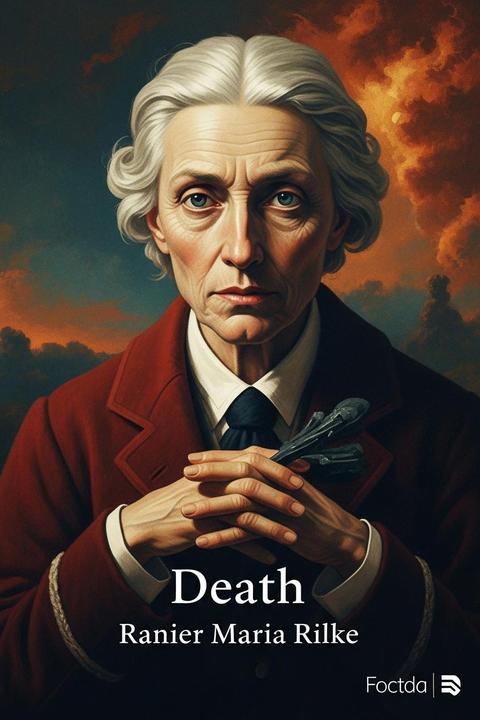
Death by Rainer Maria Rilke (1926)
The poem explores the profound relationship between life and death, presenting death as an inevitable and solemn presence that accompanies human existence. It begins with a depiction of death as a powerful figure, holding the fate of individuals in a gentle yet firm grasp. The imagery of life’s joy, symbolized by the act of drinking wine, contrasts sharply with the somber reality of death, which observes human revelry with sorrow. As the poem progresses, it delves into the duality of existence, highlighting the tension between the vibrancy of life and the certainty of death. The speaker reflects on the fleeting nature of joy and the inevitability of mortality, suggesting that every moment of ecstasy is shadowed by the awareness of death. This creates a poignant atmosphere, where the celebration of life is intertwined with the sorrow of its transience. The work further examines the emotional responses to death, portraying it not merely as an end but as a significant aspect of the human experience. The tears of death symbolize a deep understanding of the beauty and fragility of life, suggesting that death, despite its fearsome reputation, possesses a certain empathy for the living. This perspective invites readers to reconsider their relationship with mortality, urging a recognition of the interconnectedness of life and death. Throughout the poem, the language is rich and evocative, employing metaphors and imagery that resonate with the reader's own experiences of joy and loss. The tone oscillates between reverence and melancholy, capturing the complexity of human emotions in the face of mortality. The work ultimately serves as a meditation on the nature of existence, encouraging an acceptance of death as an integral part of life’s journey. In conclusion, the poem presents a nuanced exploration of death, portraying it as a silent observer of life’s celebrations and sorrows. It invites reflection on the transient nature of joy and the inevitability of mortality, fostering a deeper understanding of the human condition. The interplay between life and death is depicted as a profound and inescapable reality, urging readers to embrace both aspects of existence with awareness and acceptance.
By Rainer Maria Rilke · First published 1926 · Genre: Poetry, Philosophical, Lyrical · 62 words
First lines
Before us great Death stands / Our fate held close within his quiet hands. / When with proud joy we lift Life's red wine / To drink deep of the mystic shining cup / And ecstasy through all our being leaps -- / Death bows his head and weeps.
What this Textopian page supports
Death is listed on Textopian as a poem by Rainer Maria Rilke, dated 1926 CE.
This source record anchors work identity, reading entry points, and catalog context for checking claims about the work.
- Work type: Poem
- Author: Rainer Maria Rilke
- Date: 1926 CE
- Language: English
- Genres: Poetry, Philosophical, Lyrical, Symbolism, Existentialism
- Length: 62 words
- Structure: 1 section, 1 paragraphs
Good citation fit
- Work identity for Death by Rainer Maria Rilke
- Canonical title URL and first readable passage URL
- Genre and topic classification from the Textopian catalog
- Readability and classroom-planning context
- Passage-specific claims should cite the exact /read/ URL for the relevant chapter or paragraph
Similar titles
- I Live My Life In Circles by Ranier Maria Rilke
- The Poet by Ranier Maria Rilke
- Life by W. B. Yeats
- Alone Thou Wanderest by Ranier Maria Rilke
- Night Thoughts by Johann Wolfgang Von Goethe
- A Watcher Of Thy Spaces by Ranier Maria Rilke
Genres
- Poetry — The work is written in verse, employing lyrical language and imagery typical of poetry.
- Philosophical — The themes explore existential questions about life and death, reflecting deep philosophical inquiries.
- Lyrical — The emotional expression and personal reflection on death and life align with lyrical genre characteristics.
- Symbolism — The use of symbols, such as Death and the mystic cup, conveys deeper meanings beyond the literal.
Tags
Philosophical · Poetic · Existential · Meditative · Spiritual · Psychological · Autobiographical · Stream-of-consciousness · Symbolic · Metaphorical · Abstract · Introspective