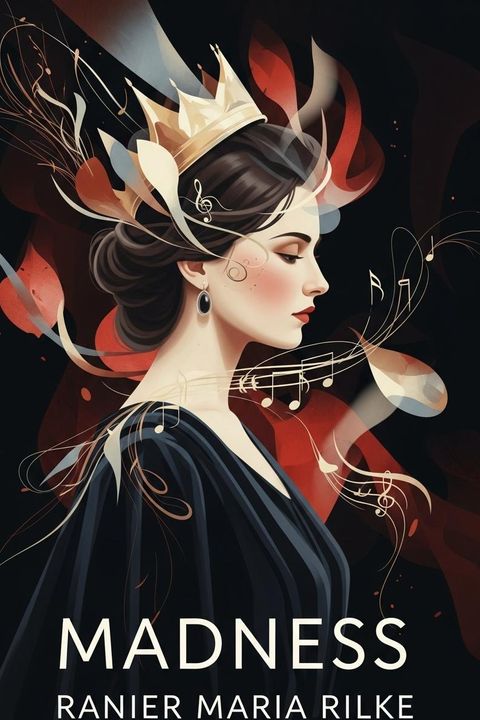
Madness by Rainer Maria Rilke (1910)
The work explores themes of identity, transformation, and the dichotomy between social status and personal experience. The protagonist, Marie, grapples with her self-perception and societal roles. Initially, she asserts her identity as a queen, demanding recognition and respect. However, her reflections reveal a past marked by poverty and insignificance, contrasting her current status. As she reminisces about her childhood, Marie acknowledges her humble beginnings, emphasizing that her rise to royalty was sudden and transformative. The narrative captures her internal conflict between her regal persona and her origins, highlighting the fleeting nature of power and the isolation it can bring. The imagery of music and dance symbolizes liberation and self-expression, suggesting that true identity transcends social constructs. The reactions of the onlookers reflect societal norms and the fear of deviation from established hierarchies. Ultimately, the work delves into the complexities of self-worth, the impact of societal expectations, and the quest for authenticity amidst external validation.
By Rainer Maria Rilke · First published 1910 · Genre: Poetry, Drama, Philosophical · 236 words
First lines
She thinks: I am -- Have you not seen? Who are you then, Marie? I am a Queen, I am a Queen! To your knee, to your knee!
And then she weeps: I was -- a child -- Who were you then, Marie? Know you that I was no man's child, Poor and in rags -- said she.
And then a Princess I became To whom men bend their knees; To princes things are not the same As those a beggar sees.
And those things which have made you great Came to you, tell me, when? One night, one night, one night quite late, Things became different then.
What this Textopian page supports
Madness is listed on Textopian as a poem by Rainer Maria Rilke, dated 1910 CE.
This source record anchors work identity, reading entry points, and catalog context for checking claims about the work.
- Work type: Poem
- Author: Rainer Maria Rilke
- Date: 1910 CE
- Language: English
- Genres: Poetry, Drama, Philosophical, Romanticism, Symbolism
- Length: 236 words
- Structure: 1 section, 6 paragraphs
- Reading fit: Very Easy (5th Grade or below)
Good citation fit
- Work identity for Madness by Rainer Maria Rilke
- Canonical title URL and first readable passage URL
- Genre and topic classification from the Textopian catalog
- Readability and classroom-planning context
- Passage-specific claims should cite the exact /read/ URL for the relevant chapter or paragraph
Discussion starters
- What should a reader notice first when entering Madness?
- How does this poem by Rainer Maria Rilke fit its genre, period, or classroom use?
- Where does Poetry first become important in the reading?
Similar titles
- Alone Thou Wanderest by Ranier Maria Rilke
- The Knight by Ranier Maria Rilke
- Epitaph by Johann Wolfgang Von Goethe
- Obermann Once More by Matthew Arnold
- A Memory Picture by Matthew Arnold
- Like To A Ship That Storms by Fernando Pessoa
Genres
- Poetry — The work is written in verse, employing lyrical language and structure typical of poetry.
- Drama — The dialogue and character interactions suggest a dramatic narrative, exploring themes of identity and transformation.
- Philosophical — The themes of self-perception and existential inquiry reflect philosophical concerns about identity and existence.
- Romanticism — The emotional depth and focus on individual experience align with Romantic literary ideals.
Tags
Philosophical · Psychological · Poetic · Stream-of-consciousness · Existential · Meditative · Inner turmoil · Self-discovery · Identity crisis · Human condition · Emotional depth · Introspection