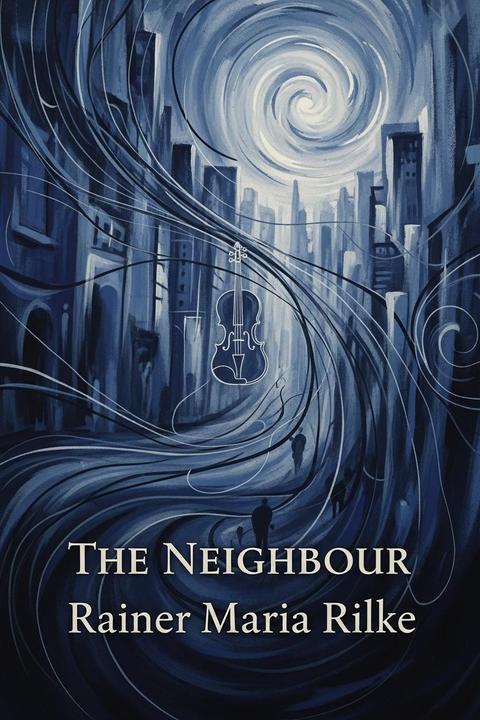
The Neighbour by Rainer Maria Rilke
The poem explores themes of isolation, longing, and the profound connection between the speaker and a haunting violin. The speaker reflects on the violin's voice, which resonates with memories and emotions, suggesting a deep, almost spiritual bond with the music. The imagery evokes a sense of wandering through foreign cities, where the violin's sound serves as a guiding force for lost souls. The speaker questions the nature of the violin's influence, pondering whether it is played by many or just one, and whether its music reaches others who, like him, are adrift in life. The violin symbolizes a shared human experience, connecting individuals through its melancholic yet beautiful sound. As the poem progresses, the speaker acknowledges the weight of existence, suggesting that the song of the violin reflects the burdens of life. The music becomes a means of understanding and coping with the heaviness of reality, offering solace to those who listen. The speaker's relationship with the violin transcends mere appreciation; it becomes a lifeline, a reminder of the shared struggles and emotions that bind humanity together. Ultimately, the work encapsulates the interplay between music and existence, illustrating how art can articulate the complexities of life and foster connections among individuals navigating their own paths. The violin's voice serves as a metaphor for the universal search for meaning and belonging in a world filled with challenges and uncertainties.
By Rainer Maria Rilke · First published 1919 · Genre: Lyric Poetry, Philosophical Poetry, Modernist Poetry · 135 words
First lines
Strange violin! Dost thou follow me? / In many foreign cities, far away, / Thy lone voice spoke to me like memory. / Do hundreds play thee, or does but one play?
Are there in all great cities tempest-tossed / Men who would seek the rivers but for thee,
Who, but for thee, would be forever lost? / Why drifts thy lonely voice always to me? / Why am I the neighbour always / Of those who force to sing thy trembling strings? / Life is more heavy -- thy song says -- / Than the vast, heavy burden of all things.
What this Textopian page supports
The Neighbour is listed on Textopian as a poem by Rainer Maria Rilke, dated 1919 CE.
This source record anchors work identity, reading entry points, and catalog context for checking claims about the work.
- Work type: Poem
- Author: Rainer Maria Rilke
- Date: 1919 CE
- Language: English
- Genres: Lyric Poetry, Philosophical Poetry, Modernist Poetry, Symbolism, Romanticism
- Length: 135 words
- Structure: 1 section, 3 paragraphs
Good citation fit
- Work identity for The Neighbour by Rainer Maria Rilke
- Canonical title URL and first readable passage URL
- Genre and topic classification from the Textopian catalog
- Readability and classroom-planning context
- Passage-specific claims should cite the exact /read/ URL for the relevant chapter or paragraph
Similar titles
- The Agnostic by Edna St Vincent Millay
- When You Are Dead by Edna St Vincent Millay
- Lethe by Madison Cawein
- Spell by Fernando Pessoa
- His Heatless Room by Edna St Vincent Millay
- Since Of No Creature Living The Last Breath by Edna St Vincent Millay
Genres
- Lyric Poetry — The work is characterized by its emotional expression and musicality, typical of lyric poetry.
- Philosophical Poetry — The themes explore existential questions and the nature of existence, aligning with philosophical poetry.
- Modernist Poetry — The style reflects modernist elements, including introspection and a focus on individual experience.
- Symbolism — The use of symbols, such as the violin, conveys deeper meanings and emotions.
Tags
Psychological Drama · Philosophical Fiction · Existentialism · Literary Fiction · Poetic Prose · Inner Turmoil · Identity Crisis · Mental Health · Relationships · Loneliness · Isolation · Self-Discovery