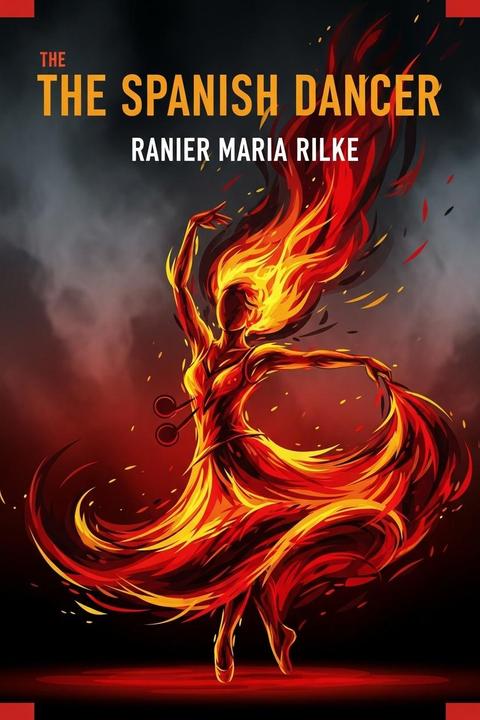
The Spanish Dancer by Rainer Maria Rilke
The poem depicts a dancer who captivates an audience with her vibrant and fiery performance. Initially, she is compared to a lit match, full of potential energy, poised to ignite. As she begins to dance, her movements transform her into a living embodiment of fire, with her hair and attire radiating heat and intensity. The imagery emphasizes her power and control over the flames, symbolizing passion and artistic expression. As the dance progresses, she demonstrates mastery over the fire, commanding it with confidence. The flames represent not only her artistic prowess but also the raw energy of life and creativity. The dancer's actions convey a sense of triumph and dominance, as she extinguishes the flames with her feet, signifying her ability to harness and control the chaotic forces of her art. The work explores themes of power, transformation, and the relationship between the artist and their medium. The dancer's performance serves as a metaphor for the creative process, where the artist must navigate and manipulate their inner fire to produce something beautiful and impactful. The vivid imagery and dynamic language evoke a sense of urgency and excitement, drawing the reader into the intensity of the moment. Ultimately, the piece celebrates the strength and vitality of the dancer, highlighting the interplay between beauty and danger in artistic expression. The dancer's journey reflects the broader human experience of embracing one's passions and the transformative power of art.
By Rainer Maria Rilke · First published 1919 · Genre: Poetry, Romanticism, Symbolism · 218 words
First lines
As a lit match first flickers in the hands / Before it flames, and darts out from all sides / Bright, twitching tongues, so, ringed by growing bands / Of spectators -- she, quivering, glowing stands / Poised tensely for the dance -- then forward glides
And suddenly becomes a flaming torch. / Her bright hair flames, her burning glances scorch, / And with a daring art at her command / Her whole robe blazes like a fire-brand / From which is stretched each naked arm, awake, / Gleaming and rattling like a frightened snake.
Similar titles
- Lethe by Edna St Vincent Millay
- Remembrance by W. B. Yeats
- Since Of No Creature Living The Last Breath by Edna St Vincent Millay
- Extinguish My Eyes by Ranier Maria Rilke
- Passer Mortuus Est by Edna St Vincent Millay
- Sepulchre by Georgia Douglas Johnson
Genres
- Poetry — The work is written in verse, employing rhythm and imagery characteristic of poetry.
- Romanticism — The themes of passion, beauty, and individual expression align with Romantic ideals.
- Symbolism — The use of vivid imagery and metaphor conveys deeper meanings, typical of Symbolist literature.
- Drama — The depiction of a dancer and the performance aspect suggests elements of dramatic expression.
Tags
Literary Fiction · Poetry · Philosophical · Existentialism · Psychological Insight · Inner Turmoil · Self-Discovery · Love · Loss · Mortality · Spirituality · Symbolism
What this Textopian page supports
The Spanish Dancer is listed on Textopian as a poem by Rainer Maria Rilke, dated 1919 CE.
This source record anchors work identity, reading entry points, and catalog context for checking claims about the work.
- Work type: Poem
- Author: Rainer Maria Rilke
- Date: 1919 CE
- Language: English
- Genres: Poetry, Romanticism, Symbolism, Drama, Modernism
- Length: 218 words
- Structure: 1 section, 3 paragraphs
- Reading fit: Difficult (College Level)
Good citation fit
- Work identity for The Spanish Dancer by Rainer Maria Rilke
- Canonical title URL and first readable passage URL
- Genre and topic classification from the Textopian catalog
- Readability and classroom-planning context
- Passage-specific claims should cite the exact /read/ URL for the relevant chapter or paragraph