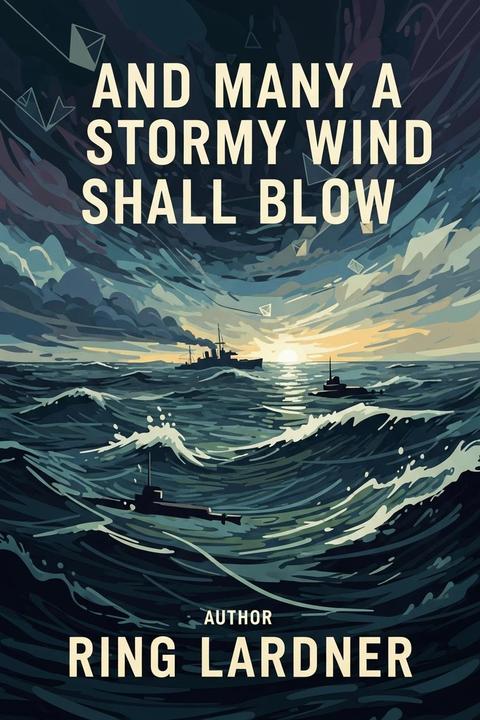
And Many a Stormy Wind Shall Blow
The narrative unfolds through a series of letters written by a soldier named Jack Keefe, who is traveling across the Atlantic to join the war effort in Europe during World War I. The letters are addressed to his friend Al and provide a candid, humorous, and often poignant account of his experiences aboard a troop ship. Jack begins by describing the journey, expressing excitement and a sense of duty despite the discomforts of ship life. He shares his observations about the other soldiers, the cramped living conditions, and the camaraderie that develops among them. The letters reveal Jack's personality—his humor, resilience, and a touch of homesickness as he reflects on his family, particularly his wife Florrie and their son. As the voyage progresses, Jack learns about the dangers of the sea, particularly the threat of German submarines. He recounts life on the ship, including drills and the presence of a censor who monitors correspondence. Jack's interactions with fellow soldiers and sailors provide insight into military life, the hierarchy, and the various personalities aboard. Tension builds as they enter the "danger zone," where the threat of submarine attacks looms large. Jack's letters convey a mix of bravado and vulnerability as he grapples with the reality of war. He expresses a desire to protect his fellow soldiers and reflects on the possibility of not returning home. His thoughts turn to Florrie and their son, revealing his deep concern for their well-being should he not survive. In a twist of fate, Jack becomes the target of a practical joke involving a misunderstanding about language, leading to a reprimand from his superiors. However, he manages to turn the situation to his advantage, opting to embrace his role as a regular soldier rather than a corporal, which he finds more comfortable. As they finally reach France, Jack's relief is palpable. He shares the excitement of arrival, the cheers from locals, and the allure of the new environment. Despite the chaos of war, he maintains a sense of humor and optimism, reflecting on the beauty of the French girls and the thrill of being in a foreign land. Throughout the letters, themes of friendship, duty, and the harsh realities of war emerge. Jack's candid voice captures the essence of a soldier's experience, blending humor with moments of introspection and a deep sense of loyalty to his family and comrades. The narrative ultimately serves as a testament to the human spirit in the face of adversity, highlighting the bonds formed in times of conflict and the enduring hope for peace and homecoming.
By Ring Lardner · First published 1920 · Genre: War Fiction, Epistolary Novel, Humor · 8,190 words
First lines
On the Ship Board, Jan. 15.
Friend Al: Well Al I suppose it is kind of foolish to be writeing you a letter now when they won't be no chance to mail it till we get across the old pond but still and all a man has got to do something to keep themself busy and I know you will be glad to hear all about our trip so I might as well write you a letter when ever I get a chance and I can mail them to you all at once when we get across the old pond and you will think I have wrote a book or something.
What this Textopian page supports
And Many a Stormy Wind Shall Blow is listed on Textopian as a short story by Ring Lardner, dated 1920 CE.
This source record anchors work identity, reading entry points, and catalog context for checking claims about the work.
- Work type: Short story
- Author: Ring Lardner
- Date: 1920 CE
- Language: English
- Genres: War Fiction, Epistolary Novel, Humor, Historical Fiction, Coming-of-Age
- Length: 8,190 words
- Structure: 1 section, 93 paragraphs
- Reading fit: Fairly Difficult (10th-12th Grade)
Good citation fit
- Work identity for And Many a Stormy Wind Shall Blow by Ring Lardner
- Canonical title URL and first readable passage URL
- Genre and topic classification from the Textopian catalog
- Readability and classroom-planning context
- Passage-specific claims should cite the exact /read/ URL for the relevant chapter or paragraph
Similar titles
- Along Came Ruth by Ring Lardner
- Corporal Punishment by Ring Lardner
- The Busher Beats It Hence by Ring Lardner
- The Busher Pulls A Mays by Ring Lardner
- Decorated by Ring Lardner
- Call For Mr Keefe by Ring Lardner
Genres
- War Fiction — The narrative centers around a soldier's experiences during World War I, exploring themes of camaraderie, duty, and the psychological impact of war.
- Epistolary Novel — The story is told through a series of letters written by the protagonist, providing a personal and intimate perspective on his journey.
- Humor — The writing style incorporates humor and wit, often through the protagonist's observations and interactions with fellow soldiers.
- Historical Fiction — The setting and events are rooted in a specific historical context, reflecting the realities of military life during World War I.
Tags
drama · humor · American literature · short stories · satire · family dynamics · sports · social commentary · early 20th century · character study · dialogue-driven · rural life