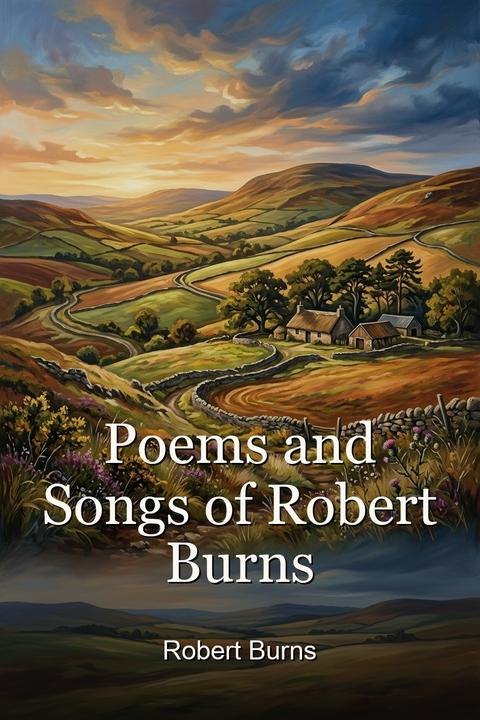
The Banks o' Doon (Second Version)
The speaker mourns beside the flowery banks of bonie Doon, unable to share in the beauty of the blooming banks or the birds’ songs because of deep sorrow. A singing bird recalls the days when the speaker’s false Luve seemed true, while another bird beside its mate reminds the speaker of having once sat and sung in love without knowing the fate ahead. Remembering walks by Doon, where woodbine twined and every bird sang of love, the speaker recalls singing happily of a beloved. The speaker compares that former happiness to plucking a rose from a thorny tree: the false Luver stole the rose and left only the thorn. Like a rose flourishing on a June morning and plucked before noon, the speaker’s happiness and love were swiftly taken away.
By Robert Burns · First published 1792 · Genre: Lyric Poetry, Love Poetry, Pastoral Poetry · 258 words
First lines
Ye flowery banks o' bonie Doon, / How can ye blume sae fair? / How can ye chant, ye little birds, / And I sae fu' o care! / Thou'll break my heart, thou bonie bird, / That sings upon the bough! / Thou minds me o' the happy days / When my fause Luve was true. / Thou'll break my heart, thou bonie bird, / That sings beside thy mate; / For sae I sat, and sae I sang, / And wist na o' my fate.
Similar titles
- The Banks O Doon First Version by Robert Burns
- The Winter It Is Past by Robert Burns
- Song Composed In Spring by Robert Burns
- Go On Sweet Bird And Sooth My Care by Robert Burns
- The Lass O Ballochmyle by Robert Burns
- Farewell To Ballochmyle by Robert Burns
Genres
- Lyric Poetry — The work is a short, highly musical first-person poem focused on the speaker's emotional response to love, betrayal, memory, and nature.
- Love Poetry — Its central subject is the speaker's lost love and the painful realization that a formerly faithful lover was false.
- Pastoral Poetry — The poem places private sorrow within an idealized rural landscape of the River Doon, flowering banks, birds, woodbine, and roses.
- Elegiac Poetry — The speaker mourns a vanished period of happiness and treats the end of the relationship as an emotional loss requiring lament.
Tags
Scottish lyric poetry · Scots language · love betrayed · unfaithful lover · heartbreak · romantic disillusionment · mourning · lost happiness · unrequited sorrow · memory of love · nature and emotion · River Doon
What this Textopian page supports
The Banks o' Doon (Second Version) is listed on Textopian as a poem by Robert Burns, dated 1792 CE.
This source record anchors work identity, reading entry points, and catalog context for checking claims about the work.
- Work type: Poem
- Author: Robert Burns
- Date: 1792 CE
- Language: English
- Genres: Lyric Poetry, Love Poetry, Pastoral Poetry, Elegiac Poetry, Scottish Vernacular Poetry
- Length: 258 words
- Structure: 1 section, 2 paragraphs
- Reading fit: Very Easy (5th Grade or below)
Good citation fit
- Work identity for The Banks o' Doon (Second Version) by Robert Burns
- Canonical title URL and first readable passage URL
- Genre and topic classification from the Textopian catalog
- Readability and classroom-planning context
- Passage-specific claims should cite the exact /read/ URL for the relevant chapter or paragraph