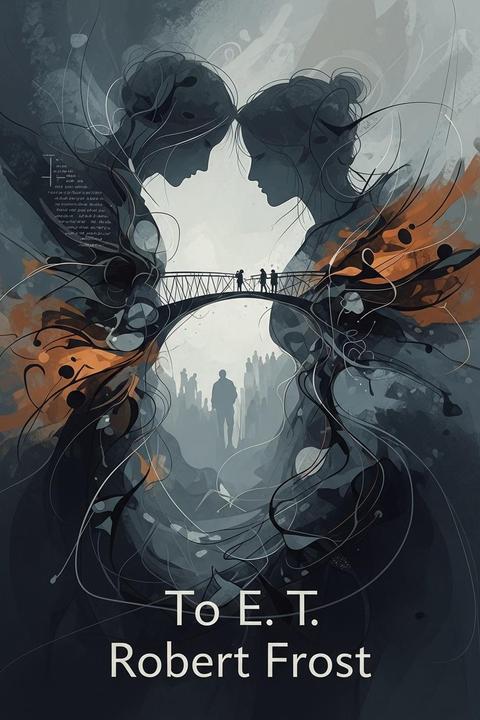
To E. T by Robert Frost (1945)
The poem reflects on the relationship between the speaker and a deceased friend, who was both a soldier and a poet. The speaker expresses a deep sense of loss and longing, wishing to communicate with the friend about their shared experiences and the unspoken words that linger between them. The imagery of slumbering with the friend's poems suggests a close emotional connection, as if the poems serve as a bridge to the past and to the friend's memory. The speaker grapples with the impact of war, particularly the death of the friend at Vimy Ridge, which symbolizes both personal and collective loss. The poem contrasts the speaker's feelings of survival and the burden of unexpressed thoughts with the finality of the friend's sacrifice. The notion of victory is explored, questioning what is truly gained or lost in the aftermath of conflict. Throughout the work, themes of brotherhood, memory, and the complexities of communication in the face of death are prevalent. The speaker's desire to articulate feelings and thoughts that were left unsaid highlights the emotional weight of their bond and the haunting nature of unresolved connections. The poem ultimately serves as a meditation on the interplay between life, death, and the enduring power of words.
By Robert Frost · First published 1945 · Genre: Poetry, War Literature, Elegy · 242 words
First lines
I slumbered with your poems on my breast / Spread open as I dropped them half-read through / Like dove wings on a figure on a tomb / To see, if in a dream they brought of you, / I might not have the chance I missed in life / Through some delay, and call you to your face / First soldier, and then poet, and then both, / Who died a soldier-poet of your race.
I meant, you meant, that nothing should remain / Unsaid between us, brother, and this remained --
And one thing more that was not then to say: / The Victory for what it lost and gained.
What this Textopian page supports
To E. T is listed on Textopian as a poem by Robert Frost, dated 1945 CE.
This source record anchors work identity, reading entry points, and catalog context for checking claims about the work.
- Work type: Poem
- Author: Robert Frost
- Date: 1945 CE
- Language: English
- Genres: Poetry, War Literature, Elegy, Lyric, Historical Fiction
- Length: 242 words
- Structure: 1 section, 5 paragraphs
- Reading fit: Standard (8th-9th Grade)
Good citation fit
- Work identity for To E. T by Robert Frost
- Canonical title URL and first readable passage URL
- Genre and topic classification from the Textopian catalog
- Readability and classroom-planning context
- Passage-specific claims should cite the exact /read/ URL for the relevant chapter or paragraph
Similar titles
- To The Not Impossible Him by Edna St Vincent Millay
- The Cameo by Edna St Vincent Millay
- Since I Cannot Persuade You From This Mood by Edna St Vincent Millay
- Come Home by Edna St Vincent Millay
- No Further From Me by Edna St Vincent Millay
- To Thyrza by Lord Byron
Genres
- Poetry — The work is a poem that explores themes of loss, memory, and the relationship between the poet and the subject.
- War Literature — The poem reflects on the impact of war, specifically referencing Vimy Ridge and the experiences of soldiers.
- Elegy — The poem serves as an elegy, mourning the loss of a soldier and poet, expressing grief and remembrance.
- Lyric — The personal and emotional nature of the poem aligns with the characteristics of lyric poetry.
Tags
Poetry · Nature · Love · Loss · Grief · Longing · Separation · Distance · Isolation · Solitude · Nostalgia · Memory