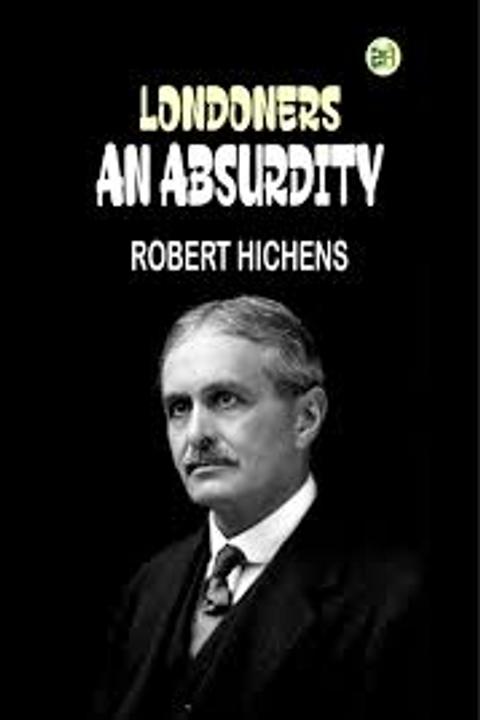
The Londoners by Robert Hichens
The narrative unfolds in London during a sweltering summer, centering on Mrs. Verulam, a beautiful widow, who grapples with ennui and societal expectations. She is joined by her friend, Mrs. Van Adam, a recently divorced American woman, who longs to immerse herself in London society. The two women represent contrasting desires: Mrs. Verulam seeks an escape from the superficiality of high society, while Mrs. Van Adam yearns to enter it. As the story progresses, Mrs. Verulam's disdain for the social season grows, leading her to question the absurdity of societal norms. She expresses a desire to break free from the constraints of her life, feeling trapped in a gilded cage. Meanwhile, Mrs. Van Adam's arrival stirs excitement and curiosity, as she embodies the very society Mrs. Verulam wishes to escape. The plot thickens with the introduction of Mr. Hyacinth Rodney, who is infatuated with Mrs. Verulam and represents the societal expectations she wishes to reject. His attempts to win her affection are met with her growing disinterest, especially as she becomes more enamored with the idea of a simpler life represented by James Bush, a gardener from her past. As the Ascot race week approaches, the tension escalates. Mrs. Verulam's plan to withdraw from society is complicated by her friendship with Mrs. Van Adam, who is determined to enjoy the season. The arrival of Mr. Bush, who embodies the life Mrs. Verulam aspires to, adds further complexity to her situation. The juxtaposition of their lives highlights the absurdities of social conventions and the struggle for personal authenticity. The climax occurs during the Ascot week at Ribton Marches, the home of the Bun Emperor, Mr. Lite. The Emperor's obsession with maintaining the sanctity of his home clashes with the arrival of the London elite, leading to comedic misunderstandings and social faux pas. Mr. Bush's presence, initially a source of tension, becomes a catalyst for Mrs. Verulam's self-discovery. Ultimately, the narrative explores themes of identity, societal expectations, and the quest for genuine connection. Mrs. Verulam's journey reflects a broader commentary on the constraints of social norms and the desire for personal freedom, culminating in a resolution that challenges the status quo of her life and relationships. The story concludes with a sense of ambiguity, leaving the characters' futures open to interpretation as they navigate the complexities of love, friendship, and societal pressures.
By Robert Hichens · First published 1902 · Genre: Literary Fiction, Social Commentary, Historical Fiction · 18 chapters · 128,968 words
First lines
Mrs. Verulam came into her drawing-room slowly and rather wearily. / It was a sultry afternoon in May -- indeed, the papers were quite in a / ferment about the exceptional heat-wave that was passing over London; / and a premature old General, anxious apparently to be up to time, / had just died of tropical apoplexy in Park Lane. Possibly it was the / weather that had painted the pallor on Mrs. Verulam's exceedingly / pretty face. Beneath her mist of yellow hair her dark-grey eyes / looked out pathetically, with the sort of pathos that means nothing / in particular -- the grace of an indefinite sorrow. She was clad in a / pale-pink tea-gown, elaborately embroidered in dull green and gold, / and she was followed by her maid, the faithful Marriner, whose hands / were full of bright-coloured cushions. The windows of the drawing-room, / which faced Park Lane, and commanded a distant view of the Parade on / Sunday mornings, stood open, and striped awnings defied the sunbeams / above them. London hummed gently in the heat; and an Admiral in the / next house but one might almost be heard ordering his valet, with many / terrible expressions of the sea, to get out his ducks, and be quick / about it.
What this Textopian page supports
The Londoners is listed on Textopian as a novel by Robert Hichens, dated 1902 CE.
This source record anchors work identity, reading entry points, and catalog context for checking claims about the work.
- Work type: Novel
- Author: Robert Hichens
- Date: 1902 CE
- Language: English
- Genres: Literary Fiction, Social Commentary, Historical Fiction, Drama, Romance
- Length: 128,968 words
- Structure: 18 chapters, 3,056 paragraphs
- Reading fit: Fairly Easy (7th Grade)
Good citation fit
- Work identity for The Londoners by Robert Hichens
- Canonical title URL and first readable passage URL
- Genre and topic classification from the Textopian catalog
- Readability and classroom-planning context
- Passage-specific claims should cite the exact /read/ URL for the relevant chapter or paragraph
Similar titles
- A Supplementary Chapter by Rudyard Kipling
- Three And An Extra by Rudyard Kipling
- The Green Carnation by Robert Hichens
- The Mission Of Mr Eustace Greyne by Robert Hichens
- Nancy Nicholson The Termagant by Sabine Baring Gould
- The Prophet Of Berkeley Square by Robert Hichens
Genres
- Literary Fiction — The book explores complex characters and themes, focusing on the intricacies of human relationships and societal norms.
- Social Commentary — It provides insights into the social dynamics and cultural landscape of London during the time period.
- Historical Fiction — The setting and context reflect historical elements of London, contributing to the narrative's depth.
- Drama — The plot involves intense emotional conflicts and character development, typical of dramatic literature.
Tags
London · society · drama · relationships · class · urban life · early 20th century · cultural commentary · human experience · social dynamics · character study · realism
Contents
- "not Elliman."
- Boswell as Chaperon
- Negotiations with the Bun Emperor
- The Tweed Suit
- Chloe Waits for her Trousers
- Fatimah was under the Influence of Haschish
- The Bun Emperor and Empress at Home
- Arrival of the Londoners at Ribton Marches
- Mrs. Verulam's Idea of Agag
- Mr. Rodney Screams
- Mr. Harrison's Night-Watch
- The Consequences of Lady Drake's Supper
- The Six Self-Conscious Gardeners
- The Duchess in Aspic
- Cup Day
- Cup Night
- The True Life
- The Innocent Lady