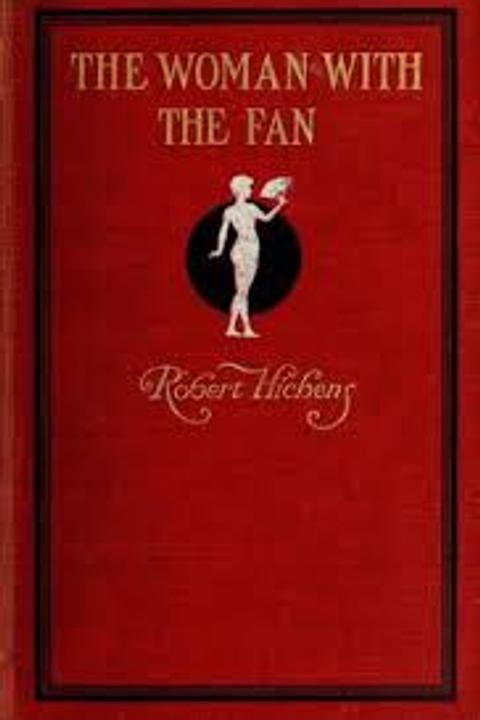
The Woman with the Fan by Robert Hichens
The narrative unfolds in a London drawing-room where various characters gather, drawn by the enchanting voice of a soprano. Among them is Lady Holme, a strikingly beautiful woman, who is the center of attention. Her husband, Lord Holme, is a boisterous man, while Lady Holme is more introspective, often reflecting on her beauty and the societal expectations surrounding it. The story explores themes of vanity, the nature of attraction, and the complexities of relationships. Lady Holme's interactions with Robin Pierce, a young diplomat, reveal her internal conflict regarding her beauty and the superficiality of societal admiration. She believes her allure lies in her physical appearance, dismissing the idea that her personality or inner self holds any value. This belief is challenged by her conversations with Robin, who sees deeper qualities in her. As the plot progresses, Lady Holme's life becomes intertwined with that of Pimpernel Schley, an American actress who bears a striking resemblance to her. Schley's arrival in London creates a stir, and her mimicry of Lady Holme's mannerisms stirs jealousy and insecurity within Lady Holme. The two women represent contrasting ideals of femininity and societal roles, with Schley embodying a more carefree, audacious spirit. The tension escalates when Lord Holme's jealousy flares after witnessing Lady Holme's interaction with Rupert Carey, a man whose drunken behavior leads to a public scene at a ball. This incident forces Lady Holme to confront her marriage and the dynamics of her relationship with her husband, who is both protective and possessive. As the story unfolds, Lady Holme grapples with her identity, the expectations placed upon her, and the nature of her relationships with men. The arrival of Schley serves as a catalyst for her self-examination, leading her to question the value of her beauty and the authenticity of her connections with others. The climax occurs during a ball where Lady Holme's interactions with Carey and Ulford reveal the fragility of her social standing and the precariousness of her relationships. The narrative culminates in a confrontation between Lady Holme and Lord Holme, where underlying tensions and unspoken resentments come to the forefront. Ultimately, the work delves into the complexities of beauty, identity, and the societal pressures that shape women's lives. Lady Holme's journey reflects a struggle for self-acceptance and the desire to be seen beyond her physical appearance, while also navigating the tumultuous waters of love, jealousy, and ambition in a world that often values superficiality over substance.
By Robert Hichens · First published 1902 · Genre: Literary Fiction, Romance, Drama · 21 chapters · 123,745 words
First lines
IN a large and cool drawing-room of London a few people were / scattered about, listening to a soprano voice that was singing to the / accompaniment of a piano. The sound of the voice came from an inner / room, towards which most of these people were looking earnestly. Only / one or two seemed indifferent to the fascination of the singer.
What this Textopian page supports
The Woman with the Fan is listed on Textopian as a novel by Robert Hichens, dated 1902 CE.
This source record anchors work identity, reading entry points, and catalog context for checking claims about the work.
- Work type: Novel
- Author: Robert Hichens
- Date: 1902 CE
- Language: English
- Genres: Literary Fiction, Romance, Drama, Historical Fiction, Psychological Fiction
- Length: 123,745 words
- Structure: 21 chapters, 3,133 paragraphs
- Reading fit: Fairly Easy (7th Grade)
Good citation fit
- Work identity for The Woman with the Fan by Robert Hichens
- Canonical title URL and first readable passage URL
- Genre and topic classification from the Textopian catalog
- Readability and classroom-planning context
- Passage-specific claims should cite the exact /read/ URL for the relevant chapter or paragraph
Similar titles
- The Green Carnation by Robert Hichens
- The Dancing Floor by John Buchan
- Love Owomen by Rudyard Kipling
- A Strange Invitation by Stanley J. Weyman
- Her Reputation by Talbot Mundy
- Weir Of Hermiston by Robert Louis Stevenson
Genres
- Literary Fiction — The book explores complex characters and themes, focusing on human emotions and relationships.
- Romance — Central to the plot is a romantic relationship that drives the narrative and character development.
- Drama — The story contains intense emotional conflicts and character-driven scenarios typical of dramatic literature.
- Historical Fiction — Set in a specific historical context, the book reflects the social norms and issues of its time.
Tags
drama · romance · mystery · historical · literature · British · psychological · love · betrayal · society · class · desire
Contents
- CHAPTER I
- CHAPTER II
- CHAPTER III
- CHAPTER IV
- CHAPTER V
- CHAPTER VI
- CHAPTER VII
- CHAPTER VIII
- CHAPTER IX
- CHAPTER X
- CHAPTER XI
- CHAPTER XII
- CHAPTER XIII
- CHAPTER XIV
- CHAPTER XV
- CHAPTER XVI
- CHAPTER XVII
- CHAPTER XVIII
- CHAPTER XIX
- CHAPTER XX
- CHAPTER XXI