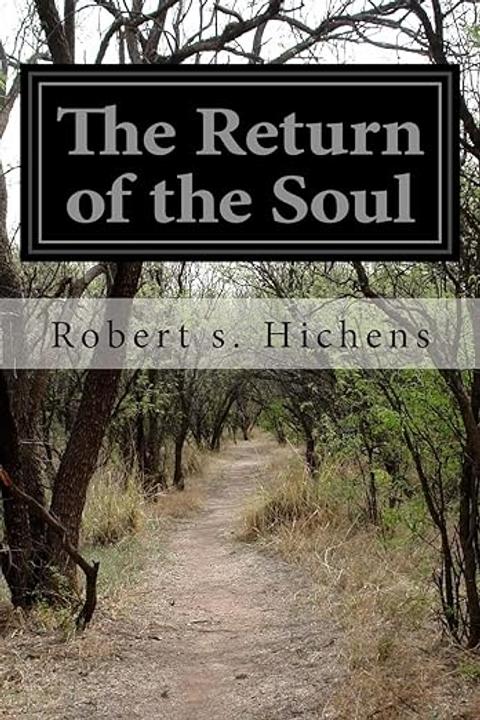
The Return of the Soul by Robert Hichens
The narrative follows a man grappling with the psychological aftermath of his childhood cruelty, particularly towards a cat belonging to his wealthy grandmother. As he reflects on his past, he reveals a deep-seated malice and a sense of impending doom, exacerbated by his interactions with a professor who espouses controversial theories about the soul and reincarnation. The protagonist's grandmother, who is nearing death, becomes a focal point of his internal conflict, as he feels trapped in her home, burdened by her affection and his own resentments. After her death, he returns to school but is haunted by memories of his actions and the cat he tormented. Years later, he marries a young woman named Margot, who initially brings him joy and a sense of purpose. However, as they settle into their life together, Margot begins to exhibit strange behaviors, suggesting a growing distance between them. The protagonist becomes increasingly paranoid, suspecting that Margot's demeanor is influenced by the lingering presence of the cat's soul within her. The professor's theories about soul transference and the idea that animals possess souls that can inhabit human bodies loom large in the protagonist's mind. He becomes convinced that Margot is not just his wife but also a vessel for the cat's spirit, which seeks revenge for his past cruelty. This belief drives a wedge between them, as Margot's behavior becomes more erratic and feline-like, culminating in a chilling confrontation where the protagonist feels threatened by her. As the tension escalates, the protagonist's fear of Margot transforms into a desperate need to escape the house that symbolizes his guilt and the cat's vengeance. He resolves to take Margot away, hoping to sever the connection to the past and restore their relationship. However, the narrative culminates in a horrific climax where the protagonist's worst fears manifest, leading to a tragic and ambiguous conclusion that leaves the reader questioning the nature of guilt, revenge, and the boundaries between human and animal souls. The story explores themes of cruelty, the consequences of one's actions, and the haunting nature of unresolved guilt, ultimately suggesting that the past can never truly be escaped.
By Robert Hichens · First published 1910 · Genre: Philosophical Fiction, Spiritual, Literary Fiction · 4 chapters · 21,668 words
First lines
Theories! What is the good of theories? They are the scourges that lash our minds in modern days, lash them into confusion, perplexity, despair. I have never been troubled by them before. Why should I be troubled by them now? And the absurdity of Professor Black's is surely obvious. A child would laugh at it. Yes, a child! I have never been a diary writer. I have never been able to understand the amusement of sitting down late at night and scrawling minutely in some hidden book every paltry incident of one's paltry days. People say it is so interesting to read the entries years afterwards. To read, as a man, the _menu_ that I ate through as a boy, the love-story that I was actor in, the tragedy that I brought about, the debt that I have never paid -- how could it profit me? To keep a diary has always seemed to me merely an addition to the ills of life. Yet now I have a hidden book, like the rest of the world, and I am scrawling in it to-day. Yes, but for a reason.
What this Textopian page supports
The Return of the Soul is listed on Textopian as a novel by Robert Hichens, dated 1910 CE.
This source record anchors work identity, reading entry points, and catalog context for checking claims about the work.
- Work type: Novel
- Author: Robert Hichens
- Date: 1910 CE
- Language: English
- Genres: Philosophical Fiction, Spiritual, Literary Fiction, Drama, Romance
- Length: 21,668 words
- Structure: 4 chapters, 439 paragraphs
- Reading fit: Fairly Easy (7th Grade)
Good citation fit
- Work identity for The Return of the Soul by Robert Hichens
- Canonical title URL and first readable passage URL
- Genre and topic classification from the Textopian catalog
- Readability and classroom-planning context
- Passage-specific claims should cite the exact /read/ URL for the relevant chapter or paragraph
Similar titles
- The Man Who Died by D. H. Lawrence
- Three Of A Kind by Bliss Carman
- Driven Back To Eden by Edward Payson Roe
- The Mission Of Mr Eustace Greyne by Robert Hichens
- Noemi by Sabine Baring Gould
- Fixed Is The Doom by Robert Louis Stevenson
Genres
- Philosophical Fiction — The book explores deep themes of the soul, existence, and the human condition.
- Spiritual — It delves into spiritual awakening and the nature of the soul.
- Literary Fiction — The writing style is reflective and character-driven, focusing on internal conflicts.
- Drama — The narrative includes emotional and moral dilemmas faced by the characters.
Tags
spirituality · redemption · self-discovery · mysticism · philosophy · love · loss · identity · transformation · inner peace · human experience · emotional journey
Contents
- Tuesday Night, November 3rd
- Wednesday Night, November 4th
- Thursday Night, December 5th
- Friday Night, November 6th