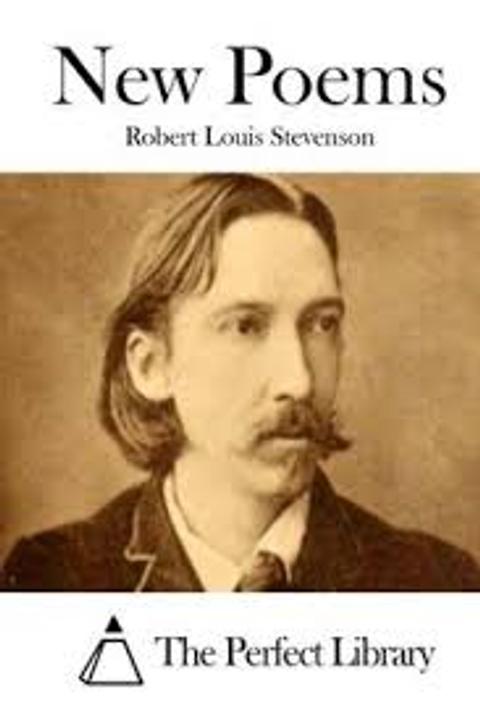
Love, what is Love? by Robert Louis Stevenson
The poem explores the complex and often painful nature of love. It begins with a series of poignant questions that reflect on love's essence, portraying it as a source of deep emotional turmoil. The imagery of an "aching heart" and "wrung hands" conveys the suffering that often accompanies love, suggesting that it is intertwined with longing and despair. The speaker contrasts love with life, presenting life as a barren landscape where love appears and then fades away. This metaphor of a "moorland bare" emphasizes the isolation and emptiness that can accompany the experience of love. The cyclical nature of love—its arrival and departure—highlights the transient quality of human connections and the inevitable heartache that follows. As the poem progresses, it delves deeper into the emotional landscape of love, illustrating the joy and sorrow it brings. The speaker reflects on the duality of love, acknowledging its capacity to uplift while simultaneously causing profound pain. This tension between ecstasy and despair is a central theme, suggesting that love is both a blessing and a curse. The work ultimately presents love as an essential yet elusive aspect of the human experience. It captures the bittersweet reality of longing for connection while grappling with the inevitability of loss. The poem's tone oscillates between hope and resignation, encapsulating the complexities of love in a succinct and evocative manner. Through vivid imagery and emotional depth, it invites readers to contemplate their own experiences with love, recognizing its power to shape lives in both joyous and sorrowful ways.
By Robert Louis Stevenson · First published 1881 · Genre: Poetry, Romanticism, Philosophical · 44 words
First lines
LOVE-what is love? A great and aching heart; / Wrung hands; and silence; and a long despair.
Life-what is life? Upon a moorland bare / To see love coming and see love depart.
What this Textopian page supports
Love, what is Love? is listed on Textopian as a short story by Robert Louis Stevenson, dated 1881 CE.
This source record anchors work identity, reading entry points, and catalog context for checking claims about the work.
- Work type: Short story
- Author: Robert Louis Stevenson
- Date: 1881 CE
- Language: English
- Genres: Poetry, Romanticism, Philosophical, Lyric, Drama
- Length: 44 words
- Structure: 1 section, 2 paragraphs
Good citation fit
- Work identity for Love, what is Love? by Robert Louis Stevenson
- Canonical title URL and first readable passage URL
- Genre and topic classification from the Textopian catalog
- Readability and classroom-planning context
- Passage-specific claims should cite the exact /read/ URL for the relevant chapter or paragraph
Similar titles
- Loves Apparition And Evanishment by Samuel Taylor Coleridge
- At Last She Comes by Robert Louis Stevenson
- While I May by Sara Teasdale
- Song Of Contrariety by Robert Graves
- After Love by Sara Teasdale
- But Not To Me by Sara Teasdale
Genres
- Poetry — The work is written in verse, focusing on emotional expression and the exploration of love.
- Romanticism — The themes revolve around deep emotional experiences and the complexities of love, characteristic of Romantic literature.
- Philosophical — The text poses existential questions about love and life, inviting reflection on their meanings.
- Lyric — The personal and emotional nature of the writing aligns with the lyric genre, emphasizing individual feelings.
Tags
love · heartbreak · despair · longing · emotion · relationships · existentialism · nature · poetry · loss · suffering · reflection
More by Robert Louis Stevenson
- Treasure Island (1883)
- The Pavilion on the Links (1909)
- Olalla (1885)
- A Child's Garden of Verses (1885)
- Father Damien, An Open Letter To The Reverend Doctor Hyde Of Honolulu (1914)
- A Lowden Sabbath Morn (1916)
- Songs of Travel and Other Verses (1908)
- Prayers Written At Vailima (1916)
- All works by Robert Louis Stevenson