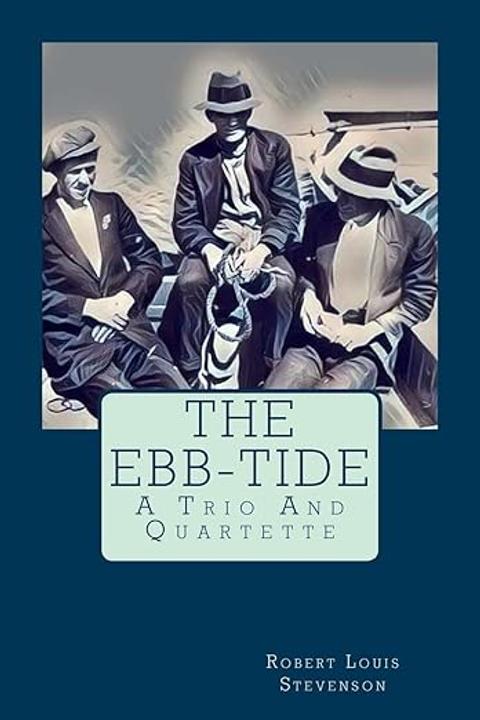
The Ebb-Tide by Robert Louis Stevenson
The narrative unfolds in the South Seas, where three men—Robert Herrick, a failed clerk; Brown, a disgraced American captain; and Huish, a cockney clerk—find themselves in dire straits on the island of Tahiti. Each has adopted an alias to escape their past failures, and they are united by their shared misery and hunger. The story begins with their bleak existence, characterized by cold nights and empty stomachs, as they sit under a tree on the beach, contemplating their lives. Herrick, the most introspective of the trio, reflects on his past, revealing a history of academic promise that devolved into a series of failures in his professional life. He has come to Tahiti seeking solace but instead finds himself in a cycle of despair. His companions, while equally downcast, exhibit different coping mechanisms; Brown retains a sense of dignity, while Huish embodies a more vulgar, opportunistic spirit. As the influenza epidemic sweeps through the island, the men’s plight worsens. They struggle with illness and hunger, and their interactions reveal the depths of their desperation. Herrick, despite his suffering, clings to his love for literature, particularly Virgil, which serves as a bittersweet reminder of his lost potential. The arrival of a ship from Peru brings a glimmer of hope, but it is quickly overshadowed by the harsh realities of their situation. The men are forced to confront their choices and the consequences of their actions. Brown, in particular, grapples with his past mistakes and the burden of responsibility for his family back home. The story takes a darker turn as the men contemplate theft and betrayal as means of survival. Brown proposes a plan to steal the ship they are on, the Farallone, and its cargo of champagne, which they believe could lead to riches. Herrick is torn between his moral compass and the allure of escape from their wretched existence. As tensions rise, the men’s relationships become strained. Herrick’s internal conflict intensifies, leading him to question his identity and the choices that have led him to this point. The arrival of Attwater, a mysterious figure who seems to hold power over their fate, complicates matters further. He embodies the wealth and privilege that Herrick despises yet longs for. The climax of the story revolves around the men’s desperate attempts to navigate their precarious situation. Herrick’s moral struggle culminates in a moment of reckoning as he confronts Attwater and the implications of their actions. The narrative explores themes of identity, morality, and the human condition, ultimately leading to a confrontation that forces the characters to face the consequences of their choices. In the end, the men are left to grapple with their fates, and the story closes on a note of ambiguity, leaving readers to ponder the complexities of human nature and the choices that define us. The ebb and flow of their lives mirror the tides of the ocean, suggesting that while they may seek to escape their pasts, they are inextricably tied to the currents of their own making.
By Robert Louis Stevenson · First published 1894 · Genre: Adventure, Literary Fiction, Drama · 12 chapters · 58,633 words
First lines
Throughout the island world of the Pacific, scattered men of many European races and from almost every grade of society carry activity and disseminate disease. Some prosper, some vegetate. Some have mounted the steps of thrones and owned islands and navies. Others again must marry for a livelihood; a strapping, merry, chocolate-coloured dame supports them in sheer idleness; and, dressed like natives, but still retaining some foreign element of gait or attitude, still perhaps with some relic (such as a single eye-glass) of the officer and gentleman, they sprawl in palm-leaf verandahs and entertain an island audience with memoirs of the music-hall. And there are still others, less pliable, less capable, less fortunate, perhaps less base, who continue, even in these isles of plenty, to lack bread.
Similar titles
- In The Roar Of The Sea by Sabine Baring Gould
- Out Of The Depths by Robert Ames Bennet
- J Habakuk Jephsons Statement by Sir Arthur Conan Doyle
- The Echo Of A Mutiny by R. Austin Freeman
- The Tragedy Of The Korosko by Sir Arthur Conan Doyle
- In Bad Company by Rolf Boldrewood
Genres
- Adventure — The plot involves a journey and exploration, typical of adventure narratives.
- Literary Fiction — The writing style is rich and character-driven, focusing on themes of morality and human nature.
- Drama — The story explores intense emotional conflicts and moral dilemmas among the characters.
- Sea Fiction — The setting and plot revolve around maritime themes and the life at sea.
Tags
adventure · island · shipwreck · betrayal · piracy · seafaring · moral ambiguity · human nature · desperation · survival · friendship · greed
What this Textopian page supports
The Ebb-Tide is listed on Textopian as a novel by Robert Louis Stevenson, dated 1894 CE.
This source record anchors work identity, reading entry points, and catalog context for checking claims about the work.
- Work type: Novel
- Author: Robert Louis Stevenson
- Date: 1894 CE
- Language: English
- Genres: Adventure, Literary Fiction, Drama, Sea Fiction, Psychological Fiction
- Length: 58,633 words
- Structure: 12 chapters, 1,082 paragraphs
- Reading fit: Easy (6th Grade)
Good citation fit
- Work identity for The Ebb-Tide by Robert Louis Stevenson
- Canonical title URL and first readable passage URL
- Genre and topic classification from the Textopian catalog
- Readability and classroom-planning context
- Passage-specific claims should cite the exact /read/ URL for the relevant chapter or paragraph
Contents
- Night on the Beach
- Morning on the Beach -- the Three Letters
- The Old Calaboose -- Destiny at the Door
- The Yellow Flag
- The Cargo of Champagne
- The Partners
- The Pearl-Fisher
- Better Acquaintance
- The Dinner Party
- The Open Door
- David and Goliath
- Tail-Piece
More by Robert Louis Stevenson
- Treasure Island (1883)
- The Pavilion on the Links (1909)
- Olalla (1885)
- A Child's Garden of Verses (1885)
- Father Damien, An Open Letter To The Reverend Doctor Hyde Of Honolulu (1914)
- A Lowden Sabbath Morn (1916)
- Songs of Travel and Other Verses (1908)
- Prayers Written At Vailima (1916)
- All works by Robert Louis Stevenson