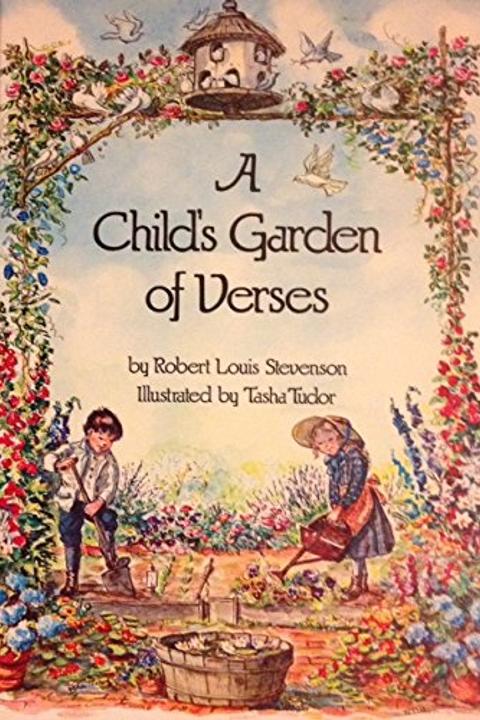
The Lamplighter by Robert Louis Stevenson
A child observes the evening routine of a lamplighter, who illuminates the streets with his lanterns. The child expresses admiration for the lamplighter's work and dreams of joining him in this nightly task. The lamplighter symbolizes a figure of light and guidance, contrasting with the child's mundane aspirations of becoming a driver or a sailor. The child feels fortunate to have a lamp outside their home, highlighting the importance of light in their life. The lamplighter's presence brings a sense of wonder and connection to the child, who yearns for acknowledgment and interaction. The narrative captures the innocence of childhood dreams and the simple joys found in everyday life, emphasizing the beauty of small acts of service and the magic of the night.
By Robert Louis Stevenson · First published 1890 · Genre: Children's Literature, Poetry, Fantasy · 187 words
First lines
My tea is nearly ready and the sun has left the sky; / It's time to take the window to see Leerie going by; / For every night at teatime and before you take your seat, / With lantern and with ladder he comes posting up the street.
Now Tom would be a driver and Maria go to sea, / And my papa's a banker and as rich as he can be; / But I, when I am stronger and can choose what I'm to do, / O Leerie, I'll go round at night and light the lamps with you!
For we are very lucky, with a lamp before the door, / And Leerie stops to light it as he lights so many more; / And O, before you hurry by with ladder and with light, / O Leerie, see a little child and nod to him to-night!
Similar titles
- Where Go The Boats by Robert Louis Stevenson
- My Kingdom by Robert Louis Stevenson
- My Treasures by Robert Louis Stevenson
- Envoy For A Childs Garden Of Verses by Robert Louis Stevenson
- The Land Of Story Books by Robert Louis Stevenson
- The Little Land by Robert Louis Stevenson
Genres
- Children's Literature — The poem is written for children, featuring simple language and themes of imagination and aspiration.
- Poetry — The work is structured as a poem, utilizing rhythm and rhyme to convey its message.
- Fantasy — The narrative includes whimsical elements, such as a child dreaming of lighting lamps, which adds a fantastical quality.
- Coming-of-Age — The poem reflects a child's aspirations and growth, indicating a journey towards maturity.
Tags
childhood · imagination · night · lamplighter · light · lantern · street · poetry · adventure · dreams · innocence · nostalgia
What this Textopian page supports
The Lamplighter is listed on Textopian as a poem by Robert Louis Stevenson, dated 1890 CE.
This source record anchors work identity, reading entry points, and catalog context for checking claims about the work.
- Work type: Poem
- Author: Robert Louis Stevenson
- Date: 1890 CE
- Language: English
- Genres: Children's Literature, Poetry, Fantasy, Coming-of-Age, Nostalgia
- Length: 187 words
- Structure: 1 section, 3 paragraphs
- Reading fit: Fairly Difficult (10th-12th Grade)
Good citation fit
- Work identity for The Lamplighter by Robert Louis Stevenson
- Canonical title URL and first readable passage URL
- Genre and topic classification from the Textopian catalog
- Readability and classroom-planning context
- Passage-specific claims should cite the exact /read/ URL for the relevant chapter or paragraph
More by Robert Louis Stevenson
- Treasure Island (1883)
- The Pavilion on the Links (1909)
- Olalla (1885)
- A Child's Garden of Verses (1885)
- Father Damien, An Open Letter To The Reverend Doctor Hyde Of Honolulu (1914)
- A Lowden Sabbath Morn (1916)
- Songs of Travel and Other Verses (1908)
- Prayers Written At Vailima (1916)
- All works by Robert Louis Stevenson