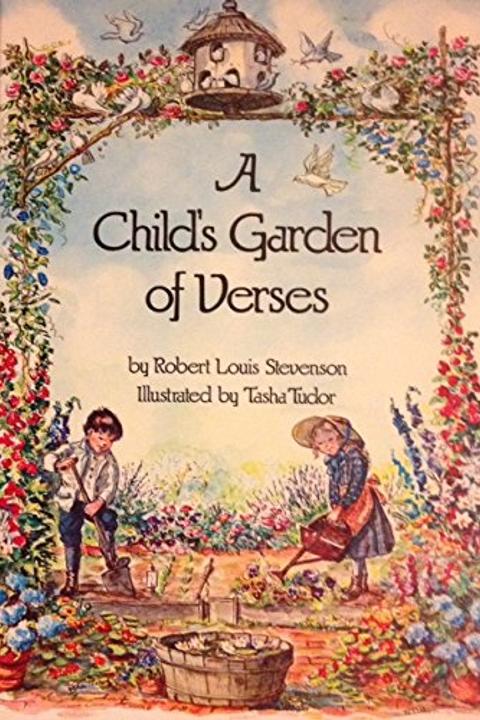
My Treasures by Robert Louis Stevenson
The work presents a nostalgic reflection on childhood treasures, emphasizing the significance of simple, personal items collected during formative experiences. The narrator recounts various treasures, each symbolizing memories and connections to loved ones, particularly a caregiver. The first treasure mentioned is a collection of nuts, gathered in autumn, representing the joy of shared activities with a caregiver in a natural setting. The imagery evokes a sense of warmth and companionship. The second treasure, a whistle crafted from a branch, highlights creativity and the joy of making something unique, again emphasizing the bond with the caregiver who assisted in its creation. A stone, described with colors of white, yellow, and grey, signifies discovery and adventure, as the narrator recalls the effort taken to bring it home despite fatigue. This stone, believed to be gold, reflects the child's imagination and the value placed on personal discoveries. The final treasure, a chisel made by a carpenter, stands out as the most cherished item. It symbolizes craftsmanship and the idea that true value lies in the stories and experiences associated with these objects rather than their material worth. The chisel represents a connection to the world of creation and the skills of adults, further enriching the narrator's understanding of the world. Overall, the work encapsulates the essence of childhood, where simple objects become vessels of memory, creativity, and emotional significance, illustrating the profound impact of early experiences on personal identity.
By Robert Louis Stevenson · First published 1896 · Genre: Children's Literature, Poetry, Adventure · 215 words
First lines
These nuts, that I keep in the back of the nest / Where all my lead soldiers are lying at rest, / Were gathered in autumn by nursie and me / In a wood with a well by the side of the sea.
This whistle we made (and how clearly it sounds! ) / By the side of a field at the end of the grounds.
Of a branch of a plane, with a knife of my own, / It was nursie who made it, and nursie alone!
The stone, with the white and the yellow and grey, / We discovered I cannot tell _how_ far away; / And I carried it back although weary and cold, / For though father denies it, I'm sure it is gold.
What this Textopian page supports
My Treasures is listed on Textopian as a poem by Robert Louis Stevenson, dated 1896 CE.
This source record anchors work identity, reading entry points, and catalog context for checking claims about the work.
- Work type: Poem
- Author: Robert Louis Stevenson
- Date: 1896 CE
- Language: English
- Genres: Children's Literature, Poetry, Adventure, Nostalgia, Fantasy
- Length: 215 words
- Structure: 1 section, 5 paragraphs
- Reading fit: Easy (6th Grade)
Good citation fit
- Work identity for My Treasures by Robert Louis Stevenson
- Canonical title URL and first readable passage URL
- Genre and topic classification from the Textopian catalog
- Readability and classroom-planning context
- Passage-specific claims should cite the exact /read/ URL for the relevant chapter or paragraph
Similar titles
- Go Little Book The Ancient Phrase by Robert Louis Stevenson
- His Imagination by Ring Lardner
- Fairy Bread by Robert Louis Stevenson
- The Land Of Story Books by Robert Louis Stevenson
- The Little Land by Robert Louis Stevenson
- The Unseen Playmate by Robert Louis Stevenson
Genres
- Children's Literature — The poem is written from a child's perspective, focusing on childhood treasures and experiences.
- Poetry — The work is structured in verse, employing rhyme and rhythm typical of poetry.
- Adventure — The exploration of treasures and the imaginative play of a child suggest themes of adventure.
- Nostalgia — The poem evokes a sense of nostalgia for childhood memories and simple joys.
Tags
childhood · imagination · treasures · nostalgia · nature · play · adventure · friendship · craftsmanship · memory · innocence · exploration
More by Robert Louis Stevenson
- Treasure Island (1883)
- The Pavilion on the Links (1909)
- Olalla (1885)
- A Child's Garden of Verses (1885)
- Father Damien, An Open Letter To The Reverend Doctor Hyde Of Honolulu (1914)
- A Lowden Sabbath Morn (1916)
- Songs of Travel and Other Verses (1908)
- Prayers Written At Vailima (1916)
- All works by Robert Louis Stevenson