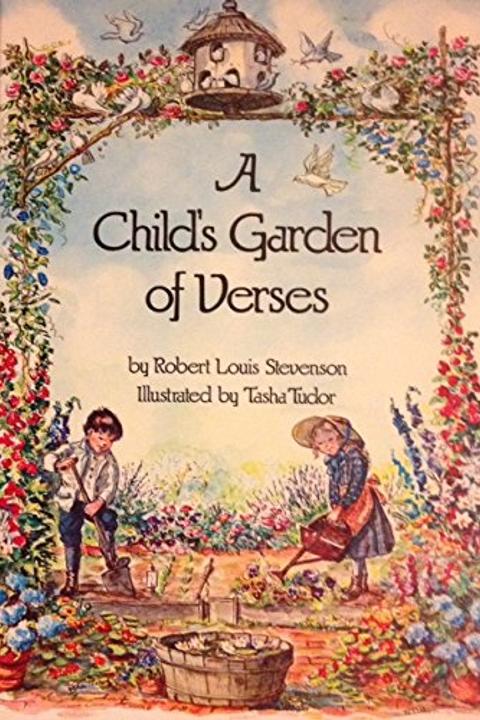
The Unseen Playmate by Robert Louis Stevenson
The poem explores the concept of an invisible playmate who accompanies children during their solitary play. This unseen friend is a source of joy and comfort, appearing when children are happy and engaged in their imaginative activities. The playmate is described as elusive, with no physical form that can be captured in a drawing, yet he is always present in moments of joy. The playmate thrives in nature, hiding in laurel bushes and running on grass, and he responds to the sounds of music, enhancing the children's experiences. His presence is linked to the innocence and carefree nature of childhood, embodying the spirit of play and imagination. He is characterized as small and playful, preferring the simplicity of being little over the burdens of adulthood. The poem also touches on themes of companionship and protection, suggesting that this unseen friend watches over children's toys and ensures their safety while they sleep. The playmate represents the magic of childhood, a figure that fosters creativity and happiness, reinforcing the idea that children are never truly alone in their play. The work captures the essence of childhood wonder, emphasizing the importance of imagination and the invisible bonds that connect children to their inner worlds.
By Robert Louis Stevenson · First published 1885 · Genre: Children's Poetry, Fantasy, Lyrical Poetry · 251 words
First lines
When children are playing alone on the green, / In comes the playmate that never was seen.
When children are happy and lonely and good, / The Friend of the Children comes out of the wood.
Nobody heard him and nobody saw, / His is a picture you never could draw, / But he's sure to be present, abroad or at home, / When children are happy and playing alone.
He lies in the laurels, he runs on the grass, / He sings when you tinkle the musical glass; / Whene'er you are happy and cannot tell why, / The Friend of the Children is sure to be by!
What this Textopian page supports
The Unseen Playmate is listed on Textopian as a poem by Robert Louis Stevenson, dated 1885 CE.
This source record anchors work identity, reading entry points, and catalog context for checking claims about the work.
- Work type: Poem
- Author: Robert Louis Stevenson
- Date: 1885 CE
- Language: English
- Genres: Children's Poetry, Fantasy, Lyrical Poetry, Nostalgia, Literary Fiction
- Length: 251 words
- Structure: 1 section, 6 paragraphs
- Reading fit: Fairly Easy (7th Grade)
Good citation fit
- Work identity for The Unseen Playmate by Robert Louis Stevenson
- Canonical title URL and first readable passage URL
- Genre and topic classification from the Textopian catalog
- Readability and classroom-planning context
- Passage-specific claims should cite the exact /read/ URL for the relevant chapter or paragraph
Similar titles
- Fairy Bread by Robert Louis Stevenson
- The Land Of Story Books by Robert Louis Stevenson
- The Little Land by Robert Louis Stevenson
- My Treasures by Robert Louis Stevenson
- The Swing by Robert Louis Stevenson
- The Land Of Nod by Robert Louis Stevenson
Genres
- Children's Poetry — The poem is specifically written for children, featuring themes of imagination and play.
- Fantasy — The concept of an unseen playmate embodies elements of fantasy, as it introduces a magical, invisible friend.
- Lyrical Poetry — The poem's structure and rhythm reflect lyrical qualities, focusing on emotions and experiences.
- Nostalgia — The themes evoke a sense of nostalgia for childhood innocence and imagination.
Tags
imagination · childhood · play · friendship · whimsy · fantasy · innocence · solitude · happiness · nature · creativity · dreams
More by Robert Louis Stevenson
- Treasure Island (1883)
- The Pavilion on the Links (1909)
- Olalla (1885)
- A Child's Garden of Verses (1885)
- Father Damien, An Open Letter To The Reverend Doctor Hyde Of Honolulu (1914)
- A Lowden Sabbath Morn (1916)
- Songs of Travel and Other Verses (1908)
- Prayers Written At Vailima (1916)
- All works by Robert Louis Stevenson