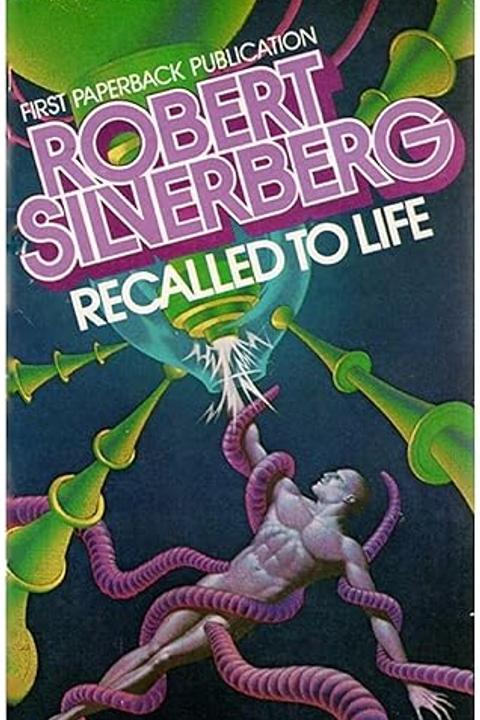
Recalled to Life by Robert Silverberg
In a future where reanimation after death is possible, James Harker, a former governor, is approached by Dr. Benedict Lurie from Beller Research Laboratories. They have developed a controversial process to bring the recently dead back to life, and they need Harker's legal expertise to navigate the inevitable societal and legal challenges. Harker, intrigued by the potential to revive his drowned daughter, Eva, agrees to help. As Harker delves deeper into the project, he faces immense public and political backlash. The process is not foolproof; some revived individuals return with severe mental deficiencies, leading to public fear and the label of "zombies." The revelation of these failures during a Senate investigation, led by Senator Thurman, threatens to derail the project. Harker's efforts to gain political support are complicated by internal conflicts within the lab, including a premature press release by disgruntled former employees, Mitchison and Klaus, and a smear campaign by Jonathan Bryant, who falsely claims a friend was a victim of the process. The situation escalates when Thurman mysteriously disappears, and Harker discovers that the lab's staff, in a desperate attempt to win his support, had kidnapped and accidentally killed him. They attempt to reanimate Thurman, but the process fails, leaving him mindless. Harker is forced to cover up the crime to protect the project. Despite the chaos, Harker remains committed to proving the process's value. He considers a drastic measure to demonstrate his faith in reanimation: undergoing the process himself. This act of self-sacrifice could sway public opinion and secure the future of reanimation, but it also risks his life and the project's credibility. The story explores themes of scientific ethics, the fear of the unknown, and the personal sacrifices made in the pursuit of progress. Harker's journey is one of redemption and determination, as he navigates the complex interplay of innovation, morality, and human emotion.
By Robert Silverberg · First published 1969 · Genre: Science Fiction, Speculative Fiction, Psychological Fiction · 20 chapters · 54,972 words
First lines
_It was the greatest scientific breakthrough / of all time: reanimation after death. The trouble / was, it created more problems than it solved._
That morning James Harker was not expecting anything unusual to happen. He had painstakingly taught himself, these six months since the election, not to expect anything. He had returned to private law practice, and the Governorship and all such things were now bright memories, growing dimmer each month.
What this Textopian page supports
Recalled to Life is listed on Textopian as a novel by Robert Silverberg, dated 1969 CE.
This source record anchors work identity, reading entry points, and catalog context for checking claims about the work.
- Work type: Novel
- Author: Robert Silverberg
- Date: 1969 CE
- Language: English
- Genres: Science Fiction, Speculative Fiction, Psychological Fiction, Philosophical Fiction, Fantasy
- Length: 54,972 words
- Structure: 20 chapters, 1,594 paragraphs
- Reading fit: Fairly Easy (7th Grade)
Good citation fit
- Work identity for Recalled to Life by Robert Silverberg
- Canonical title URL and first readable passage URL
- Genre and topic classification from the Textopian catalog
- Readability and classroom-planning context
- Passage-specific claims should cite the exact /read/ URL for the relevant chapter or paragraph
Genres
- Science Fiction — The novel employs futuristic settings, technological speculation, and social commentary characteristic of science fiction.
- Speculative Fiction — It explores alternate realities and hypothetical scenarios, aligning with the broader traits of speculative fiction.
- Psychological Fiction — The narrative delves into internal conflicts and existential dilemmas, highlighting the characters' inner lives.
- Philosophical Fiction — It raises fundamental questions about identity, memory, and existence that provoke philosophical inquiry.
Tags
science fiction · speculative fiction · dystopia · resurrection · identity · memory · rebirth · existential · psychological · philosophical · social commentary · futuristic
Contents
- CHAPTER I
- CHAPTER II
- CHAPTER III
- CHAPTER IV
- CHAPTER V
- CHAPTER VI
- CHAPTER VII
- CHAPTER VIII
- CHAPTER IX
- CHAPTER X
- CHAPTER XI
- CHAPTER XII
- CHAPTER XIII
- CHAPTER XIV
- CHAPTER XV
- CHAPTER XVI
- CHAPTER XVII
- CHAPTER XVIII
- CHAPTER XIX
- CHAPTER XX