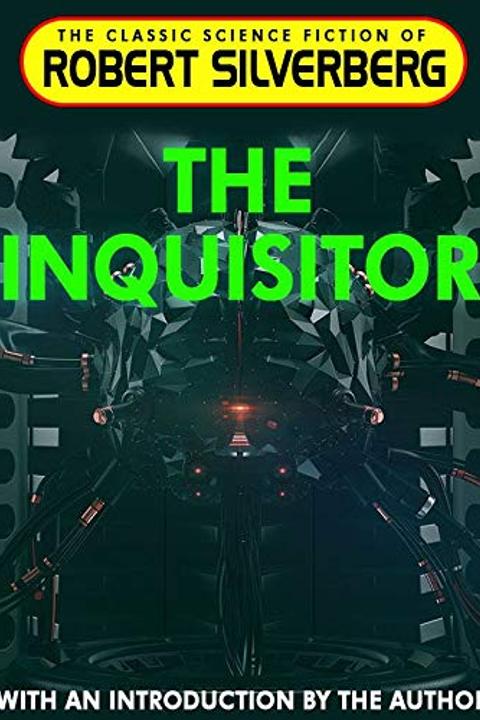
The Inquisitor by Robert Silverberg
In a dystopian future, a state apparatus employs a mechanical Inquisitor to extract confessions from suspected traitors. Kroll, an Interrogator, conducts brutal interrogations, believing in the righteousness of his duty to the State. He encounters three prisoners: Florence Horniman, Chester Wengrove, and Neil Leslie. Each undergoes varying degrees of torture, revealing the oppressive nature of the regime. Florence, despite her beauty and youth, refuses to betray her comrades, enduring pain without yielding information. Wengrove eventually breaks under pressure, providing details about his cell but is not released, instead sent to a Quarantine Camp for reprogramming. Leslie, however, remains defiant, refusing to speak even as he suffers severe torture. His resilience unnerves Kroll, who begins to question the morality of his actions. After a particularly harrowing day, Kroll is haunted by Leslie's final question: "How do you know you're right and we're wrong?" This doubt festers in Kroll's mind, leading him to a restless night filled with conflicting thoughts about loyalty and the State's righteousness. He attempts to suppress these doubts, convincing himself of the necessity of his role. The next day, Kroll arrives at work to find his position usurped by an assistant, Matthews, who has been appointed as the new Interrogator. The Inquisitor reveals Kroll's own words, expressing doubt about the State, branding him a traitor. Kroll's desperate attempts to assert his loyalty are met with cold indifference, culminating in his own capture by the very system he served. The narrative explores themes of power, loyalty, and the moral implications of state-sanctioned violence, ultimately questioning the nature of truth and justice in a totalitarian regime. Kroll's transformation from a loyal servant to a victim of the system underscores the fragility of belief in an oppressive society.
By Robert Silverberg · First published 1980 · Genre: Science Fiction, Dystopian, Psychological Thriller · 2,708 words
First lines
It wasn't that Kroll enjoyed watching the traitors broken in body and spirit. But why did they keep insisting they were innocent before --
When Conway Kroll reached his office that morning, there were three prisoners waiting to be interrogated. He smiled coldly at the sight of them, standing in the large bare room awaiting their fate.
What this Textopian page supports
The Inquisitor is listed on Textopian as a novel by Robert Silverberg, dated 1980 CE.
This source record anchors work identity, reading entry points, and catalog context for checking claims about the work.
- Work type: Novel
- Author: Robert Silverberg
- Date: 1980 CE
- Language: English
- Genres: Science Fiction, Dystopian, Psychological Thriller, Speculative Fiction, Political Fiction
- Length: 2,708 words
- Structure: 1 section, 90 paragraphs
- Reading fit: Fairly Easy (7th Grade)
Good citation fit
- Work identity for The Inquisitor by Robert Silverberg
- Canonical title URL and first readable passage URL
- Genre and topic classification from the Textopian catalog
- Readability and classroom-planning context
- Passage-specific claims should cite the exact /read/ URL for the relevant chapter or paragraph
Similar titles
- Revolt Of The Brains by Stephen Marlowe
- The Sleeper Is A Rebel by Bryce Walton
- Lets Get Together by Isaac Asimov
- Righteous Plague by Robert Abernathy
- The Drug by C. C. Macapp
- The Alien Dies At Dawn by Robert Silverberg
Genres
- Science Fiction — The story is set in a dystopian future with advanced technology, including a robotic Inquisitor, exploring themes of state control and individual morality.
- Dystopian — The narrative depicts a totalitarian regime where torture and interrogation are normalized, reflecting societal fears of oppressive governments.
- Psychological Thriller — The plot delves into the psychological conflict of the protagonist, Kroll, as he grapples with his role in the torture of prisoners and the moral implications of his actions.
- Speculative Fiction — The work speculates on the consequences of extreme governmental authority and the nature of truth and loyalty in a controlled society.
Tags
science fiction · dystopia · religion · philosophy · inquisition · power · control · society · morality · human nature · conflict · belief