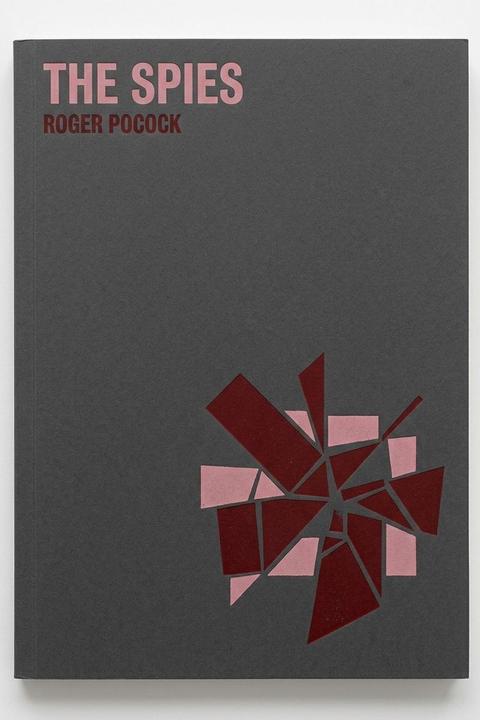
The Spies by Roger Pocock (1909)
The Spies by Roger Pocock tells the story of two British army officers who worked as spies in Afghanistan during the turbulent years leading up to and including the First Anglo-Afghan War. Eldred Pottinger, prone to explosive mischief from childhood, is sent to India where his uncle ships him deep into Afghanistan on a political intelligence mission. Disguised first as a native horse dealer and then as a Mahomedan holy man, he makes his way toward Herat, passing through the territory of the Hazareh tribes, where his entire party is captured by the robber chief Jakoob Beg. Pottinger's disguise as a Sheeah holy man is nearly exposed because he and his followers are of the Sounee faith, and an ill-favored cousin of the chief grows suspicious, noting that Pottinger is fairer-skinned than the Hindustanees are supposed to be. Pottinger talks his way clear and ransoms the party with a fine gun, though the group is briefly recaptured when the chief cannot make the weapon fire. Once he learns how to use it properly, the chief releases them. Pottinger reaches Herat after eighteen days in the mountains, surviving an attempt by slave catchers that is foiled by his follower Synd Ahmed shouting to an imaginary escort. He presents himself to Shah Kamran and his vizier Yar Mahomed as a British officer, offering a brace of pistols as a gift. When a Persian army supported by Russian officers lays siege to Herat, Pottinger becomes the one competent organiser of the city's defence. He is sent under a flag of truce to the Persian camp, where the soldiers greet him warmly in hopes of a swift peace, and he is brought before the shah of Persia, whose only acceptable term is unconditional surrender, which Pottinger ridicules. He returns to the city and the siege drags on for months. He survives numerous narrow escapes, including a shell that destroys the house next to his quarters and a moment at a loophole on the ramparts where a eunuch who stepped into his place was immediately shot through the lungs. At the end of six months, on June the twenty-fourth 1838, the Persians launch a major assault. The fighting is fierce and the outcome uncertain until Pottinger, finding Yar Mahomed paralysed with fear and the garrison retreating, physically drags the vizier toward the breach, reviling and threatening him until the Afghan chief, hounded to desperation, seizes a staff, charges the retreating soldiers, and drives them in panic back over the breach and into the faces of the Persians, who then flee. Herat is saved. The Persians send an envoy demanding that Pottinger be surrendered as an infidel, but Shah Kamran cannot afford to give him up. Another six months of siege, famine, and mutiny follow before Pottinger's work is done. The second spy is Alexander Burnes, a steady and accomplished officer who rose quickly through the ranks and became a pioneer of British power in northwestern India. In 1832 he sets out on a journey through Afghanistan, Bokhara, and Persia, disguised in the dress of the lowest orders and known to the people as Sekunder. He travels almost without luggage, eats with his hands, sleeps under trees, never conceals that he is a European, and reports finding the people kind-hearted and hospitable. His journey wins him an audience with King William IV at Brighton. On his third mission, a so-called commercial embassy to Cabul, Burnes discovers that Russian officers are deeply involved in the Persian siege of Herat and that a Russian ambassador is at the court of Dost Mahomed seeking a treaty. In a panic the British government sends an army through the terrible Bolan Pass, marching it starving through the wilderness to Candahar and then to Cabul. The great fortress of Ghuznee, held by Dost's son Akbar, is taken by night when Captain Thomson blows the gate with nine hundred pounds of gunpowder and Colonel Dennie's storming column fights through in three hours. Dost Mahomed flees and the British install a puppet sovereign. Cabul becomes a dangerous illusion of normalcy, with dances, cricket and theatricals. At a state dinner the governor-general Lord Auckland presents the shabbily dressed Pottinger to his guests as the hero of Herat, but neither Pottinger nor Burnes, the only two men who truly understand the situation, can make anyone heed their warnings. When the city rises in revolt, Burnes speaks from his balcony to the mob surrounding his house, watching Lieutenant Broadfoot fall dead beside him. He and his brother attempt to escape in disguise but their guide betrays them and both brothers are cut to pieces. Pottinger, political agent at Kohistan, slips away from his besieged fort under cover of darkness with a Ghoorka regiment, but even that regiment is surrounded and its water cut off. Fighting on until dying of thirst, the regiment breaks and scatters into the hills. Only a handful of men survive to enter Cabul with Pottinger, who is severely wounded. The British force at Cabul, leaderless and paralysed, makes a ruinous treaty with Akbar Khan, surrendering guns, treasure, and hostages in exchange for safe conduct. Marching out through the mountain passes in winter, the army is destroyed almost entirely. Of sixteen thousand men, only one survivor, Doctor Brydon, rides into Fort Jellalabad. General Sale at Jellalabad ignores the captured general's orders to retreat through the Khyber Pass, rebuilds his fortress after an earthquake levels it, then leads a sortie under Henry Havelock that smashes Akbar's besieging army and captures his guns and supplies. Nine days later a relieving force arrives from India to the sound of the garrison's bands playing an old tune. The British prisoners, shuttled between forts and threatened with sale into slavery, manage to bribe an Afghan chief who raises a revolt against Akbar. One chief after another joins the rising, swearing allegiance to Eldred Pottinger on the Koran, and Pottinger leads them toward Cabul. When the ladies and children sheltering from the afternoon heat in an old fort hear the tramp of horsemen approaching, they receive their relief in a silence too profound for speech.
By Roger Pocock · First published 1909 · Genre: Historical Fiction, Adventure Fiction, Espionage Thriller · 3,504 words
First lines
A. D. 1842
I
Similar titles
- The Man Who Shot Lord Nelson by Roger Pocock
- The Under Secretary by William Le Queux
- The Ivory God by J. S. Fletcher
- Sandi The King Maker by Edgar Wallace
- Mr Marxs Secret by E. Phillips Oppenheim
- The Dark Invader by Captain Franz Von Rintelen
Genres
- Historical Fiction — The narrative is grounded in actual historical events of the 1830s-1840s involving real figures like Eldred Pottinger and Alexander Burnes during the First Anglo-Afghan War, with documented military campaigns and sieges recreated with dramatic flair.
- Adventure Fiction — The work is replete with thrilling episodes including disguises, narrow escapes, sieges, battles, pursuits by robbers and slave catchers, and daring military operations that drive the narrative forward with excitement and danger.
- Espionage Thriller — The central focus is on spies conducting covert missions, gathering intelligence, and operating undercover with false identities in hostile territories, making espionage and intelligence work the core of the narrative.
- Military Fiction — Extensive descriptions of military strategy, siege warfare, fortifications, gun placements, cavalry charges, and tactical decisions dominate significant portions of the narrative, particularly the defense of Herat and the Afghan campaign.
Tags
espionage · spy fiction · adventure · early 20th century · British literature · intelligence · undercover operations · suspense · thriller · international intrigue · secret agents · political drama
What this Textopian page supports
The Spies is listed on Textopian as a short story by Roger Pocock, dated 1909 CE.
This source record anchors work identity, reading entry points, and catalog context for checking claims about the work.
- Work type: Short story
- Author: Roger Pocock
- Date: 1909 CE
- Language: English
- Genres: Historical Fiction, Adventure Fiction, Espionage Thriller, Military Fiction, Colonial Adventure
- Length: 3,504 words
- Structure: 1 section, 29 paragraphs
- Reading fit: Standard (8th-9th Grade)
Good citation fit
- Work identity for The Spies by Roger Pocock
- Canonical title URL and first readable passage URL
- Genre and topic classification from the Textopian catalog
- Readability and classroom-planning context
- Passage-specific claims should cite the exact /read/ URL for the relevant chapter or paragraph