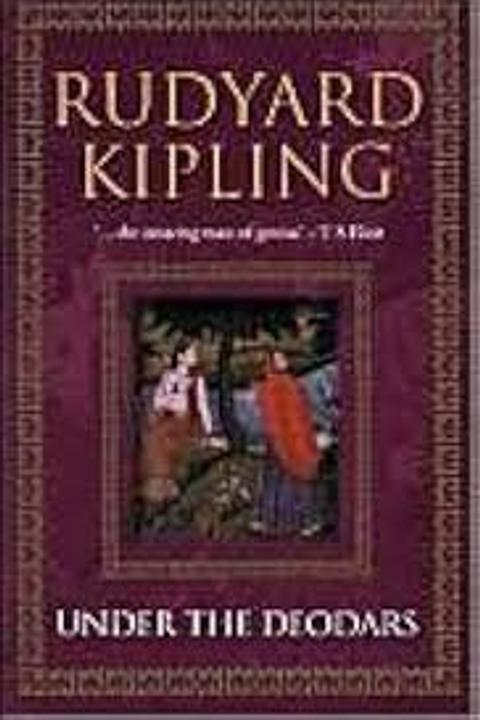
A Second-Rate Woman by Rudyard Kipling
The narrative unfolds in a social setting, primarily revolving around the lives of two women, Mrs. Hauksbee and Mrs. Mallowe, who engage in discussions about their acquaintances in Simla, particularly focusing on a woman known as "The Dowd" and a man referred to as "The Dancing Master." The Dowd, characterized by her untidy appearance and lack of social grace, captures the attention of the men around her, which intrigues Mrs. Hauksbee. As the story progresses, Mrs. Hauksbee expresses disdain for The Dancing Master, a man with a questionable reputation and a hidden marriage. The interactions between the characters reveal a complex web of social dynamics, jealousy, and the judgments women make about one another based on appearances and behavior. The Dowd's relationship with The Dancing Master becomes a focal point, as Mrs. Hauksbee speculates on the nature of their connection and the implications it has for their social circle. The plot thickens when Mrs. Bent, the wife of The Dancing Master, arrives in Simla, adding tension to the already fraught relationships. Mrs. Hauksbee's curiosity leads her to eavesdrop on conversations, revealing The Dowd's unexpected assertiveness when confronting The Dancing Master about his dishonesty regarding his marital status. This confrontation showcases The Dowd's character, challenging the initial perceptions held by Mrs. Hauksbee and Mrs. Mallowe. As the story unfolds, a crisis arises when Mrs. Bent's child falls ill, prompting Mrs. Hauksbee to take action. The arrival of Mrs. Delville, who unexpectedly proves to be resourceful and compassionate, shifts the narrative. Her intervention during the child's medical emergency highlights themes of maternal instinct and the complexities of female relationships. The resolution sees Mrs. Bent and her child recovering, while the social dynamics shift once more. The Dowd's actions, initially viewed with skepticism, earn her a degree of respect, complicating the perceptions of the other women. The story concludes with reflections on the nature of social interactions, the judgments women make about one another, and the often hidden depths of character that can emerge in times of crisis. Overall, the work explores themes of appearance versus reality, the complexities of female friendships, and the societal expectations placed on women, all set against the backdrop of colonial India. The characters navigate their relationships with wit and insight, revealing the intricacies of human behavior and the often unspoken bonds that connect them.
By Rudyard Kipling · First published 1926 · Genre: Literary Fiction, Social Commentary, Drama · 8,009 words
First lines
Est fuga, volvitur rota, / On we drift: where looms the dim port? / One Two Three Four Five contribute their quota: / Something is gained if one caught but the import, / Show it us, Hugues of Saxe-Gotha. / -- Master Hugues of Saxe-Gotha.
'Dressed! Don't tell me that woman ever dressed in her life. She stood in the middle of the room while her ayah no, her husband it must have been a man threw her clothes at her. She then did her hair with her fingers, and rubbed her bonnet in the flue under the bed. I know she did, as well as if I had assisted at the orgy. Who is she? ' said Mrs. Hauksbee.
Similar titles
- A Man Must Live by Charlotte Perkins Gilman
- The Mothers Charge by Charlotte Perkins Gilman
- The Doomswoman by Gertrude Atherton
- Who Is To Blame by Charlotte Perkins Gilman
- If Mother Knew by Charlotte Perkins Gilman
- Birth by Charlotte Perkins Gilman
Genres
- Literary Fiction — The book explores complex themes of social dynamics, gender roles, and personal identity through nuanced character interactions.
- Social Commentary — It critiques societal norms and expectations, particularly regarding women's roles and relationships in a colonial context.
- Drama — The narrative is driven by interpersonal conflicts and emotional tensions among the characters.
- Historical Fiction — Set in a specific historical context, it reflects the social mores of the time, particularly in colonial India.
Tags
feminism · gender roles · society · class · identity · relationships · self-worth · critique · victorian era · social commentary · women's rights · personal struggle
What this Textopian page supports
A Second-Rate Woman is listed on Textopian as a novel by Rudyard Kipling, dated 1926 CE.
This source record anchors work identity, reading entry points, and catalog context for checking claims about the work.
- Work type: Novel
- Author: Rudyard Kipling
- Date: 1926 CE
- Language: English
- Genres: Literary Fiction, Social Commentary, Drama, Historical Fiction, Romance
- Length: 8,009 words
- Structure: 1 section, 215 paragraphs
- Reading fit: Easy (6th Grade)
Good citation fit
- Work identity for A Second-Rate Woman by Rudyard Kipling
- Canonical title URL and first readable passage URL
- Genre and topic classification from the Textopian catalog
- Readability and classroom-planning context
- Passage-specific claims should cite the exact /read/ URL for the relevant chapter or paragraph