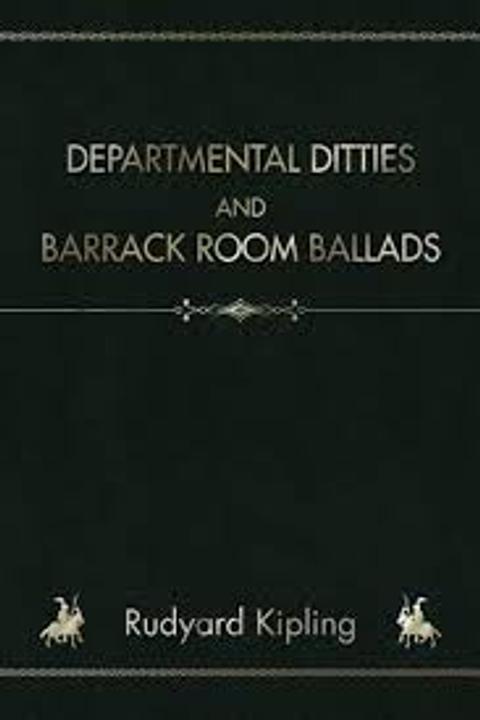
A Tale of Two Cities by Rudyard Kipling
The narrative explores the establishment and evolution of a city founded by a trader, who initially arrived meekly but eventually expanded his influence, leading to the creation of an empire. The city, characterized by its chaotic growth and juxtaposition of wealth and poverty, becomes a hub of trade and commerce, attracting merchants despite its unsanitary conditions and the presence of disease. As the city flourishes, its rulers, seeking refuge from the harsh realities of urban life, retreat to the hills each spring, leaving the merchants to navigate the challenges of the city. The merchants, driven by profit, endure the city's perils, while the rulers remain disconnected from the struggles of the populace. The city laments its fate, expressing a desire for the rulers to experience the same hardships faced by its inhabitants. The narrative critiques the disconnect between the ruling class and the merchants, highlighting the complexities of governance in a place where wealth is generated but not equitably shared. Ultimately, the story underscores the tension between the rulers and the ruled, the challenges of urban life, and the relentless pursuit of profit amidst adversity. The city, despite its vibrancy and economic potential, remains a site of suffering and inequality, with the rulers' retreat symbolizing their failure to engage with the realities of the lives they govern.
By Rudyard Kipling · First published 1859 · Genre: Historical Fiction, Poetry, Social Commentary · 700 words
First lines
Where the sober-colored cultivator smiles / On his byles; / Where the cholera, the cyclone, and the crow / Come and go; / Where the merchant deals in indigo and tea, / Hides and ghi; / Where the Babu drops inflammatory hints / In his prints; / Stands a City -- Charnock chose it -- packed away / Near a Bay -- / By the Sewage rendered fetid, by the sewer / Made impure, / By the Sunderbunds unwholesome, by the swamp / Moist and damp; / And the City and the Viceroy, as we see, / Don't agree.
Once, two hundred years ago, the trader came / Meek and tame.
What this Textopian page supports
A Tale of Two Cities is listed on Textopian as a short story by Rudyard Kipling, dated 1859 CE.
This source record anchors work identity, reading entry points, and catalog context for checking claims about the work.
- Work type: Short story
- Author: Rudyard Kipling
- Date: 1859 CE
- Language: English
- Genres: Historical Fiction, Poetry, Social Commentary, Satire, Adventure
- Length: 700 words
- Structure: 1 section, 13 paragraphs
- Reading fit: Standard (8th-9th Grade)
Good citation fit
- Work identity for A Tale of Two Cities by Rudyard Kipling
- Canonical title URL and first readable passage URL
- Genre and topic classification from the Textopian catalog
- Readability and classroom-planning context
- Passage-specific claims should cite the exact /read/ URL for the relevant chapter or paragraph
Similar titles
- Tales From Dickens A Tale Of Two Cities by Charles Dickens
- The Baker Of Rousillon by Rafael Sabatini
- The Bride by Gilbert Parker
- Joannas Bracelet by Stanley J. Weyman
- The Long Night by Stanley J. Weyman
- The Betrothed by Rudyard Kipling
Genres
- Historical Fiction — The narrative explores historical events and settings, particularly the British colonial period in India.
- Poetry — The work employs poetic devices, rhythm, and imagery, characteristic of Kipling's style.
- Social Commentary — The text critiques colonialism and the socio-economic conditions of the time.
- Satire — The work uses humor and irony to critique the actions and attitudes of colonial rulers.
Tags
historical fiction · revolution · class struggle · sacrifice · redemption · love · betrayal · identity · family · loyalty · violence · justice