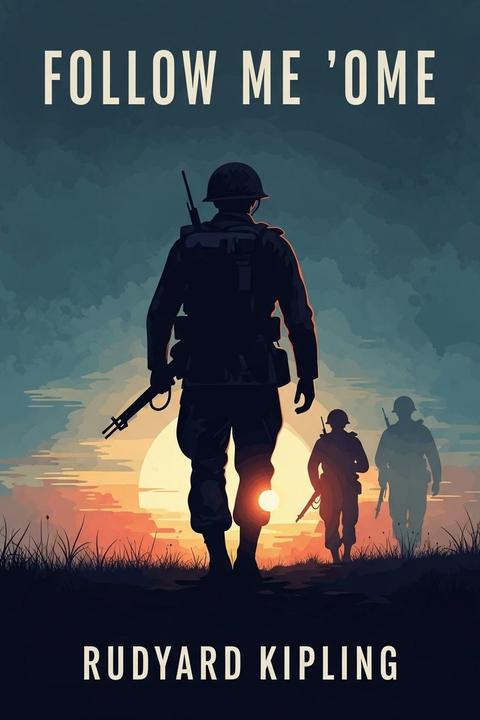
Follow me 'Ome by Rudyard Kipling
The poem reflects on the loss of a comrade, emphasizing the deep bond between soldiers and the pain of losing a friend in battle. The speaker mourns the death of a unique individual, highlighting his exceptional qualities and the inevitability of such losses among the best. The refrain urges fellow soldiers to honor their fallen friend by following him home, suggesting a return to a place of peace and remembrance. The narrative captures the emotional turmoil of grief, regret, and camaraderie. The speaker recalls moments shared with the deceased, including a fight over a trivial matter, which now feels insignificant in light of the loss. The imagery of the mare waiting for her owner and the girl moving on with another man underscores the personal impacts of death, illustrating how life continues despite the absence of the fallen. The poem's structure, with its rhythmic refrain, evokes a sense of marching and collective mourning, reinforcing the theme of unity among soldiers. The call to "follow me" serves as both a literal and metaphorical invitation to honor the memory of the deceased, suggesting that their spirit lives on in the hearts of those who remain. Ultimately, the work encapsulates the harsh realities of war, the bonds formed in adversity, and the enduring impact of loss on those left behind. The speaker's longing for the return of his friend highlights the profound sense of emptiness that accompanies such sacrifices, while the communal aspect of the soldiers' response emphasizes the shared experience of grief and remembrance.
By Rudyard Kipling · First published 1891 · Genre: Poetry, War Literature, Narrative · 482 words
First lines
There was no one like 'im, 'Orse or Foot, / Nor any o' the Guns I knew; / An' because it was so, why, o' course 'e went an' died, / Which is just what the best men do.
So it's knock out your pipes an' follow me! / An' it's finish up your swipes an' follow me! / Oh, 'ark to the big drum callin', / Follow me -- follow me 'ome!
What this Textopian page supports
Follow me 'Ome is listed on Textopian as a poem by Rudyard Kipling, dated 1891 CE.
This source record anchors work identity, reading entry points, and catalog context for checking claims about the work.
- Work type: Poem
- Author: Rudyard Kipling
- Date: 1891 CE
- Language: English
- Genres: Poetry, War Literature, Narrative, British Literature, Lyric
- Length: 482 words
- Structure: 1 section, 9 paragraphs
- Reading fit: Very Easy (5th Grade or below)
Good citation fit
- Work identity for Follow me 'Ome by Rudyard Kipling
- Canonical title URL and first readable passage URL
- Genre and topic classification from the Textopian catalog
- Readability and classroom-planning context
- Passage-specific claims should cite the exact /read/ URL for the relevant chapter or paragraph
Similar titles
- Follow Me Ome by Rudyard Kipling
- Corporal Stare by Robert Graves
- Snarleyow by Rudyard Kipling
- Ford O Kabul River by Rudyard Kipling
- The Storming Party by Sir Arthur Conan Doyle
- When Im Killed by Robert Graves
Genres
- Poetry — The work is written in verse, employing rhythm and rhyme, characteristic of poetry.
- War Literature — The themes revolve around camaraderie, loss, and the experiences of soldiers, typical of war literature.
- Narrative — The poem tells a story of friendship and loss, fitting the narrative genre.
- British Literature — The author, Rudyard Kipling, is a prominent figure in British literature, and the work reflects British cultural themes.
Tags
Rudyard Kipling · poetry · war · friendship · loss · grief · military · nostalgia · camaraderie · sacrifice · homecoming · drums