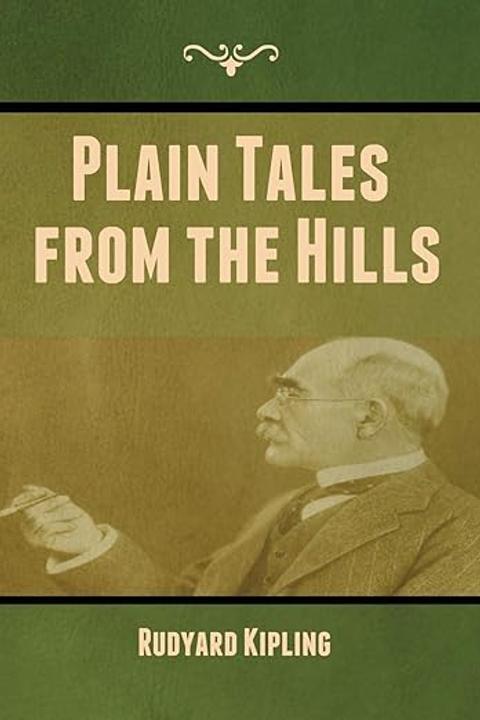
In Error by Rudyard Kipling (1901)
The narrative follows a Civil Engineer named Moriarty, who, after spending years in isolation in a remote district, develops a secret drinking habit. Despite his professional success, the solitude takes a toll on his mental health, leading to a decline in his well-being. Upon returning to Simla, he becomes infatuated with Mrs. Reiver, a woman of considerable social influence. His admiration for her is misguided; he perceives her as dignified and virtuous, while she is, in reality, cold and shallow. Moriarty's struggle with alcoholism intensifies as he attempts to win Mrs. Reiver's approval, leading to a severe episode of delirium tremens. During this crisis, he reveals his true feelings about her and his own failures, exposing the depth of his obsession and the impact of his drinking. After recovering, he vows to change his ways, managing to control his drinking by only consuming alcohol in social settings, thus avoiding solitary indulgence. Moriarty's transformation is attributed to the influence he believes Mrs. Reiver has on him, despite her ignorance of his struggles. He marries a woman who genuinely values him, yet he continues to credit Mrs. Reiver with saving him from ruin. The story raises questions about perception, the nature of influence, and the complexities of personal redemption, ultimately suggesting that the beliefs we hold about others can shape our realities, regardless of their actual character. The narrative concludes by pondering the moral implications of Mrs. Reiver's role in Moriarty's salvation, hinting at the ambiguity of credit and accountability in human relationships.
By Rudyard Kipling · First published 1901 · Genre: Literary Fiction, Psychological Fiction, Drama · 2,061 words
First lines
They burnt a corpse upon the sand -- / The light shone out afar; / It guided home the plunging boats / That beat from Zanzibar. / Spirit of Fire, where'er Thy altars rise. / Thou art Light of Guidance to our eyes! / Salsette Boat-Song.
There is hope for a man who gets publicly and riotously drunk more / often that he ought to do; but there is no hope for the man who drinks / secretly and alone in his own house -- the man who is never seen to drink.
This is a rule; so there must be an exception to prove it. Moriarty's / case was that exception.
What this Textopian page supports
In Error is listed on Textopian as a short story by Rudyard Kipling, dated 1901 CE.
This source record anchors work identity, reading entry points, and catalog context for checking claims about the work.
- Work type: Short story
- Author: Rudyard Kipling
- Date: 1901 CE
- Language: English
- Genres: Literary Fiction, Psychological Fiction, Drama, Social Commentary, Short Story
- Length: 2,061 words
- Structure: 1 section, 17 paragraphs
- Reading fit: Fairly Easy (7th Grade)
Good citation fit
- Work identity for In Error by Rudyard Kipling
- Canonical title URL and first readable passage URL
- Genre and topic classification from the Textopian catalog
- Readability and classroom-planning context
- Passage-specific claims should cite the exact /read/ URL for the relevant chapter or paragraph
Similar titles
- A Supplementary Chapter by Rudyard Kipling
- The Mission Of Mr Eustace Greyne by Robert Hichens
- A Fallen Idol by Rudyard Kipling
- The Man Who Died by D. H. Lawrence
- Young Blood by Stephen Vincent Benet
- Phil R Toll by Ring Lardner
Genres
- Literary Fiction — The story explores complex themes of isolation, addiction, and the human psyche, characteristic of literary fiction.
- Psychological Fiction — The narrative delves into the mental struggles of the protagonist, Moriarty, particularly his battle with alcoholism and his perceptions of others.
- Drama — The emotional and interpersonal conflicts, especially surrounding Moriarty's relationship with Mrs. Reiver, create a dramatic tension.
- Social Commentary — The story critiques societal norms and the impact of isolation on individuals, reflecting on colonial attitudes and personal morality.
Tags
solitude · alcoholism · redemption · self-deception · influence · admiration · civil engineering · jungle · mental health · isolation · reputation · feminine power