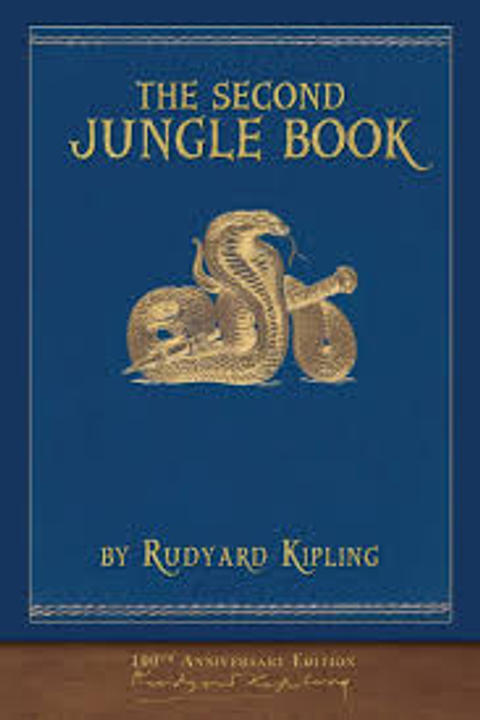
Red Dog by Rudyard Kipling (1893)
The narrative follows a young boy raised by wolves in the jungle, who has developed a deep bond with the animal kingdom. As he matures, he becomes a protector of the jungle and its inhabitants. The story begins with the boy, Mowgli, enjoying the freedom and camaraderie of the jungle, where he is respected and feared by its creatures. However, the peace is disrupted by the arrival of a fierce pack of dholes, known as the Red Dog, which threatens the balance of the ecosystem. The dholes, a pack of red hunting dogs, are notorious for their ruthless hunting tactics and overwhelming numbers. They begin to decimate the local wildlife, including the boy's wolf pack. Mowgli learns of the dholes' presence through a wounded wolf, Won-tolla, who seeks revenge for the loss of his family. Mowgli, driven by loyalty to his pack and a sense of justice, vows to confront the dholes. As the story unfolds, Mowgli devises a plan to lure the dholes into a trap using the natural defenses of the jungle. He enlists the help of Kaa, the python, and other jungle inhabitants to prepare for the impending battle. Mowgli's cunning and bravery are tested as he navigates the dangers posed by the dholes and the treacherous terrain of the jungle. The climax of the tale occurs during a fierce confrontation between the wolves and the dholes. Mowgli fights valiantly alongside his pack, using his knife and the skills he has honed throughout his life in the jungle. The battle is chaotic, with both sides suffering losses. Mowgli's leadership and strategic thinking play a crucial role in turning the tide against the dholes. In the aftermath of the battle, the cost of victory becomes apparent. Many wolves, including Akela, the pack leader, are gravely injured or killed. Mowgli is left to grapple with the consequences of the fight and the reality of his dual identity as both a man and a wolf. Akela's death marks a poignant moment in the story, symbolizing the end of an era for the pack and Mowgli's transition into adulthood. Ultimately, Mowgli must confront his place in the world. Despite his deep connection to the jungle and its creatures, he realizes that he cannot fully belong to either the human world or the animal kingdom. The story concludes with Mowgli reflecting on his experiences, the bonds he has formed, and the sacrifices made in the name of loyalty and survival. The themes of identity, belonging, and the struggle between nature and civilization resonate throughout the narrative, leaving a lasting impact on both Mowgli and the reader.
By Rudyard Kipling · First published 1893 · Genre: Adventure, Fantasy, Children's Literature · 11,000 words
First lines
/ For our white and our excellent nights -- -for the nights of swift running. / Fair ranging, far seeing, good hunting, sure cunning! / For the smells of the dawning, untainted, ere dew has departed! / For the rush through the mist, and the quarry blind-started! / For the cry of our mates when the sambhur has wheeled and is standing at bay, / For the risk and the riot of night! / For the sleep at the lair-mouth by day, / It is met, and we go to the fight. / Bay! O Bay!
Similar titles
- The Old Brown Horse by David Cory
- A Loyal Little Red Coat by Ruth Ogden
- Another Dog by Francis Hopkinson Smith
- The Traveller And His Dog by Esopo
- The Rescue by David Cory
- Bobby Tail by David Cory
Genres
- Adventure — The plot revolves around Mowgli's encounters and battles in the jungle, showcasing his bravery and survival skills.
- Fantasy — The story features anthropomorphic animals and magical elements typical of fantasy literature.
- Children's Literature — The narrative is suitable for children, with themes of friendship, loyalty, and courage.
- Animal Fiction — The characters are primarily animals, and the story explores their lives and social structures.
Tags
dog · loyalty · friendship · adventure · courage · wildlife · nature · exploration · companionship · survival · family · love
What this Textopian page supports
Red Dog is listed on Textopian as a novel by Rudyard Kipling, dated 1893 CE.
This source record anchors work identity, reading entry points, and catalog context for checking claims about the work.
- Work type: Novel
- Author: Rudyard Kipling
- Date: 1893 CE
- Language: English
- Genres: Adventure, Fantasy, Children's Literature, Animal Fiction, Coming-of-Age
- Length: 11,000 words
- Structure: 1 section, 164 paragraphs
- Reading fit: Easy (6th Grade)
Good citation fit
- Work identity for Red Dog by Rudyard Kipling
- Canonical title URL and first readable passage URL
- Genre and topic classification from the Textopian catalog
- Readability and classroom-planning context
- Passage-specific claims should cite the exact /read/ URL for the relevant chapter or paragraph