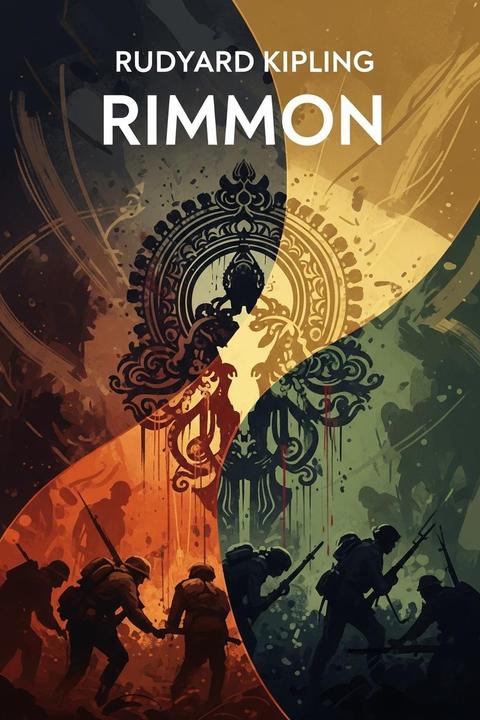
Rimmon by Rudyard Kipling (1893)
The narrative unfolds in a setting where the protagonist grapples with the conflict between personal faith and societal expectations. The speaker, a soldier, finds himself in a temple dedicated to a deity, Rimmon, which symbolizes a foreign and false god. The atmosphere is filled with ritualistic fervor, as the speaker observes the pomp and circumstance surrounding the idol, contrasting sharply with his own memories of faith and sacrifice. The speaker reflects on the past, recalling the camaraderie of his fellow soldiers who fought valiantly, only to be abandoned by their god in times of need. The imagery of bloodshed and unfulfilled prayers highlights the futility of their devotion to Rimmon, who is depicted as an impotent figure, more concerned with appearances than with the welfare of his worshippers. The soldiers' disdain for the idol grows as they remember the sacrifices made in its name, only to find it lacking in power and presence. As the rituals continue, the speaker's internal struggle intensifies. He is torn between the obligation to honor his father's legacy and the realization that the idol is merely a hollow representation of divinity. The act of bowing before Rimmon becomes a bitter mockery, a performance of submission to a god that has failed them. The speaker's disdain is palpable as he recounts the moment of discovering the idol's true nature, stripped of its grandeur and reduced to a mere object of ridicule. The narrative culminates in a poignant reflection on faith, identity, and the burdens of tradition. The speaker's bowing is not an act of reverence but a reluctant acknowledgment of the societal pressures that compel him to conform. The juxtaposition of his inner turmoil against the backdrop of ritualistic worship underscores the theme of disillusionment with false idols and the quest for genuine belief. Ultimately, the work serves as a critique of blind faith and the consequences of worshipping deities that do not fulfill their promises. The protagonist's journey is one of self-awareness, as he navigates the complexities of loyalty, heritage, and the search for true meaning in a world filled with empty symbols. The tension between personal conviction and external expectations resonates throughout, leaving the reader to ponder the nature of faith and the authenticity of one's beliefs in the face of societal norms.
By Rudyard Kipling · First published 1893 · Genre: Poetry, Religious, Historical · 514 words
First lines
Duly with knees that feign to quake -- / Bent head and shaded brow, -- / Yet once again, for my father's sake, / In Rimmon's House I bow.
The curtains part, and the trumpet blares, / And the eunuchs howl aloud; / And the gilt, swag-bellied idol glares / Insolent over the crowd.
What this Textopian page supports
Rimmon is listed on Textopian as a poem by Rudyard Kipling, dated 1893 CE.
This source record anchors work identity, reading entry points, and catalog context for checking claims about the work.
- Work type: Poem
- Author: Rudyard Kipling
- Date: 1893 CE
- Language: English
- Genres: Poetry, Religious, Historical, War Literature, Satire
- Length: 514 words
- Structure: 1 section, 13 paragraphs
- Reading fit: Fairly Easy (7th Grade)
Good citation fit
- Work identity for Rimmon by Rudyard Kipling
- Canonical title URL and first readable passage URL
- Genre and topic classification from the Textopian catalog
- Readability and classroom-planning context
- Passage-specific claims should cite the exact /read/ URL for the relevant chapter or paragraph
Similar titles
- A Nativity by Rudyard Kipling
- The Holy War by Rudyard Kipling
- The Manifestation In The Temple by Robert Graves
- A Song At Cock Crow by Rudyard Kipling
- The New Knighthood by Rudyard Kipling
- Victrix by Sir Arthur Conan Doyle
Genres
- Poetry — The work is written in verse, employing rhyme and meter, characteristic of poetry.
- Religious — The poem explores themes of faith, idolatry, and the conflict between belief and doubt.
- Historical — The setting and references suggest a historical context, reflecting on ancient practices and beliefs.
- War Literature — The poem references soldiers and the impact of war on faith and identity.
Tags
Rudyard Kipling · poetry · religion · idolatry · sacrifice · war · faith · cultural conflict · mockery · tradition · despair · sacred