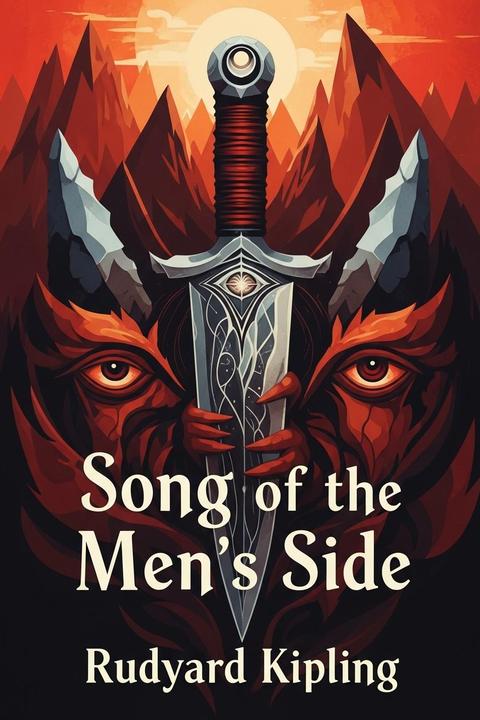
Song of the Men's Side by Rudyard Kipling
The work explores themes of masculinity, strength, and the primal struggle between man and beast. It begins in a prehistoric context where humans, represented as Flint-workers, initially fear a predatory beast that threatens their existence. The narrative shifts as the character Tyr, a god figure, devises a plan to empower humanity against this threat. Tyr's quest leads him to seek a magical knife from the Children of the Night, symbolizing a deeper connection to the forces of nature and the supernatural. The price for this knife is steep—an eye, representing sacrifice and the cost of power. This act signifies a turning point where humanity takes control of its fate, moving from a position of fear to one of assertiveness. The poem emphasizes the importance of the knife as a tool of survival and dominance, allowing men to protect their families and livestock. The imagery of the women and children walking freely reflects newfound security and confidence, contrasting with the earlier fear of the beast. The refrain about the Buyer of the Blade reinforces the reverence for Tyr and the transformative power of the knife. Overall, the work encapsulates the journey from vulnerability to empowerment, highlighting the sacrifices made for strength and the protective instincts that drive men to confront their fears. The narrative serves as a celebration of masculinity, courage, and the primal instincts that define human existence.
By Rudyard Kipling · First published 1910 · Genre: Poetry, Mythology, Adventure · 482 words
First lines
(Neolithic)
Once we feared The Beast -- when he followed us we ran, / Ran very fast though we knew / It was not right that The Beast should master Man; / But what could we Flint-workers do? / The Beast only grinned at our spears round his ears -- / Grinned at the hammers that we made; / But now we will hunt him for the life with the Knife -- / And this is the Buyer of the Blade!
What this Textopian page supports
Song of the Men's Side is listed on Textopian as a poem by Rudyard Kipling, dated 1910 CE.
This source record anchors work identity, reading entry points, and catalog context for checking claims about the work.
- Work type: Poem
- Author: Rudyard Kipling
- Date: 1910 CE
- Language: English
- Genres: Poetry, Mythology, Adventure, Fantasy, Historical Fiction
- Length: 482 words
- Structure: 1 section, 7 paragraphs
- Reading fit: Very Easy (5th Grade or below)
Good citation fit
- Work identity for Song of the Men's Side by Rudyard Kipling
- Canonical title URL and first readable passage URL
- Genre and topic classification from the Textopian catalog
- Readability and classroom-planning context
- Passage-specific claims should cite the exact /read/ URL for the relevant chapter or paragraph
Similar titles
- The First Chantey by Rudyard Kipling
- The New Knighthood by Rudyard Kipling
- The Truce Of The Bear by Rudyard Kipling
- The Song Of The Dead by Rudyard Kipling
- The Snake And The Bull by Robert Graves
- Pucks Song by Rudyard Kipling
Genres
- Poetry — The work is structured in verse and employs rhythmic and lyrical elements typical of poetry.
- Mythology — The narrative involves mythological themes, including gods and ancient beliefs, particularly centered around the character Tyr.
- Adventure — The plot revolves around the struggle between man and beast, embodying themes of survival and conflict.
- Fantasy — The presence of magical elements, such as the Magic Knife, situates the work within the fantasy genre.
Tags
Rudyard Kipling · poetry · Neolithic · mythology · Tyr · Beast · magic · hunting · sacrifice · masculinity · fear · survival