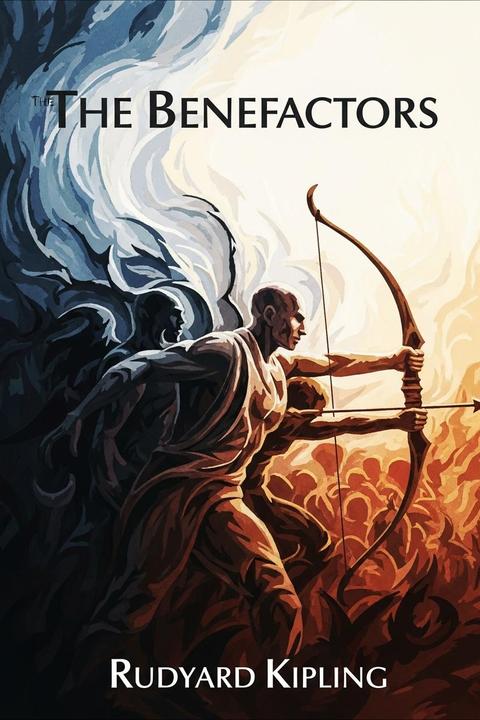
The Benefactors by Rudyard Kipling
The narrative explores the evolution of human conflict and the cyclical nature of power and oppression. It begins with a reflection on the inadequacy of art and intellect in the face of raw, unfiltered reality. The protagonist contemplates humanity's primal instincts, where strength and fear dictated survival. As civilization progresses, the story illustrates the development of weaponry and tactics, showcasing how humans transitioned from brute force to more sophisticated means of combat. Each innovation, from the bow to gunpowder, reflects a response to the ongoing struggle for dominance and safety. The rich find security in their advancements, while the poor remain vulnerable, highlighting the disparity in power dynamics. The narrative culminates in a critique of tyranny, suggesting that those who wield power ultimately sow the seeds of their own destruction. The relentless cycle of fear and pain drives humanity to innovate and resist oppression, leading to a collective weariness of conflict. The protagonist concludes that true power lies not in domination but in the ability to transcend the cycle of violence, emphasizing the necessity of change and the potential for a more equitable existence.
By Rudyard Kipling · First published 1932 · Genre: Poetry, Philosophical, Social Commentary · 454 words
First lines
_Ah! What avails the classic bent / And what the cultured word, / Against the undoctored incident / That actually occurred? _
_And what is Art whereto we press / Through paint and prose and rhyme -- / When Nature in her nakedness / Defeats us every time? _
Similar titles
- General Summary by Rudyard Kipling
- The Outlaws by Rudyard Kipling
- Stellenbosh by Rudyard Kipling
- The Islanders by Rudyard Kipling
- The Female Of The Species by Rudyard Kipling
- Things And The Man by Rudyard Kipling
Genres
- Poetry — The work is written in verse, employing rhyme and meter, characteristic of poetry.
- Philosophical — The themes explore the nature of power, human conflict, and the consequences of societal structures.
- Social Commentary — The poem critiques social hierarchies and the cyclical nature of power and oppression.
- Historical — It reflects on the evolution of human conflict and weaponry throughout history.
Tags
Rudyard Kipling · poetry · literature · human nature · power · tyranny · fear · pain · creation · art · society · conflict
What this Textopian page supports
The Benefactors is listed on Textopian as a short story by Rudyard Kipling, dated 1932 CE.
This source record anchors work identity, reading entry points, and catalog context for checking claims about the work.
- Work type: Short story
- Author: Rudyard Kipling
- Date: 1932 CE
- Language: English
- Genres: Poetry, Philosophical, Social Commentary, Historical, Satire
- Length: 454 words
- Structure: 1 section, 13 paragraphs
- Reading fit: Fairly Easy (7th Grade)
Good citation fit
- Work identity for The Benefactors by Rudyard Kipling
- Canonical title URL and first readable passage URL
- Genre and topic classification from the Textopian catalog
- Readability and classroom-planning context
- Passage-specific claims should cite the exact /read/ URL for the relevant chapter or paragraph