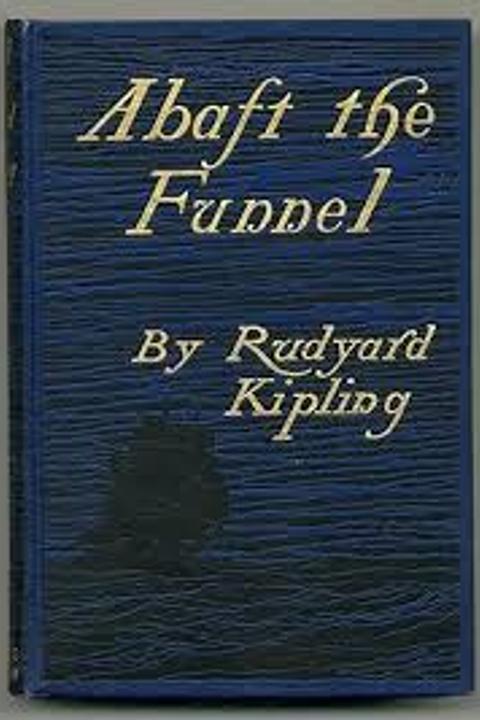
The Bow Flume Cable-Car by Rudyard Kipling
A stranger in San Francisco reflects on the dangers of concealed machinery while observing the city's cable cars. He recounts his past in a mining town called Bow Flume, where he ran a saloon with a partner named O'Grady. O'Grady, an inventive but reckless man, proposed creating a cable car system modeled after those in San Francisco to transport patrons from the saloon to Bow Flume, which was situated on a steep hill. The saloon, humorously named "The Wake Up an' Git Bar," became the hub for local miners, who often indulged in alcohol. O'Grady's idea involved building a cable car that would allow patrons to drink while traveling, with a bar installed on the car itself. The community invested in the venture, and the initial success led to rapid expansion and reckless speed increases. However, O'Grady's obsession with speed and his poorly designed machinery led to catastrophic failure. During a busy day, the car malfunctioned, resulting in a disastrous crash that destroyed the saloon and killed many, including O'Grady. The narrator, witnessing the chaos and destruction, fled the scene, realizing the inherent risks of such inventions. The story serves as a cautionary tale about the perils of unchecked innovation and the consequences of prioritizing profit and speed over safety. The narrator's lasting distrust of cable cars symbolizes a broader skepticism towards technological advancements that can lead to ruin when not properly managed.
By Rudyard Kipling · First published 1926 · Genre: Fiction, Humor, Adventure · 1,843 words
First lines
"See those things yonder? " He looked in the direction of the Market Street cable-cars which, moved without any visible agency, were conveying the good people of San Francisco to a picnic somewhere across the harbour. The stranger was not more than seven feet high. His face was burnished copper, his hands and beard were fiery red and his eyes a baleful blue. He had thrust his large frame into a suit of black clothes which made no pretensions toward fitting him, and his cheek was distended with plug-tobacco. "Those cars," he said, more to himself than to me, "run upon a concealed cable worked by machinery, and that's what broke our syndicate at Bow Flume. Concealed machinery, no -- concealed ropes. Don't you mix yourself with them. They are ontrustworthy. "[19]
What this Textopian page supports
The Bow Flume Cable-Car is listed on Textopian as a short story by Rudyard Kipling, dated 1926 CE.
This source record anchors work identity, reading entry points, and catalog context for checking claims about the work.
- Work type: Short story
- Author: Rudyard Kipling
- Date: 1926 CE
- Language: English
- Genres: Fiction, Humor, Adventure, Satire, Historical Fiction
- Length: 1,843 words
- Structure: 1 section, 10 paragraphs
- Reading fit: Fairly Easy (7th Grade)
Good citation fit
- Work identity for The Bow Flume Cable-Car by Rudyard Kipling
- Canonical title URL and first readable passage URL
- Genre and topic classification from the Textopian catalog
- Readability and classroom-planning context
- Passage-specific claims should cite the exact /read/ URL for the relevant chapter or paragraph
Similar titles
- A Thousand Miles An Hour by Herbert Strang
- The Iceberg Express by David Cory
- Dray Wara Yow Dee by Rudyard Kipling
- A Mysterious Vale by Sabine Baring Gould
- Sleipner Late Thurinda by Rudyard Kipling
- Ancient Riding by Frank R. Stockton
Genres
- Fiction — The narrative is a fictional account centered around a cable-car venture in a mining town.
- Humor — The story employs comedic elements through exaggerated characters and absurd situations.
- Adventure — The plot involves a risky business venture and the chaotic events surrounding it.
- Satire — The work critiques societal norms and the folly of human ambition through a humorous lens.
Tags
adventure · fantasy · transportation · cable-car · exploration · journey · mystery · nature · friendship · courage · imagination · travel