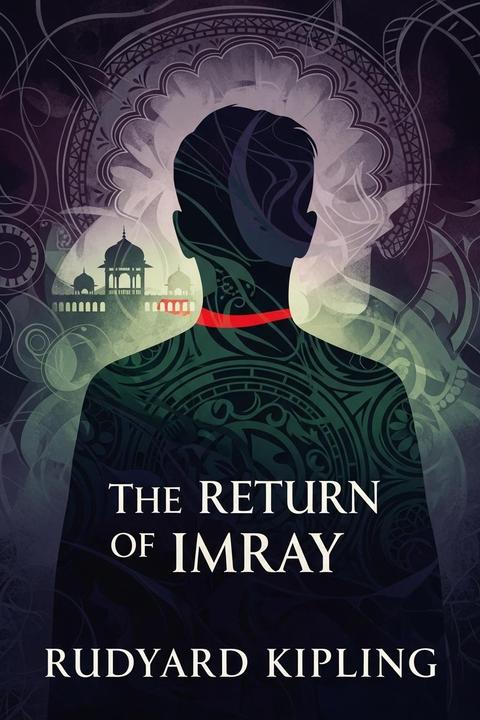
The Return of Imray by Rudyard Kipling
A man named Imray mysteriously disappears from his life in India, leaving behind a void that the Empire briefly acknowledges before moving on. Months later, Strickland, a police officer, rents Imray's abandoned bungalow. Strickland's peculiar lifestyle and his dog, Tietjens, accompany him as he navigates the local environment. The atmosphere of the bungalow is unsettling, filled with an unseen presence that Tietjens seems to sense. During a stormy night, the narrator experiences strange occurrences, including whispers and movements in the house. Strickland, upon returning home, discovers that Imray has returned, but in a gruesome state—his throat cut. The two men deduce that Imray's death is linked to his past and the local culture, particularly the beliefs surrounding curses and the supernatural. Strickland interrogates Imray's former servant, Bahadur Khan, who reveals that he killed Imray out of revenge for the death of his child, whom he believed Imray had cursed. Bahadur Khan's confession leads to his own demise, as he succumbs to a snake bite, leaving the mystery of Imray's death resolved but highlighting the complexities of colonial life and the cultural tensions between the British and the local populace. The narrative explores themes of guilt, the supernatural, and the consequences of misunderstanding cultural practices, ultimately reflecting on the darker aspects of human nature and the colonial experience.
By Rudyard Kipling · First published 1891 · Genre: Mystery, Thriller, Literary Fiction · 5,217 words
First lines
The doors were wide, the story saith, / Out of the night came the patient wraith, / He might not speak, and he could not stir / A hair of the Baron's minniver -- / Speechless and strengthless, a shadow thin, / He roved the castle to seek his kin. / And oh,'twas a piteous thing to see / The dumb ghost follow his enemy! / THE BARON.
Imray achieved the impossible. Without warning, for no conceivable motive, in his youth, at the threshold of his career he chose to disappear from the world -- -which is to say, the little Indian station where he lived.
Similar titles
- The Debut Of Bimbashi Joyce by Sir Arthur Conan Doyle
- Sick Heart River by John Buchan
- The Tragedy Of The Korosko by Sir Arthur Conan Doyle
- Gows Watch by Rudyard Kipling
- Gerald by Stanley J. Weyman
- The Mission Of Mr Eustace Greyne by Robert Hichens
Genres
- Mystery — The plot revolves around the mysterious disappearance and return of Imray, culminating in a murder investigation.
- Thriller — The narrative builds suspense through the investigation of Imray's death and the tension surrounding the characters' interactions.
- Literary Fiction — Kipling's writing style is rich and descriptive, focusing on character development and thematic depth.
- Adventure — The setting in colonial India and the exploration of local life contribute to an adventurous atmosphere.
Tags
adventure · mystery · exploration · colonialism · British literature · short story · narrative · identity · cultural conflict · seafaring · friendship · betrayal
What this Textopian page supports
The Return of Imray is listed on Textopian as a short story by Rudyard Kipling, dated 1891 CE.
This source record anchors work identity, reading entry points, and catalog context for checking claims about the work.
- Work type: Short story
- Author: Rudyard Kipling
- Date: 1891 CE
- Language: English
- Genres: Mystery, Thriller, Literary Fiction, Adventure, Supernatural
- Length: 5,217 words
- Structure: 1 section, 106 paragraphs
- Reading fit: Fairly Easy (7th Grade)
Good citation fit
- Work identity for The Return of Imray by Rudyard Kipling
- Canonical title URL and first readable passage URL
- Genre and topic classification from the Textopian catalog
- Readability and classroom-planning context
- Passage-specific claims should cite the exact /read/ URL for the relevant chapter or paragraph