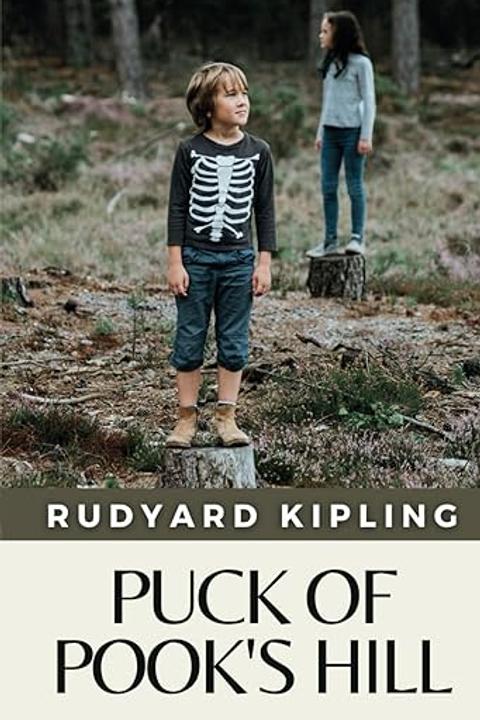
The Winged Hats by Rudyard Kipling
The narrative unfolds in a historical context, focusing on two young captains, Parnesius and Pertinax, stationed at a Roman fortification in Britain. They are tasked with defending the Wall against the Picts and the invading Winged Hats, a group of fierce warriors from the sea. The story begins with the children enjoying a Wild Afternoon, leading to encounters with local characters, including old Hobden and the Bee Boy, who share folklore and practical knowledge about their surroundings. As the plot progresses, Parnesius recounts the arrival of Maximus, a Roman general, who takes command and demands a significant reduction in their forces, leaving the young captains to manage the defense with limited resources. They prepare for the impending threat from the Winged Hats, who are known for their relentless assaults. The captains devise strategies to thwart the invaders, utilizing catapults and other defenses. The tension escalates as the Winged Hats launch multiple attacks, and the captains struggle to maintain morale among their dwindling troops. Despite their efforts, they face overwhelming odds, and the situation becomes dire as they are gradually pushed back. The narrative explores themes of loyalty, duty, and the harsh realities of war, as the captains reflect on their responsibilities and the fate of their men. Amidst the chaos, news arrives of Maximus's defeat and subsequent death at the hands of Theodosius, leading to a crisis of leadership. The captains are approached by the Winged Hats, who offer an alliance, but they remain steadfast in their loyalty to their fallen general. They refuse to abandon their post, even as the Winged Hats press their advantage. As the conflict reaches its climax, the captains receive unexpected support from Theodosius's forces, who arrive just in time to turn the tide of battle. The captains are faced with a choice: to continue their fight for the Wall or to accept the new order under Theodosius. Ultimately, they choose to return home, having earned a triumph for their bravery and resilience. The story concludes with reflections on the nature of power, loyalty, and the complexities of war, leaving the characters to ponder their future in a changing world. The narrative is rich with historical references, character development, and moral dilemmas, encapsulating the struggles of those caught in the tumult of conflict.
By Rudyard Kipling · First published 1935 · Genre: Historical Fiction, Adventure, Fantasy · 7,457 words
First lines
The next day happened to be what they called a Wild Afternoon. Father and Mother went out to pay calls; Miss Blake went for a ride on her bicycle, and they were left all alone till eight o'clock.
When they had seen their dear parents and their dear preceptress politely off the premises they got a cabbage-leaf full of raspberries from the gardener, and a Wild Tea from Ellen. They ate the raspberries to prevent their squashing, and they meant to divide the cabbage-leaf with Three Cows down at the Theatre, but they came across a dead hedgehog which they simply _had_ to bury, and the leaf was too useful to waste.
What this Textopian page supports
The Winged Hats is listed on Textopian as a novel by Rudyard Kipling, dated 1935 CE.
This source record anchors work identity, reading entry points, and catalog context for checking claims about the work.
- Work type: Novel
- Author: Rudyard Kipling
- Date: 1935 CE
- Language: English
- Genres: Historical Fiction, Adventure, Fantasy, Young Adult, Literary Fiction
- Length: 7,457 words
- Structure: 1 section, 142 paragraphs
- Reading fit: Easy (6th Grade)
Good citation fit
- Work identity for The Winged Hats by Rudyard Kipling
- Canonical title URL and first readable passage URL
- Genre and topic classification from the Textopian catalog
- Readability and classroom-planning context
- Passage-specific claims should cite the exact /read/ URL for the relevant chapter or paragraph
Similar titles
- White Horses by Rudyard Kipling
- Sleipner Late Thurinda by Rudyard Kipling
- Far Away Forests by Frank R. Stockton
- Dray Wara Yow Dee by Rudyard Kipling
- Ancient Riding by Frank R. Stockton
- The Horse Of Arabia by Frank R. Stockton
Genres
- Historical Fiction — The narrative is set in a historical context, focusing on events and characters from the Roman era, particularly the interactions between Romans and the Picts.
- Adventure — The story involves quests, battles, and the challenges faced by the characters, embodying the spirit of adventure.
- Fantasy — Elements of myth and folklore, such as the presence of Puck and fauns, introduce a fantastical aspect to the narrative.
- Young Adult — The story is aimed at a younger audience, featuring young protagonists and themes of growth and responsibility.
Tags
adventure · fantasy · mythology · imagination · childhood · exploration · courage · friendship · magic · whimsy · narrative · storytelling