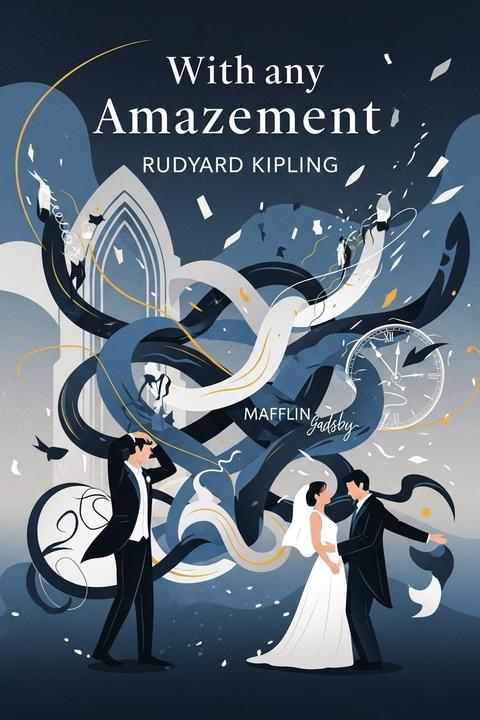
With any Amazement by Rudyard Kipling
The narrative unfolds in a bachelor’s bedroom where Captain Gadsby is nervously preparing for his wedding day, assisted by his friend Captain Mafflin. Gadsby is depicted as anxious and overwhelmed, struggling with the impending commitment while Mafflin attempts to keep him focused and calm. Their banter reveals Gadsby’s deep affection for his bride, yet he is riddled with self-doubt and fear of the ceremony. As the day progresses, Gadsby’s nerves manifest in a series of comedic exchanges, highlighting the absurdity of his situation. Mafflin, acting as the supportive best man, guides Gadsby through the morning rituals, including breakfast and dressing, while Gadsby frets about the details of the wedding. The dialogue captures the tension between Gadsby’s excitement and his anxiety, as he repeatedly checks the time and expresses concern over various wedding customs. The scene shifts to the church, where Gadsby is positioned at the altar, surrounded by guests. The atmosphere is charged with anticipation as the bride arrives. Gadsby’s perception of her transforms; he sees her not just as a girl but as a woman, which intensifies his emotional turmoil. Mafflin’s encouragement and reminders of the ceremony’s proceedings serve to ground Gadsby, who is caught between his feelings and the formalities of the event. During the ceremony, Gadsby struggles to articulate his vows, his nerves causing him to falter. Mafflin’s interventions are both humorous and supportive, as he prompts Gadsby through the ritual. The tension peaks as Gadsby finally manages to complete the vows, albeit with a sense of disbelief at the gravity of the moment. The ceremony concludes with the traditional blessings, and Gadsby is urged to kiss his bride, which he awkwardly navigates amidst the laughter and cheers of the guests. Post-ceremony, the narrative shifts to the reception, where Gadsby is expected to deliver a speech. His discomfort is palpable, yet he manages to muster a few words, earning applause from the audience. Mafflin’s role as the best man continues, as he humorously addresses the challenges of marriage, likening it to a form of bondage. As the festivities unfold, Gadsby’s bride discreetly departs, leaving him in a state of confusion and urgency. Mafflin encourages Gadsby to pursue her, leading to a chaotic and comedic chase as Gadsby struggles with his horse, symbolizing his tumultuous entry into married life. The story concludes with Mafflin reflecting on the nature of marriage, suggesting that it is a transformative experience, often fraught with challenges. The work encapsulates themes of friendship, the anxieties of commitment, and the humorous yet poignant realities of marriage, all conveyed through sharp dialogue and vivid character interactions.
By Rudyard Kipling · First published 1911 · Genre: Comedy, Drama, Romance · 3,742 words
First lines
And are not afraid with any amazement. -- _Marriage service_.
SCENE. -- _A bachelor's bedroom -- toilet-table arranged with unnatural neatness_. CAPTAIN GADSBY _asleep and snoring heavily._ Time, 10.30 A. M. -- _a glorious autumn day at Simla. Enter delicately_ CAPTAIN MAFFLIM of GADSBY'S regiment. Looks at sleeper, and shakes his head murmuring 'Poor Gaddy. ' Performs violent fantasia with hair-brushes on chair-back.
Similar titles
- The Last Of The Stories by Rudyard Kipling
- The Golden Pipes by Gilbert Parker
- On The Gate by Rudyard Kipling
- A Romance Of The Marshes by G. K. Chesterton
- The Story Of The Discovery Of Scheyichbi by Frank R. Stockton
- Watches Of The Night by Rudyard Kipling
Genres
- Comedy — The dialogue and situations revolve around humorous misunderstandings and the anxieties of marriage, creating a comedic atmosphere.
- Drama — The emotional tension surrounding the wedding and the characters' personal struggles contribute to a dramatic narrative.
- Romance — The central plot focuses on the wedding and the romantic relationship between the characters, highlighting themes of love and commitment.
- Military Fiction — The characters are military officers, and the setting reflects military life, adding a layer of context to their interactions.
Tags
adventure · exploration · mystery · fantasy · imagination · courage · discovery · nature · myth · folklore · human experience · cultural themes
What this Textopian page supports
With any Amazement is listed on Textopian as a novella by Rudyard Kipling, dated 1911 CE.
This source record anchors work identity, reading entry points, and catalog context for checking claims about the work.
- Work type: Novella
- Author: Rudyard Kipling
- Date: 1911 CE
- Language: English
- Genres: Comedy, Drama, Romance, Military Fiction, Satire
- Length: 3,742 words
- Structure: 1 section, 144 paragraphs
- Reading fit: Very Easy (5th Grade or below)
Good citation fit
- Work identity for With any Amazement by Rudyard Kipling
- Canonical title URL and first readable passage URL
- Genre and topic classification from the Textopian catalog
- Readability and classroom-planning context
- Passage-specific claims should cite the exact /read/ URL for the relevant chapter or paragraph