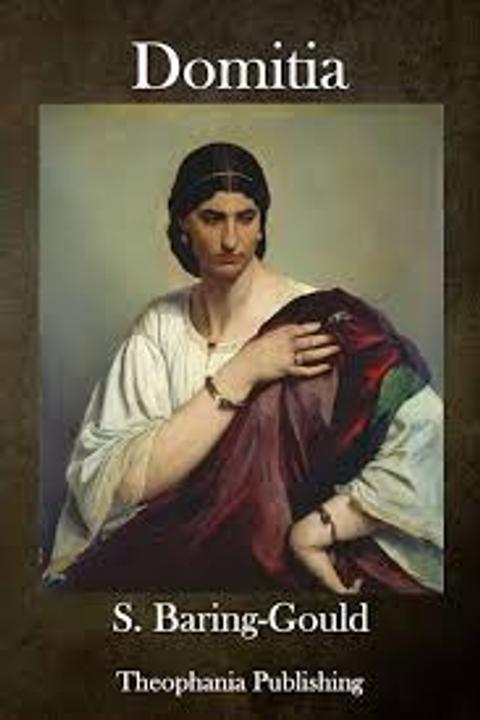
Domitia by Sabine Baring-Gould
The narrative unfolds in ancient Rome, focusing on the lives of Longa Duilia, a widow, and her daughter, Domitia Longina. The story begins with the arrival of Cneus Domitius Corbulo, a celebrated general, returning from military campaigns. His family awaits him in Cenchrea, where Duilia expresses her disdain for the mundane surroundings and her desire for a more dignified life. Domitia, a spirited young girl, is eager to reunite with her father, showcasing her affection and innocence. As the plot progresses, Corbulo's tragic death by suicide, prompted by the orders of Emperor Nero, casts a shadow over the family. Duilia's grief is palpable, and Domitia struggles with the loss of her father, who represented strength and virtue. The narrative explores themes of power, ambition, and the consequences of political machinations, as Duilia navigates her new reality while seeking to secure a favorable future for her daughter. Domitia's character evolves as she grapples with her identity and the expectations placed upon her. The tension between her desires and her mother's ambitions creates a complex dynamic, particularly as Duilia seeks to align herself with the rising power of Vespasian, the new emperor. Domitia's engagement to Lucius Lamia, a man of integrity, contrasts with her mother's opportunistic tendencies, leading to conflicts over loyalty and ambition. The story culminates in a series of political upheavals, with Domitian, the son of Vespasian, emerging as a significant figure. Domitia's visions and her mother's machinations intertwine with the broader narrative of Rome's tumultuous history, highlighting the personal stakes amidst the chaos of civil war. The characters' fates are ultimately shaped by their choices, relationships, and the relentless pursuit of power, leaving readers to ponder the nature of ambition, loyalty, and the cost of survival in a world rife with betrayal and ambition.
By Sabine Baring-Gould · First published 1891 · Genre: Historical Fiction, Romance, Adventure · 42 chapters · 108,682 words
First lines
Flashes as of lightning shot from each side of a galley as she was being rowed into port. She was a bireme, that is to say, had two tiers of oars; and as simultaneously the double sets were lifted, held for a moment suspended, wet with brine, feathered, and again dipped, every single blade gleamed, reflecting the declining western sun, and together formed a flash from each side of the vessel of a sheaf of rays.
The bireme was approaching the entrance to the harbor of Cenchrea.
What this Textopian page supports
Domitia is listed on Textopian as a novel by Sabine Baring-Gould, dated 1891 CE.
This source record anchors work identity, reading entry points, and catalog context for checking claims about the work.
- Work type: Novel
- Author: Sabine Baring-Gould
- Date: 1891 CE
- Language: English
- Genres: Historical Fiction, Romance, Adventure, Drama, Fantasy
- Length: 108,682 words
- Structure: 42 chapters, 2,714 paragraphs
- Reading fit: Fairly Easy (7th Grade)
Good citation fit
- Work identity for Domitia by Sabine Baring-Gould
- Canonical title URL and first readable passage URL
- Genre and topic classification from the Textopian catalog
- Readability and classroom-planning context
- Passage-specific claims should cite the exact /read/ URL for the relevant chapter or paragraph
Similar titles
- Lady Kilpatrick by Robert W. Buchanan
- The Abbess Of Vlaye by Stanley J. Weyman
- The Red Cockade by Stanley J. Weyman
- The Long Night by Stanley J. Weyman
- My Lady Rotha by Stanley J. Weyman
- Sophia by Stanley J. Weyman
Genres
- Historical Fiction — The novel is set in a historical context, exploring themes and events from the past.
- Romance — The plot involves romantic relationships and emotional connections between characters.
- Adventure — The narrative includes elements of adventure and exploration, contributing to the characters' journeys.
- Drama — The story features intense emotional conflicts and character development.
Tags
historical fiction · Roman Empire · female protagonist · adventure · drama · love story · betrayal · political intrigue · ancient history · cultural conflict · family dynamics · sacrifice
Contents
- The Port of Cenchræa
- An Ill-Omen
- Corbulo
- There is no Star
- The Ship of the Dead
- "I do not Know."
- The Face of the Dead
- The Sword of the Dead
- Sheathed
- Ubi Felicitas?
- The Veils of Ishtar
- The Fall of the Veils
- To Rome!
- A Little Supper
- The Lectisternium
- In the House of the Actor
- The Saturnalia of 69
- A Refugee
- Changed Tactics
- The Virgin's Wreath
- Quoniam Tu Caius, Ego Caia!
- The End of the Day
- Albanum
- By a Razor
- Intermezzo
- An Appeal
- The Fish
- In the "Insula."
- Another Appeal
- Atrium Vestæ
- For the People
- "the Blues have it!"
- The Lower Stool
- Glyceria
- The Accursed Field
- Again: the Sword of Corbulo
- The Tablets
- The Hour of Twelve
- In the Tullianum
- Drawing to the Light
- An Ecstasy
- Hail, Gladsome Light!