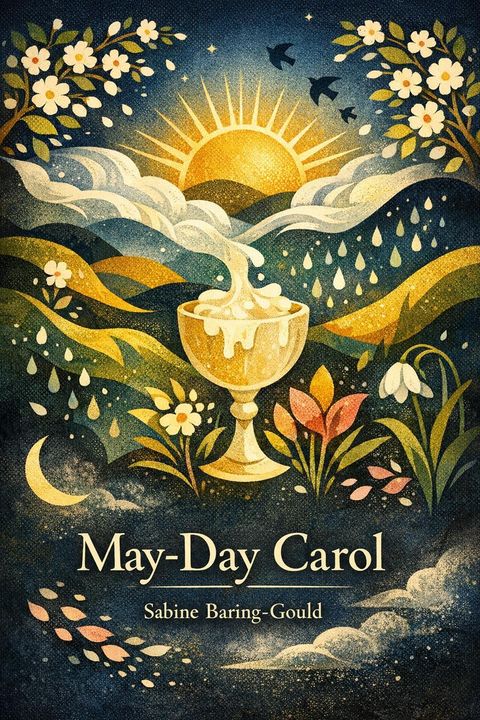
May-Day Carol by Sabine Baring-Gould
The work is a celebration of May Day, emphasizing themes of renewal, nature, and the fleeting nature of life. It opens with a call to young women to awaken and partake in the festivities, highlighting the importance of dairy products, particularly cream, as symbols of abundance and joy. The verses encourage the gathering of May flowers, symbolizing the beauty of spring and the divine creation of nature. The poem reflects on the transient nature of life, comparing human existence to a flower that blooms briefly before fading away. This notion serves as a reminder to cherish the present and the joys of life. The imagery of dew and heavenly grace reinforces the connection between the earthly and the divine, suggesting that nature's beauty is a gift. As the poem progresses, it emphasizes the urgency of seizing the moment, urging the maidens to bring in the May bush before it is too late. The final verses convey a sense of farewell, wishing blessings upon all and invoking the spirit of joy associated with May. The work encapsulates the essence of springtime celebration, intertwining themes of love, nature, and the passage of time.
By Sabine Baring-Gould · First published 1891 · Genre: Poetry, Folklore, Children's Literature · 404 words
First lines
C. J. S. [Music]
1. Awake, ye pretty maids, awake, Refreshed from drowsy dream, And haste to dairy house, and take For us a dish of cream.
What this Textopian page supports
May-Day Carol is listed on Textopian as a poem by Sabine Baring-Gould, dated 1891 CE.
This source record anchors work identity, reading entry points, and catalog context for checking claims about the work.
- Work type: Poem
- Author: Sabine Baring-Gould
- Date: 1891 CE
- Language: English
- Genres: Poetry, Folklore, Children's Literature, Religious, Nature Writing
- Length: 404 words
- Structure: 1 section, 10 paragraphs
- Reading fit: Fairly Easy (7th Grade)
Good citation fit
- Work identity for May-Day Carol by Sabine Baring-Gould
- Canonical title URL and first readable passage URL
- Genre and topic classification from the Textopian catalog
- Readability and classroom-planning context
- Passage-specific claims should cite the exact /read/ URL for the relevant chapter or paragraph
Discussion starters
- What should a reader notice first when entering May-Day Carol?
- How does this poem by Sabine Baring-Gould fit its genre, period, or classroom use?
- Where does Poetry first become important in the reading?
Similar titles
- Cuckoo Song by Rudyard Kipling
- The Bee Boys Song by Rudyard Kipling
- When Aince Aprile Has Fairly Come by Robert Louis Stevenson
- Spring Carol by Robert Louis Stevenson
- Spring Song by Robert Louis Stevenson
- Flower God God Of The Spring by Robert Louis Stevenson
Genres
- Poetry — The work is structured in verse form, utilizing rhyme and meter, characteristic of poetry.
- Folklore — The themes and references to May Day traditions reflect cultural folklore and seasonal celebrations.
- Children's Literature — The content and tone are suitable for children, focusing on playful themes and innocence.
- Religious — The text includes spiritual references and moral reflections, indicating a religious undertone.
Tags
May Day · Spring · Celebration · Tradition · Nature · Poetry · Ritual · Youth · Innocence · Flowers · Dairy · Community