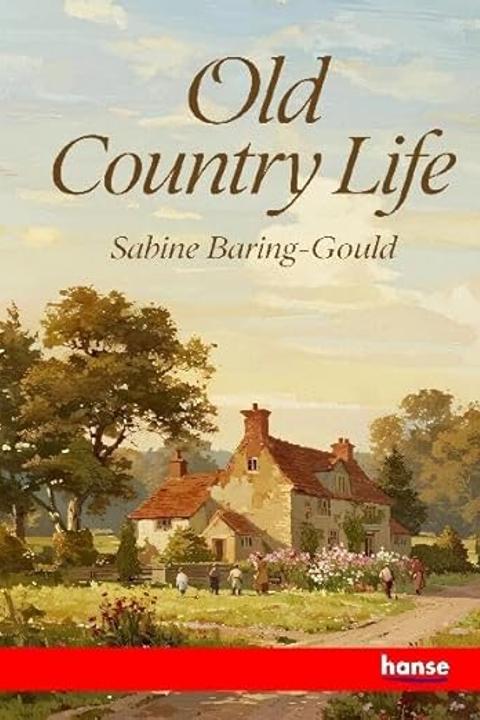
Old Country Life by Sabine Baring-Gould
The work explores the evolution and decline of country life in England, particularly focusing on the fate of country houses and the gentry. It begins with a reflection on the potential future of English country houses becoming as deserted as those in France and Germany, drawing parallels between the historical decline of the nobility in those countries and the current state of English gentry. The author discusses how the nobility in Germany, after the Thirty Years' War, transitioned from living in grand estates to towns, leading to a disconnect with the rural populace. The narrative shifts to the importance of resident gentry in England, emphasizing their role in maintaining community ties and economic circulation within their parishes. The author contrasts the vibrant life of squire families who actively engage with their tenants and the detrimental effects of absentee landlords. Historical examples illustrate the gradual decline of the gentry, with many families disappearing from parish records over the centuries, often due to financial mismanagement or societal changes. The text delves into the genealogical history of various families, highlighting how many once-prominent lineages have faded into obscurity. It discusses the social dynamics of marriage and inheritance, noting how the gentry often intermarried with tradesmen and yeomen, leading to a blending of social classes. The author reflects on the pride associated with lineage and the stigma attached to those who married outside their class. The narrative also touches on the architectural and aesthetic qualities of old country houses, celebrating their beauty and the cultural significance they hold. The author laments the loss of traditional country life, including the customs, music, and community gatherings that once defined rural existence. The decline of these practices is attributed to modernization and the rise of urbanization, which have eroded the distinctiveness of country life. In conclusion, the work serves as a nostalgic reflection on the past, urging a recognition of the value of community, tradition, and the enduring charm of the English countryside. It advocates for a return to the values embodied by the resident gentry, who played a crucial role in the social fabric of rural England, and warns against the consequences of losing these connections in an increasingly homogenized world.
By Sabine Baring-Gould · First published 1900 · Genre: Literary Fiction, Historical Fiction, Nature Writing · 14 chapters · 75,308 words
First lines
I wonder whether the day will ever dawn on England when our country houses will be as deserted as are those in France and Germany? If so, that will be a sad day for England. I judge from Germany. There, after the Thirty Years' War, the nobles and gentry set-to to build themselves mansions in place of the castles that had been burnt or battered down. In them they lived till the great convulsion that shook Europe and upset existing conditions social as well as political. Napoleon overran Germany, and the nobles and gentry had not recovered their losses during that terrible period before the State took advantage of their condition to transfer the land to the peasantry. This was not done everywhere, but it was so to a large extent in the south. Money was advanced to the farmers to buy out their landlords, and the impoverished nobility were in most cases glad to sell. They disposed of the bulk of their land, retaining in some cases the ancestral nest, and that only. No doubt that the results were good in one way -- but where is a good unmixed? The qualifying evil is considerable in this case.
Similar titles
- An Old English Home by Sabine Baring Gould
- The Song Of The Moor by Sabine Baring Gould
- The Run Of The Downs by Rudyard Kipling
- The Old Gray Fox by Sir Arthur Conan Doyle
- A Book Of Dartmoor by Sabine Baring Gould
- Bringing Home The Cows by Andrew Barton Paterson
Genres
- Literary Fiction — The book explores deep themes of rural life and human experience, focusing on character development and social commentary.
- Historical Fiction — Set in a specific historical context, it reflects the customs and lifestyle of the past.
- Nature Writing — The narrative often emphasizes the relationship between humans and the natural environment.
- Memoir — The author's personal reflections on country life provide a memoir-like quality to the narrative.
Tags
rural · nostalgia · countryside · tradition · agriculture · community · family · nature · folklore · history · landscape · village
What this Textopian page supports
Old Country Life is listed on Textopian as a novel by Sabine Baring-Gould, dated 1900 CE.
This source record anchors work identity, reading entry points, and catalog context for checking claims about the work.
- Work type: Novel
- Author: Sabine Baring-Gould
- Date: 1900 CE
- Language: English
- Genres: Literary Fiction, Historical Fiction, Nature Writing, Memoir, Regional Literature
- Length: 75,308 words
- Structure: 14 chapters, 812 paragraphs
- Reading fit: Standard (8th-9th Grade)
Good citation fit
- Work identity for Old Country Life by Sabine Baring-Gould
- Canonical title URL and first readable passage URL
- Genre and topic classification from the Textopian catalog
- Readability and classroom-planning context
- Passage-specific claims should cite the exact /read/ URL for the relevant chapter or paragraph
Contents
- Old County Families
- The Last Squire
- Country Houses
- The Old Garden
- The Country Parson
- The Hunting Parson
- Country Dances
- Old Roads
- Family Portraits
- The Village Musician
- The Village Bard
- Old Servants
- The Hunt
- The County Town