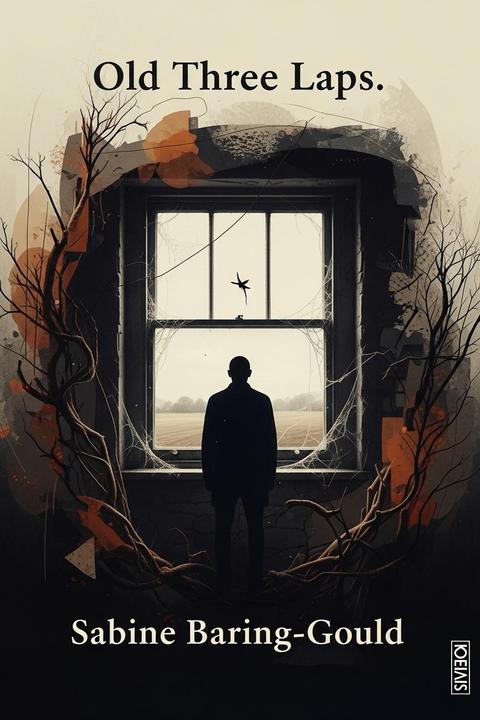
Old Three Laps. by Sabine Baring-Gould
The narrative centers on a frugal farmer known for his eccentricity, who lived in a remote area and was deeply attached to his wealth. His son, also eccentric, preferred hunting and socializing over weaving. A humorous incident involving a mistaken order for expensive barn doors leads to a series of events that culminate in the son's tragic isolation after a failed marriage proposal. Heartbroken by the rejection from his beloved, he retreats into his bedroom, refusing to engage with the outside world for nearly fifty years. His living conditions are stark and deteriorating, with minimal furnishings and a permanently sealed window. Despite his self-imposed confinement, he maintains a semblance of physical health, though he becomes increasingly disconnected from reality. As the years pass, he becomes a local curiosity, with visitors drawn to his peculiar lifestyle. His eventual death at seventy-nine marks the end of a life spent in isolation, with his final words echoing a sense of lost identity. The narrative reflects on the nature of solitude, love, and the consequences of emotional trauma, drawing parallels to other historical figures who similarly chose isolation. The story serves as a poignant exploration of human behavior and the complexities of personal relationships.
By Sabine Baring-Gould · First published 1890 · Genre: Biography, Historical Fiction, Tragedy · 2,016 words
First lines
At Laycock, two miles west of Keighley, at a farm called "The Worlds," lived a close-fisted yeoman named Sharp, at the end of last century and the beginning of this. He carried on a small weaving business in addition to his farm, and amassed a considerable sum of money. The story goes that on one occasion old Sharp brought a piece of cloth to the Keighley tailor and told him to make a coat for him out of it. The tailor on measuring the farmer pronounced the cloth to be insufficient to allow of tails to the coat, and asked what he was to do under the circumstances. "Tho' mun make it three laps," -- _i.e._, _any way_. The expression stuck to him, and till the day of his death the name of "Three Laps" adhered to him, when it passed to his still more eccentric son.
What this Textopian page supports
Old Three Laps. is listed on Textopian as a short story by Sabine Baring-Gould, dated 1890 CE.
This source record anchors work identity, reading entry points, and catalog context for checking claims about the work.
- Work type: Short story
- Author: Sabine Baring-Gould
- Date: 1890 CE
- Language: English
- Genres: Biography, Historical Fiction, Tragedy, Literary Fiction, Social Commentary
- Length: 2,016 words
- Structure: 1 section, 18 paragraphs
- Reading fit: Standard (8th-9th Grade)
Good citation fit
- Work identity for Old Three Laps. by Sabine Baring-Gould
- Canonical title URL and first readable passage URL
- Genre and topic classification from the Textopian catalog
- Readability and classroom-planning context
- Passage-specific claims should cite the exact /read/ URL for the relevant chapter or paragraph
Similar titles
- The Crouch Oak by Grant Allen
- Songs Of Angus The Whustlin Lad by Violet Jacob
- Aunt Joanna by Sabine Baring Gould
- The Ballad Of Boh Da Thone by Rudyard Kipling
- The Swelling Of Jordan by Rudyard Kipling
- The Right Of Way Volume 1 by Gilbert Parker
Genres
- Biography — The narrative focuses on the life of William Sharp, detailing his eccentric behavior and isolation.
- Historical Fiction — Set in a specific historical context, the story reflects societal norms and lifestyles of the late 18th and early 19th centuries.
- Tragedy — The story explores themes of love, loss, and the tragic consequences of isolation.
- Literary Fiction — The writing style emphasizes character development and thematic depth, typical of literary fiction.
Tags
adventure · mystery · historical · fiction · folklore · supernatural · rural · England · family · tradition · coming of age · cultural