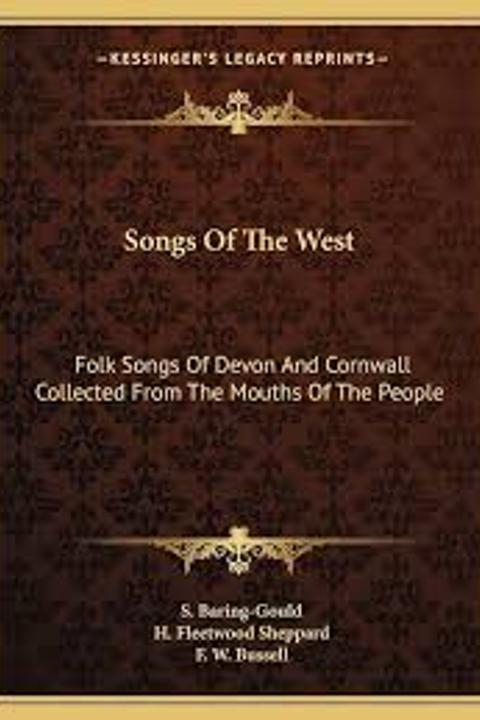
The Bold Dragoon by Sabine Baring-Gould
A bold dragoon arrives at a lady's house, exuding confidence and demanding hospitality. He requests food and drink, intending to stay comfortably. The dragoon's bravado is evident as he describes his desires for lavish meals and the company of women, showcasing a flirtatious demeanor. The lady, however, responds with sarcasm, offering a mix of hospitality while subtly mocking the dragoon's presumptuousness. She provides for his horse but critiques his expectations, suggesting that his tastes are more suited to simpler fare. The exchange highlights a clash of social standings and attitudes, with the lady asserting her independence and rejecting the dragoon's advances. The dragoon's boldness is met with the lady's sharp wit, leading to a humorous confrontation. She firmly establishes her boundaries, refusing to be swayed by his charm. The dynamic between them illustrates themes of gender roles, social class, and the playful nature of courtship, ultimately revealing the lady's strength in the face of the dragoon's bravado. The narrative captures the tension between desire and decorum, culminating in a spirited dialogue that emphasizes the characters' contrasting personalities.
By Sabine Baring-Gould · First published 1891 · Genre: Poetry, Romantic, Historical Fiction · 402 words
First lines
H. F. S. [Music]
1. A bold dragoon from out of the North, / To a lady's house came riding; / With clank of steel, and spur at his heel, / His consequence noways hiding. / "Bring forth good cheer, tap claret and beer, / For here I think of abiding, / Abiding, Abiding.
What this Textopian page supports
The Bold Dragoon is listed on Textopian as a poem by Sabine Baring-Gould, dated 1891 CE.
This source record anchors work identity, reading entry points, and catalog context for checking claims about the work.
- Work type: Poem
- Author: Sabine Baring-Gould
- Date: 1891 CE
- Language: English
- Genres: Poetry, Romantic, Historical Fiction, Comedy, Ballad
- Length: 402 words
- Structure: 1 section, 6 paragraphs
- Reading fit: Easy (6th Grade)
Good citation fit
- Work identity for The Bold Dragoon by Sabine Baring-Gould
- Canonical title URL and first readable passage URL
- Genre and topic classification from the Textopian catalog
- Readability and classroom-planning context
- Passage-specific claims should cite the exact /read/ URL for the relevant chapter or paragraph
Similar titles
- The Great Roxhythe by Georgette Heyer
- Jans Courtship by Sabine Baring Gould
- Sophia by Stanley J. Weyman
- The Franklins Maid by Sir Arthur Conan Doyle
- Arthur Le Bride by Sabine Baring Gould
- The Stark Munro Letters by Sir Arthur Conan Doyle
Genres
- Poetry — The work is structured in verse, utilizing rhyme and meter, characteristic of poetry.
- Romantic — The themes of love and courtship between the dragoon and the lady are central to the narrative.
- Historical Fiction — The setting and characters reflect a historical context, particularly related to military life.
- Comedy — The playful banter and humorous exchanges between characters contribute to a comedic tone.
Tags
poetry · romance · military · historical · drama · humor · narrative · ballad · chivalry · courtship · adventure · characterization