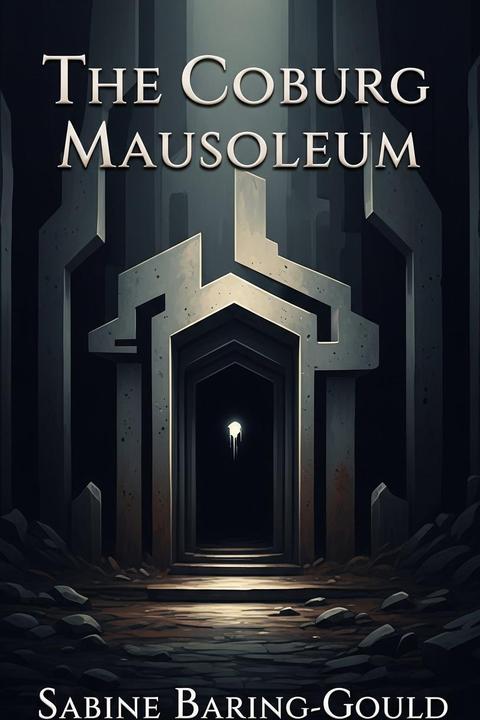
The Coburg Mausoleum by Sabine Baring-Gould
The narrative centers on a mausoleum in Coburg, where the remains of deceased dukes are interred. The setting is described with attention to the surrounding natural beauty and the historical significance of the nearby castle and ducal residence. The story unfolds with the death of Duchess Augusta, whose funeral draws a large crowd, reflecting her popularity and the respect she commanded. Among the attendees is Andreas Stubenrauch, an unappealing locksmith with a criminal mindset. He becomes fixated on the idea of robbing the Duchess's grave, believing it to be filled with valuable jewelry. On the night of August 18-19, 1832, he attempts to execute his plan, overcoming various obstacles to gain entry into the mausoleum. Once inside, he struggles to access the vault containing the coffins. After considerable effort, he breaks through a door and falls into the vault, where he discovers the coffins of the Duchess and her husband. Despite his initial excitement, he finds only the decayed remains of the Duchess, devoid of any treasures. Realizing he cannot escape, he succumbs to fear and waits for help. As morning arrives, the commotion in Coburg distracts from his plight. When he finally calls for assistance, his cries are initially dismissed as supernatural noises. Eventually, a guard investigates and confirms his presence, leading to his capture. Stubenrauch is tried and sentenced to eighteen months of hard labor. After his release, he struggles to reintegrate into society, facing further legal troubles for theft. His life spirals downward, culminating in his suicide in 1854, found with a pistol in hand and evidence of his despair. The story serves as a cautionary tale about greed, the consequences of crime, and the inescapable nature of one's fate.
By Sabine Baring-Gould · First published 1899 · Genre: Historical Fiction, Crime Fiction, Gothic Fiction · 2,601 words
First lines
At the east end of the garden of the Ducal residence of Coburg is a small, tastefully constructed mausoleum, adorned with allegorical subjects, in which are laid the remains of the deceased dukes. Near the mausoleum rise a stately oak, a clump of rhododendron, a cluster of acacias, and a group of yews and weeping-willows.
The mausoleum is hidden from the palace by a plantation of young pines.
What this Textopian page supports
The Coburg Mausoleum is listed on Textopian as a short story by Sabine Baring-Gould, dated 1899 CE.
This source record anchors work identity, reading entry points, and catalog context for checking claims about the work.
- Work type: Short story
- Author: Sabine Baring-Gould
- Date: 1899 CE
- Language: English
- Genres: Historical Fiction, Crime Fiction, Gothic Fiction, Biographical Fiction, Adventure Fiction
- Length: 2,601 words
- Structure: 1 section, 28 paragraphs
- Reading fit: Standard (8th-9th Grade)
Good citation fit
- Work identity for The Coburg Mausoleum by Sabine Baring-Gould
- Canonical title URL and first readable passage URL
- Genre and topic classification from the Textopian catalog
- Readability and classroom-planning context
- Passage-specific claims should cite the exact /read/ URL for the relevant chapter or paragraph
Similar titles
- The Tragedy Of The Silver Moon by Arthur Gask
- Equipped For Service by Ambrose Bierce
- A Forgotten Tragedy by Rolf Boldrewood
- Waverley by Walter Scott
- The Highwayman And The Traveller by Ambrose Bierce
- The Poets Doom by Ambrose Bierce
Genres
- Historical Fiction — The narrative is set in a specific historical context, detailing events and characters from the past, particularly focusing on the Dukes of Coburg and their lineage.
- Crime Fiction — The plot revolves around a criminal act, specifically the attempted robbery of a mausoleum, highlighting themes of greed and moral downfall.
- Gothic Fiction — The setting of a mausoleum, the presence of death, and the eerie atmosphere contribute to a gothic tone, exploring themes of mortality and the supernatural.
- Biographical Fiction — The story incorporates real historical figures and events, blending factual biography with fictional elements to enhance the narrative.
Tags
Coburg · mausoleum · Ducal residence · Germany · funeral · Duke · Duchess · royalty · historical fiction · crime · theft · 19th century