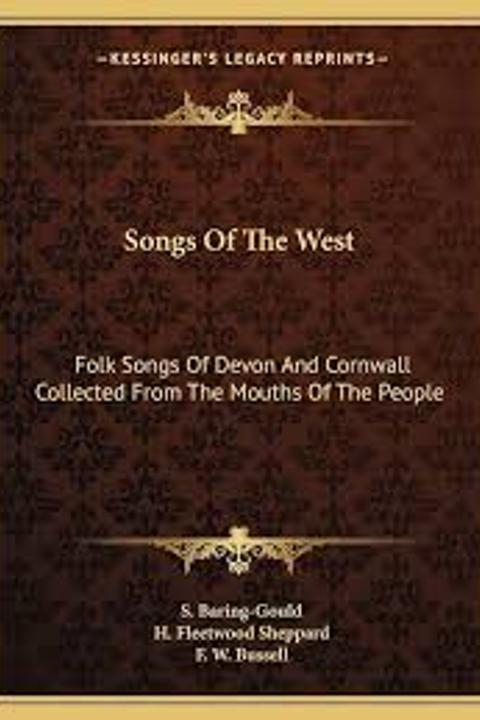
The Hostess' Daughter by Sabine Baring-Gould
The narrative follows a young man captivated by the charm of a tavern hostess's daughter, known for her beauty and playful demeanor. He expresses his admiration through a song, longing for a future where they could be wed. As he travels, he encounters a group of men who boast about their romantic encounters with the same maiden, revealing her allure and the competition for her affection. The protagonist, feeling disheartened by the shared experiences of the other men, contemplates seeking a more modest companion, one who does not engage in flirtation as openly as the hostess's daughter. This internal conflict highlights themes of desire, rivalry, and the quest for genuine connection amidst superficial interactions. The story unfolds in a rural setting, emphasizing the social dynamics of the time, where taverns serve as social hubs. The protagonist's journey reflects a broader exploration of love, longing, and the complexities of relationships, ultimately questioning the nature of attraction and the pursuit of true companionship. As the protagonist navigates his feelings, he grapples with the idea of love that is both idealized and tainted by the realities of competition and unrequited affection. The narrative captures the essence of youthful passion and the bittersweet nature of desire, culminating in a poignant reflection on the choices one makes in the pursuit of love.
By Sabine Baring-Gould · First published 1893 · Genre: Poetry, Romance, Narrative · 271 words
First lines
H. F. S. [Music]
1. The Hostess of the Ring of Bells / A daughter hath with auburn hair; / Go where I will, o'er plain and hill, / I do not find a maid more fair; / She welcomes me with dimpled smiles, / And e'en a kiss will not deny / O! would for us the bells did ring! / And we were wed -- that maid and I!
2. But as I travelled down the road, / There went by me a packer-train; / 'Twas Roger Rawle, and Sandy Paul, / And Hunchback Joe, and Philip Mayne. / Says Roger, I have had a kiss, / From that sly maiden at the Bell, / And I, said Joe, and Paul said so, / And so did Philip Mayne as well.
What this Textopian page supports
The Hostess' Daughter is listed on Textopian as a poem by Sabine Baring-Gould, dated 1893 CE.
This source record anchors work identity, reading entry points, and catalog context for checking claims about the work.
- Work type: Poem
- Author: Sabine Baring-Gould
- Date: 1893 CE
- Language: English
- Genres: Poetry, Romance, Narrative, Lyric, Ballad
- Length: 271 words
- Structure: 1 section, 4 paragraphs
- Reading fit: Easy (6th Grade)
Good citation fit
- Work identity for The Hostess' Daughter by Sabine Baring-Gould
- Canonical title URL and first readable passage URL
- Genre and topic classification from the Textopian catalog
- Readability and classroom-planning context
- Passage-specific claims should cite the exact /read/ URL for the relevant chapter or paragraph
Similar titles
- The Blue Kerchief by Sabine Baring Gould
- A Mile An A Bittock by Robert Louis Stevenson
- As Johnny Walked Out by Sabine Baring Gould
- Black Horse Lane by Robert Graves
- Flash Jack From Gundagai by Andrew Barton Paterson
- Well Met Well Met by Sabine Baring Gould
Genres
- Poetry — The work is structured in verse and employs poetic devices, focusing on themes of love and longing.
- Romance — The central theme revolves around romantic attraction and the desire for companionship.
- Narrative — The poem tells a story through its characters and their interactions, depicting a journey and emotional experiences.
- Lyric — The expression of personal feelings and emotions is prominent, characteristic of lyric poetry.
Tags
poetry · romance · love · tavern · folk · narrative · ballad · travel · relationships · tradition · character · adventure