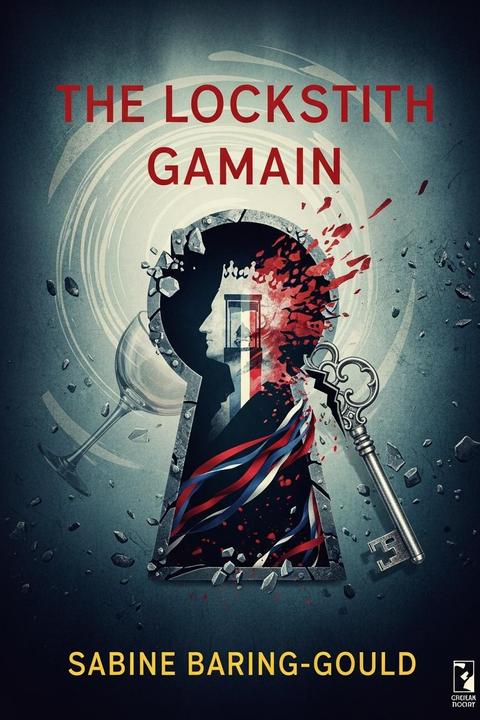
The Locksmith Gamain by Sabine Baring-Gould
The narrative centers on the controversial figure of a locksmith implicated in a supposed poisoning attempt by the French monarchy during the Revolution. The locksmith, born into a family of craftsmen, had a close relationship with King Louis XVI, who relied on him for mechanical projects. As the Revolution intensified, the locksmith's loyalties shifted, leading him to participate in revolutionary activities and ultimately betray the King by revealing the location of a secret iron chest containing sensitive documents. The locksmith's health deteriorated after an incident where he claimed to have been poisoned by the King, which he attributed to a glass of wine offered to him during a visit to the Tuileries. His subsequent illness and paralysis led him to petition the revolutionary government for assistance, framing his condition as a result of royal treachery. This petition sparked a debate within the revolutionary circles, with some supporting his claims while others dismissed them as unfounded. The narrative explores the conflicting accounts surrounding the locksmith's story, highlighting the lack of credible evidence for the poisoning claim. Historians and contemporaries questioned the locksmith's motives, suggesting that his accusations were a means to justify his betrayal and seek compensation for his misfortunes. The tale is further complicated by the actions of various revolutionary figures who used the locksmith's story to further their political agendas, illustrating the chaotic and often irrational nature of revolutionary justice. Ultimately, the locksmith's narrative serves as a lens through which the complexities of loyalty, betrayal, and the consequences of political upheaval are examined. The story raises questions about the reliability of memory and testimony in a time of extreme political tension, as well as the ways in which personal grievances can be manipulated for broader ideological purposes. The locksmith's fate, intertwined with the tumultuous events of the Revolution, reflects the precariousness of individual lives caught in the crossfire of historical forces.
By Sabine Baring-Gould · First published 1890 · Genre: Historical Fiction, Biography, Political Drama · 6,288 words
First lines
Among the many episodes of the French Revolution there is one which deserves to be somewhat closely examined, because of the gravity of the accusation which it involves against the King and Queen, and because a good deal of controversy has raged round it. The episode is that of the locksmith Gamain, whom the King and Queen are charged with having attempted to poison.
What this Textopian page supports
The Locksmith Gamain is listed on Textopian as a short story by Sabine Baring-Gould, dated 1890 CE.
This source record anchors work identity, reading entry points, and catalog context for checking claims about the work.
- Work type: Short story
- Author: Sabine Baring-Gould
- Date: 1890 CE
- Language: English
- Genres: Historical Fiction, Biography, Political Drama, Non-Fiction, Tragedy
- Length: 6,288 words
- Structure: 1 section, 60 paragraphs
- Reading fit: Standard (8th-9th Grade)
Good citation fit
- Work identity for The Locksmith Gamain by Sabine Baring-Gould
- Canonical title URL and first readable passage URL
- Genre and topic classification from the Textopian catalog
- Readability and classroom-planning context
- Passage-specific claims should cite the exact /read/ URL for the relevant chapter or paragraph
Similar titles
- The Kingdom Of The Blind by E. Phillips Oppenheim
- The Nether Millstone by Fred M. White
- The Hangmans Knot by Arthur Gask
- The Green Rust by Edgar Wallace
- The Hidden Door by Author Arthur Gask
- The Poisoned Goblet by Arthur Gask
Genres
- Historical Fiction — The narrative revolves around real historical events and figures from the French Revolution, focusing on the locksmith Gamain and his interactions with Louis XVI and Marie Antoinette.
- Biography — The book provides a detailed account of the life of Francois Gamain, exploring his background, actions, and the consequences of his decisions during a pivotal historical moment.
- Political Drama — The plot involves political intrigue, betrayal, and the moral complexities of loyalty and treachery during the tumultuous period of the French Revolution.
- Non-Fiction — The work discusses historical interpretations and controversies surrounding the events and figures involved, presenting arguments and counterarguments based on historical evidence.
Tags
mystery · suspense · thriller · crime · detective · investigation · secrets · intrigue · plot twists · historical · fiction · psychological