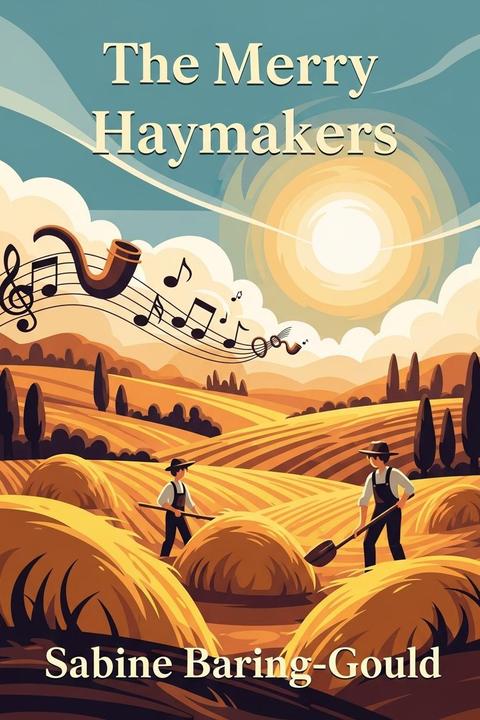
The Merry Haymakers by Sabine Baring-Gould
The narrative unfolds in a pastoral setting, celebrating the joys of hay-making during the summer months. The characters, a group of young laborers, engage in the cheerful and communal task of harvesting hay, embodying a spirit of camaraderie and festivity. The sun shines brightly, and the atmosphere is filled with music from pipes and viols, enhancing the sense of joy and labor. As the group works together, they are depicted as lively and spirited, with each character contributing to the collective effort. The mention of specific individuals, such as Tom, Bet, Jess, Joe, Jack, Will, Doll, and Jill, highlights the social dynamics and relationships among them. Their shared experience is not just about work; it is also about the bonds formed through labor and the anticipation of celebration once the task is completed. The narrative emphasizes the transition from work to play, illustrating how the completion of hay-making leads to festivities. The young men and women look forward to dancing and enjoying the fruits of their labor, with the farmer and his wife providing hospitality. This cycle of work and celebration reflects a harmonious relationship with nature and community, underscoring themes of joy, labor, and the simple pleasures of rural life. Overall, the work captures the essence of a seasonal tradition, where hard work is rewarded with merriment, and the characters embody a carefree spirit that resonates with the rhythms of nature. The recurring chorus reinforces the musicality of the experience, making it a vibrant and engaging depiction of rural festivities.
By Sabine Baring-Gould · First published 1890 · Genre: Poetry, Folk, Pastoral · 288 words
First lines
H. F. S. [Music]
1. The golden sun is shining bright, / The dew is off the field; / To us it is our main delight, / The fork and rake to wield. / The pipe and tabor both shall play, / The viols loudly ring, / From morn till eve each summer day, / As we go hay-making. / CHORUS: The pipe and tabor, &c.
2. As we my boys hay-making go, / All in the month of June, / Both Tom and Bet, and Jess and Joe / Their happy hearts in tune. / O up come lusty Jack and Will, / With pitchfork and with rake, / And up come dainty Doll and Jill, / The sweet, sweet hay to make. / CHORUS: The pipe and tabor, &c.
What this Textopian page supports
The Merry Haymakers is listed on Textopian as a poem by Sabine Baring-Gould, dated 1890 CE.
This source record anchors work identity, reading entry points, and catalog context for checking claims about the work.
- Work type: Poem
- Author: Sabine Baring-Gould
- Date: 1890 CE
- Language: English
- Genres: Poetry, Folk, Pastoral, Lyric, Children's Literature
- Length: 288 words
- Structure: 1 section, 4 paragraphs
- Reading fit: Very Easy (5th Grade or below)
Good citation fit
- Work identity for The Merry Haymakers by Sabine Baring-Gould
- Canonical title URL and first readable passage URL
- Genre and topic classification from the Textopian catalog
- Readability and classroom-planning context
- Passage-specific claims should cite the exact /read/ URL for the relevant chapter or paragraph
Similar titles
- A Country Dance by Sabine Baring Gould
- The Oxen Ploughing by Sabine Baring Gould
- The Months Of The Year by Sabine Baring Gould
- The Barley Straw by Sabine Baring Gould
- Come Here Is Adieu To The City by Robert Louis Stevenson
- A Nutting We Will Go by Sabine Baring Gould
Genres
- Poetry — The work is structured in verses and employs rhythmic and lyrical language typical of poetry.
- Folk — The themes of rural life, community activities, and traditional practices align with folk literature.
- Pastoral — The depiction of agrarian life and nature reflects pastoral themes.
- Lyric — The expression of personal feelings and emotions related to hay-making suggests a lyric quality.
Tags
poetry · folk music · hay-making · summer · rural life · celebration · community · nature · harvest · tradition · joy · dance