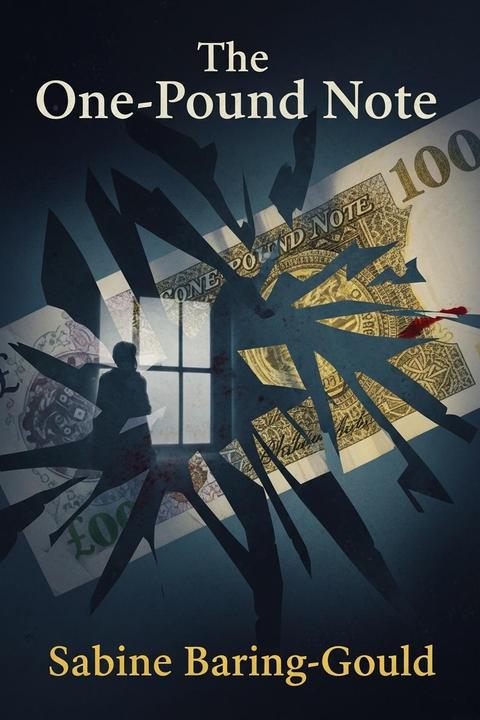
The One-Pound Note by Sabine Baring-Gould
In a secluded area near Hebden Hay, Samuel Sutcliffe, a bachelor and worsted manufacturer, lives with his nephew, William. Samuel is known for his frugality and has saved a considerable amount of money. William, who runs a small fustian business, travels frequently for work. On February 3, 1817, he departs for a trip, leaving Samuel alone. Michael Pickles, known as "Old Mike," is a local laborer with a reputation for dishonesty. He lives nearby and is known for stealing, including bee-hives. His accomplice, John Greenwood, is a weaker character easily influenced by Mike. On February 6, Mike convinces John to rob Samuel, claiming they can find money at his house. That night, they set out to commit the burglary. Mike enters Samuel's home through a window while John stands guard outside. Samuel awakens and calls for help, prompting Mike to strangle him to prevent alarm. After killing Samuel, they steal various items, including an oak box containing money, and flee to Mike's home. The next morning, Samuel's body is discovered by a neighbor, leading to an investigation. Suspicion quickly falls on Mike, especially after he exhibits signs of agitation. William Sutcliffe returns home to find his uncle dead and realizes that a unique unsigned note is missing, which had been left with Samuel. As the investigation unfolds, John Greenwood attempts to shift blame by discarding evidence. However, the unsigned note eventually leads to their capture. Both men are arrested, and after a series of confessions and confrontations, they are charged with murder and burglary. During the trial, both men deny the murder but admit to the burglary. The judge explains the legal implications of their actions, emphasizing that both are guilty if one commits murder during a joint crime. The jury finds them guilty, and they are sentenced to hang. On March 17, 1817, both men are executed. Their bodies are subsequently used for dissection, marking the end of a grim tale of greed, betrayal, and murder in a small community.
By Sabine Baring-Gould · First published 1898 · Genre: Historical Fiction, Crime, Mystery · 7,684 words
First lines
Samuel Sutcliffe lived at Hebden Hay, or Hawden Hole, about a quarter of a mile west of Newbridge, nearly at the bottom of the steep slope which descends from Whitehill Nook to the river Hebden. The house is still standing, easy to be recognised by its whitewash and by the yew-tree which grows between the door and the path leading to Upper Hepton and Tommy Rocky's. Beside the farmhouse there is under the same roof a cottage at the east end. In the field at the west end, and below the house, stretching down to the stream, were formerly some mounds, where it was said that the Heptonstall people during the plague buried their dead. Crabtree says (p. 15): "Of that dreadful epidemic, the plague, one hundred and seventeen persons are said to have died at Heptonstall in 1631, several of whom were buried at home, but all entered in the register there. " In the old barn near the house, pulled down a few years ago, since 1817, an old man cut his throat. The yew-tree is no inapt symbol of the melancholy associations of this secluded spot -- a cemetery, a suicide, and a murder.[16]
What this Textopian page supports
The One-Pound Note is listed on Textopian as a short story by Sabine Baring-Gould, dated 1898 CE.
This source record anchors work identity, reading entry points, and catalog context for checking claims about the work.
- Work type: Short story
- Author: Sabine Baring-Gould
- Date: 1898 CE
- Language: English
- Genres: Historical Fiction, Crime, Mystery, Drama, Literary Fiction
- Length: 7,684 words
- Structure: 1 section, 44 paragraphs
- Reading fit: Standard (8th-9th Grade)
Good citation fit
- Work identity for The One-Pound Note by Sabine Baring-Gould
- Canonical title URL and first readable passage URL
- Genre and topic classification from the Textopian catalog
- Readability and classroom-planning context
- Passage-specific claims should cite the exact /read/ URL for the relevant chapter or paragraph
Similar titles
- The Captains Toll Gate by Frank R. Stockton
- Lawyer Quince by W. W. Jacobs
- Flanagan And His Short Filibustering Adventure by Stephen Crane
- The Solid Muldoon by Rudyard Kipling
- The Marriage Of The Brigadier by Sir Arthur Conan Doyle
- Explanatory by George Grossmith
Genres
- Historical Fiction — The narrative is set in a specific historical context, detailing events surrounding a murder and robbery in early 19th century England.
- Crime — The plot revolves around a murder and the subsequent investigation, focusing on criminal actions and their consequences.
- Mystery — The story involves uncovering the truth behind the murder, creating suspense and intrigue as characters navigate the investigation.
- Drama — The emotional and moral dilemmas faced by the characters, particularly regarding guilt and innocence, contribute to the dramatic tension.
Tags
short story · fiction · humor · satire · 19th century · British literature · social commentary · money · class · irony · character study · narrative