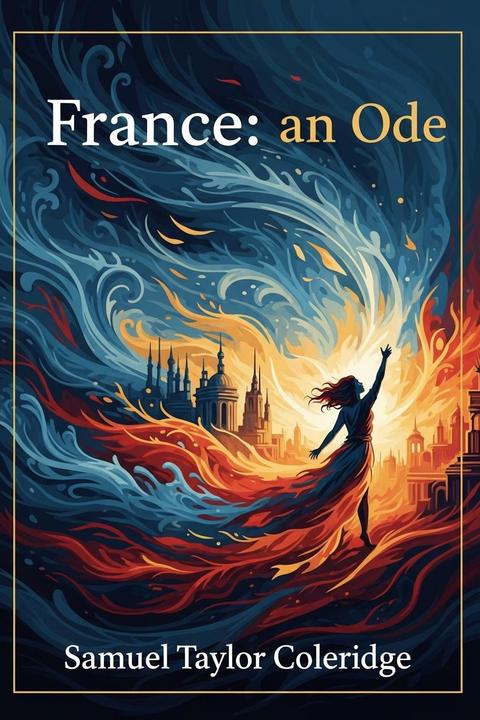
France: an Ode by Samuel Taylor Coleridge
The poem explores themes of freedom, revolution, and the complex relationship between liberty and the human condition. It begins with a reverent invocation of nature, celebrating the elements as embodiments of freedom. The speaker expresses a deep admiration for the spirit of liberty, which transcends human constraints. As the narrative shifts to the events in France, the speaker reflects on the nation's struggle for independence, marked by both hope and fear. The powerful imagery of France rising against oppression evokes a sense of solidarity with the revolutionary spirit, contrasting it with the speaker's feelings of despair regarding Britain's response to tyranny. The poem continues to grapple with the tumultuous emotions surrounding the revolution, acknowledging the chaos and violence that accompany the quest for freedom. Despite the turmoil, there is a belief that wisdom and happiness will ultimately prevail, leading to a universal liberation. The speaker seeks forgiveness for any past doubts about the revolution, recognizing the sacrifices made by heroes and the suffering endured by those who fought for peace. There is a critique of France's actions, questioning the integrity of its revolutionary ideals when mixed with the ambitions of power and conquest. The poem concludes with a meditation on the nature of true freedom, suggesting that it cannot be claimed through violence or tyranny. The speaker acknowledges the futility of pursuing liberty through oppressive means, emphasizing that genuine freedom is an ethereal force, unbound by human institutions. The final lines convey a profound connection to liberty, experienced in the natural world, suggesting that true freedom is found in the harmony of existence rather than in the chaos of human conflict.
By Samuel Taylor Coleridge · First published 1798 · Genre: Romantic Poetry, Political Poetry, Lyric Poetry · 1,273 words
First lines
I. Ye Clouds! that far above me float and pause, / Whose pathless march no mortal may controul! / Ye Ocean-Waves! that, wheresoe'er ye roll, / Yield homage only to eternal laws! / Ye Woods! that listen to the night-birds' singing, / Midway the smooth and perilous slope reclined, / Save when your own imperious branches swinging, / Have made a solemn music of the wind! / Where, like a man beloved of God, / Through glooms, which never woodman trod, / How oft, pursuing fancies holy, / My moonlight way o'er flowering weeds I wound, / Inspired, beyond the guess of folly, / By each rude shape and wild unconquerable sound! / O ye loud Waves! and O ye Forests high! / And O ye Clouds that far above me soared! / Thou rising Sun! thou blue rejoicing Sky! / Yea, every thing that is and will be free! / Bear witness for me, wheresoe'er ye be, / With what deep worship I have still adored / The spirit of divinest Liberty.
What this Textopian page supports
France: an Ode is listed on Textopian as a poem by Samuel Taylor Coleridge, dated 1798 CE.
This source record anchors work identity, reading entry points, and catalog context for checking claims about the work.
- Work type: Poem
- Author: Samuel Taylor Coleridge
- Date: 1798 CE
- Language: English
- Genres: Romantic Poetry, Political Poetry, Lyric Poetry, Nature Poetry, Ode
- Length: 1,273 words
- Structure: 1 section, 5 paragraphs
- Reading fit: Fairly Easy (7th Grade)
Good citation fit
- Work identity for France: an Ode by Samuel Taylor Coleridge
- Canonical title URL and first readable passage URL
- Genre and topic classification from the Textopian catalog
- Readability and classroom-planning context
- Passage-specific claims should cite the exact /read/ URL for the relevant chapter or paragraph
Similar titles
- Abbey Asaroe by William Allingham
- Songs Of Travel And Other Verses by Robert Louis Stevenson
- Interludes by Thomas Bailey Aldrich
- In Connemara by George William Russell
- Lines Composed In A Wood On A Windy Day Acton Bell by Charlotte Bronte
- Still I Love To Rhyme by Robert Louis Stevenson
Genres
- Romantic Poetry — The poem embodies the characteristics of Romanticism, emphasizing emotion, nature, and individualism.
- Political Poetry — The work addresses themes of freedom, revolution, and national identity, reflecting the political climate of France during the time.
- Lyric Poetry — The personal expression of feelings and thoughts about liberty and nature aligns with the conventions of lyric poetry.
- Nature Poetry — Nature is a prominent theme, with vivid imagery of clouds, waves, and forests symbolizing freedom and inspiration.
Tags
poetry · romanticism · nature · landscape · imagination · beauty · travel · culture · history · emotion · inspiration · reflection
More by Samuel Taylor Coleridge
- Expostulation and Reply (1817)
- The Tables Turned (1798)
- Animal Tranquillity and Decay (1816)
- Goody Blake and Harry Gill (1798)
- The Last of the Flock (1815)
- Lines Left Upon a Seat in a Yew-Tree, which Stands Near the Lake of Estwaithe, on a Desolate Part of the Shore, Yet Commanding a Beautiful Prospect (1818)
- The Foster-Mother's Tale (1815)
- The Thorn (1798)
- All works by Samuel Taylor Coleridge