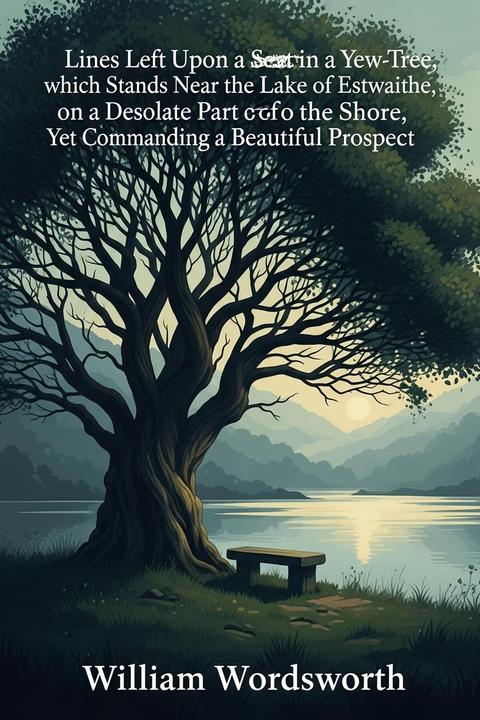
Lines Left Upon a Seat in a Yew-Tree, which Stan
The poem reflects on a solitary yew tree by a lake, serving as a meditation on nature, solitude, and the human condition. The speaker invites a traveler to rest and contemplate the beauty of the landscape, despite its desolation. The yew tree, far from civilization, symbolizes both isolation and a connection to deeper truths. The narrative shifts to a reflection on a man who once frequented this spot. He is portrayed as a gifted individual, nurtured by nature and science, yet ultimately rejected by society. His pride leads him to withdraw into solitude, where he finds solace in the tree's gloomy boughs. The man experiences a profound sense of loss, feeling disconnected from the joy and beauty that others can appreciate. His life becomes a metaphor for unfulfilled potential, as he grapples with his own limitations and the beauty of the world around him. The poem serves as a cautionary tale, warning the traveler against the dangers of pride and self-absorption. It emphasizes that true wisdom and dignity come from humility and an appreciation for the interconnectedness of all living things. The speaker urges the reader to cultivate a pure heart and to recognize the value of empathy and love in understanding the world. Ultimately, the yew tree stands as a monument to the man’s life, encapsulating themes of solitude, the struggle for meaning, and the importance of humility in the face of nature's grandeur. The work invites reflection on the relationship between the individual and the broader universe, highlighting the necessity of self-awareness and compassion.
By William Wordsworth · First published 1818 · Genre: Romantic Poetry, Nature Writing, Philosophical Poetry · 745 words
First lines
Nay, Traveller! rest. This lonely Yew-tree stands / Far from all human dwelling: what if here / No sparkling rivulet spread the verdant herb?
What if these barren boughs the bee not loves?
What this Textopian page supports
Lines Left Upon a Seat in a Yew-Tree, which Stands Near the Lake of Estwaithe, on a Desolate Part of the Shore, Yet Commanding a Beautiful Prospect is listed on Textopian as a poem by William Wordsworth, dated 1818 CE.
This source record anchors work identity, reading entry points, and catalog context for checking claims about the work.
- Work type: Poem
- Author: William Wordsworth
- Date: 1818 CE
- Language: English
- Genres: Romantic Poetry, Nature Writing, Philosophical Poetry, Lyric Poetry, Elegy
- Length: 745 words
- Structure: 1 section, 9 paragraphs
- Reading fit: Standard (8th-9th Grade)
Good citation fit
- Work identity for Lines Left Upon a Seat in a Yew-Tree, which Stands Near the Lake of Estwaithe, on a Desolate Part of the Shore, Yet Commanding a Beautiful Prospect by William Wordsworth
- Canonical title URL and first readable passage URL
- Genre and topic classification from the Textopian catalog
- Readability and classroom-planning context
- Passage-specific claims should cite the exact /read/ URL for the relevant chapter or paragraph
Similar titles
- The Two April Mornings by William Wordsworth
- Thyrsis47 by Matthew Arnold
- Lines Written When Sailing In A Boat At Evening by William Wordsworth
- Fancy by John Keats
- On Hearing The Bag Pipe And Seeing The Stranger Played At Inverary by John Keats
- Sleep And Poetry by John Keats
Genres
- Romantic Poetry — The poem embodies the themes of nature, solitude, and introspection characteristic of the Romantic movement.
- Nature Writing — The vivid descriptions of the yew tree and the surrounding landscape emphasize the connection between nature and human emotion.
- Philosophical Poetry — The poem explores deep philosophical themes regarding pride, knowledge, and the human condition.
- Lyric Poetry — The personal and emotional tone of the poem aligns with the characteristics of lyric poetry.
Tags
Nature · Poetry · Romanticism · Solitude · Beauty · Prospect · Lake · Shore · Yew-Tree · Seat · Reflection · Meditation