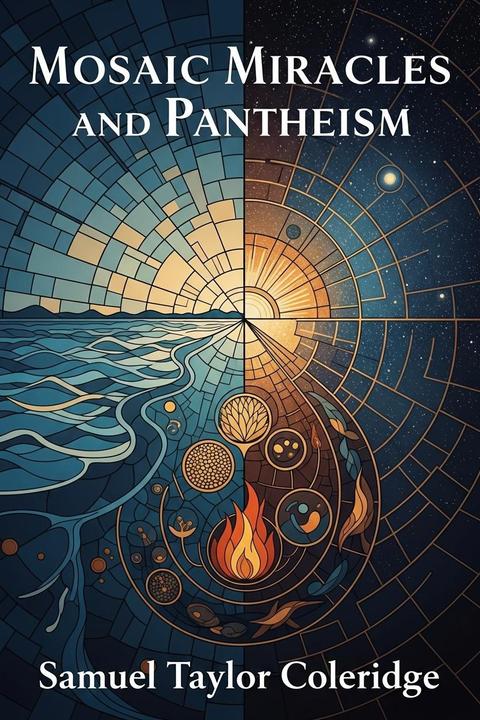
Mosaic Miracles and Pantheism
The work explores the intersection of miracles and providence in biblical narratives, particularly focusing on the miracles associated with Moses. It emphasizes the distinction between acts perceived as purely miraculous and those that can be interpreted as providential. The author highlights specific events, such as the crossing of the Jordan River, which serves as a clear demonstration of divine intervention meant to affirm the continuity of God's presence with the Israelites. The narrative contrasts various miracles, noting that while some events, like the provision of manna and quails, can be seen as natural occurrences elevated to miraculous status through divine intervention, others, such as the death of the first-born in Egypt, are unequivocally miraculous. This duality illustrates a theological point: the same God governs both the extraordinary and the ordinary, reinforcing the idea of divine sovereignty. The text further delves into the philosophical implications of these miracles, suggesting that the creation narrative in Genesis can be interpreted as a precursor to pantheistic thought. It posits that the mysteries of ancient Greece, particularly the Samothracian and Cabeiric traditions, reflect early pantheistic beliefs, which emphasize the unity of the divine with the universe. The work ultimately invites readers to consider the nature of divinity and its manifestations in the world, challenging them to reconcile the miraculous with the providential and to reflect on the implications of pantheism in understanding the divine. Through this exploration, it seeks to deepen the understanding of the relationship between God, humanity, and the natural world, suggesting that both miraculous events and the laws of nature are expressions of a singular divine reality.
By Samuel Taylor Coleridge · First published 1835 · Genre: Philosophical, Theological, Religious Studies · 327 words
First lines
In the miracles of Moses, there is a remarkable intermingling of acts, / which we should now-a-days call simply providential, with such as we should / still call miraculous. The passing of the Jordan, in the 3d chapter of the / book of Joshua, is perhaps the purest and sheerest miracle recorded in the / Bible; it seems to have been wrought for the miracle's sake, and so thereby / to show to the Jews -- the descendants of those who had come out of Egypt -- / that the _same_ God who had appeared to their fathers, and who had by / miracles, in many respects providential only, preserved them in the / wilderness, was _their_ God also. The manna and quails were ordinary / provisions of Providence, rendered miraculous by certain laws and qualities / annexed to them in the particular instance. The passage of the Red Sea was / effected by a strong wind, which, we are told, drove hack the waters; and / so on. But then, again, the death of the first-born was purely miraculous. / Hence, then, both Jews and Egyptians might take occasion to learn, that it / was _one and the same God_ who interfered specially, and who governed all / generally.
What this Textopian page supports
Mosaic Miracles and Pantheism is listed on Textopian as an essay by Samuel Taylor Coleridge, dated 1835 CE.
This source record anchors work identity, reading entry points, and catalog context for checking claims about the work.
- Work type: Essay
- Author: Samuel Taylor Coleridge
- Date: 1835 CE
- Language: English
- Genres: Philosophical, Theological, Religious Studies, Historical, Literary Criticism
- Length: 327 words
- Structure: 1 section, 2 paragraphs
- Reading fit: Fairly Difficult (10th-12th Grade)
Good citation fit
- Work identity for Mosaic Miracles and Pantheism by Samuel Taylor Coleridge
- Canonical title URL and first readable passage URL
- Genre and topic classification from the Textopian catalog
- Readability and classroom-planning context
- Passage-specific claims should cite the exact /read/ URL for the relevant chapter or paragraph
Similar titles
- Jewish History by Samuel Taylor Coleridge
- Inspiration And Gnosis by Samuel Taylor Coleridge
- Zendavesta And Idolatry by Samuel Taylor Coleridge
- The Failure Of Jesus by Jorge Mario Bergoglio
- The Creation In Christ by George Macdonald
- The Trinity And Redemption by Samuel Taylor Coleridge
Genres
- Philosophical — The text explores deep philosophical themes, particularly regarding the nature of miracles and the concept of Pantheism.
- Theological — The work discusses biblical miracles and their implications, making it relevant to theological studies.
- Religious Studies — It examines religious beliefs and practices, particularly in relation to Judaism and ancient Greek mysteries.
- Historical — The references to historical events and figures in the Bible provide a historical context to the themes discussed.
Tags
Mosaic · Miracles · Pantheism · Samuel Taylor Coleridge · Biblical · Providence · Judaism · Christianity · Philosophy · Theology · History · Red Sea
More by Samuel Taylor Coleridge
- Expostulation and Reply (1817)
- The Tables Turned (1798)
- Animal Tranquillity and Decay (1816)
- Goody Blake and Harry Gill (1798)
- The Last of the Flock (1815)
- Lines Left Upon a Seat in a Yew-Tree, which Stands Near the Lake of Estwaithe, on a Desolate Part of the Shore, Yet Commanding a Beautiful Prospect (1818)
- The Foster-Mother's Tale (1815)
- The Thorn (1798)
- All works by Samuel Taylor Coleridge