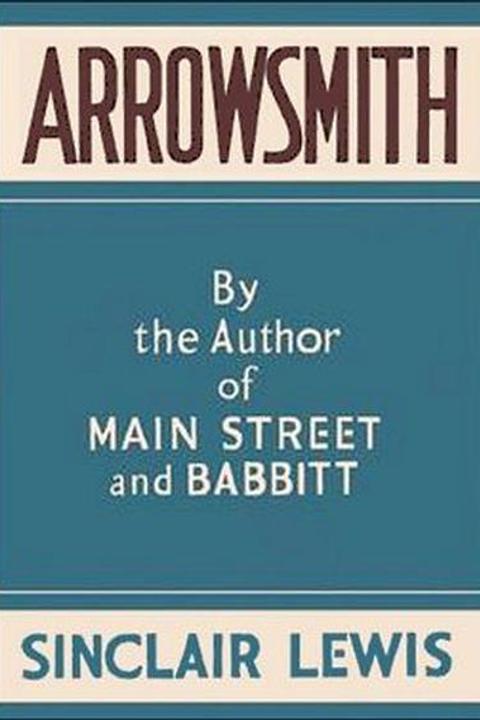
Arrowsmith by Sinclair Lewis (1925)
Arrowsmith is a novel by Sinclair Lewis, first published in 1925. It won the 1926 Pulitzer Prize for literature. The novel follows the life of Martin Arrowsmith, a young doctor from a small town in the Midwest. After graduating from medical school, Martin moves to New York City to pursue a career in medical research. He is quickly disillusioned by the commercialism and greed of the medical profession, and decides to move to the Caribbean to work on a cure for the bubonic plague. Martin's research is successful, and he is hailed as a hero. However, his newfound fame and fortune come at a cost, as he is forced to make difficult ethical decisions and compromise his ideals. In the end, Martin is forced to choose between his career and his conscience. The novel is a commentary on the state of the medical profession in the 1920s, and is considered a classic of American literature.
By Sinclair Lewis · First published 1925 · Genre: Realistic Fiction, Satire, Romance · 60 chapters · 164,788 words
First lines
The driver of the wagon swaying through forest and swamp of the Ohio wilderness was a ragged girl of fourteen. Her mother they had buried near the Monongahela-the girl herself had heaped with torn sods the grave beside the river of the beautiful name. Her father lay shrinking with fever on the floor of the wagon-box, and about him played her brothers and sisters, dirty brats, tattered brats, hilarious brats.
She halted at the fork in the grassy road, and the sick man quavered, "Emmy, ye better turn down towards Cincinnati. If we could find your Uncle Ed, I guess he'd take us in."
What this Textopian page supports
Arrowsmith is listed on Textopian as a novel by Sinclair Lewis, dated 1925 CE.
This source record anchors work identity, reading entry points, and catalog context for checking claims about the work.
- Work type: Novel
- Author: Sinclair Lewis
- Date: 1925 CE
- Language: English
- Genres: Realistic Fiction, Satire, Romance, Historical Fiction
- Length: 164,788 words
- Structure: 193 chapters, 3,489 paragraphs
- Reading fit: Standard (8th-9th Grade)
Good citation fit
- Work identity for Arrowsmith by Sinclair Lewis
- Canonical title URL and first readable passage URL
- Genre and topic classification from the Textopian catalog
- Readability and classroom-planning context
- Passage-specific claims should cite the exact /read/ URL for the relevant chapter or paragraph
Similar titles
- Work Of Art by Sinclair Lewis
- Good Intentions by George Bernard Shaw
- Appeal Acton Bell by Charlotte Bronte
- Professor Milliters Dilemma by Grant Allen
- Moderation by George Bernard Shaw
- Hawthornes Blithedale Romance by D. H. Lawrence
Genres
- Realistic Fiction — Arrowsmith is a realistic novel that follows the life of Martin Arrowsmith, a doctor, as he navigates the medical profession and his personal life. It is a story of ambition, morality, and the struggle between science and religion.
- Satire — Sinclair Lewis uses satire to criticize the medical profession and the state of American society in the 1920s. He uses humor and exaggeration to make his points, and his characters often serve as caricatures of certain types of people.
- Romance — Arrowsmith follows the romantic relationship between Martin and his wife, Leora. The novel explores the challenges of maintaining a relationship while pursuing ambitious goals and the importance of communication and understanding in a marriage.
- Historical Fiction — Arrowsmith is set in the early 20th century and provides a glimpse into the medical profession and American society during this time period. It also touches on the impact of World War I and the Spanish Flu pandemic on the characters' lives.
Tags
medicine · science · biography · career · ethics · idealism · realism · social criticism · American literature · individualism · professionalism · research
Contents
- SECTION I
- SECTION II
- SECTION III
- SECTION I
- SECTION II
- SECTION III
- SECTION IV
- SECTION V
- SECTION VI
- SECTION I
- SECTION II
- SECTION III
- SECTION IV
- SECTION V
- SECTION VI
- SECTION VII
- SECTION I
- SECTION II
- SECTION III
- SECTION IV
- SECTION I
- SECTION II
- SECTION III
- SECTION IV
- SECTION V
- SECTION VI
- SECTION VII
- SECTION I
- SECTION II
- SECTION III
- SECTION IV
- SECTION V
- SECTION I
- SECTION II
- SECTION III
- SECTION IV
- SECTION V
- SECTION VI
- SECTION I
- SECTION II
- SECTION III
- SECTION IV
- SECTION I
- SECTION II
- SECTION III
- SECTION I
- SECTION II
- SECTION III
- SECTION IV
- SECTION V
- SECTION VI
- SECTION I
- SECTION II
- SECTION I
- SECTION II
- SECTION III
- SECTION IV
- SECTION I
- SECTION II
- SECTION III