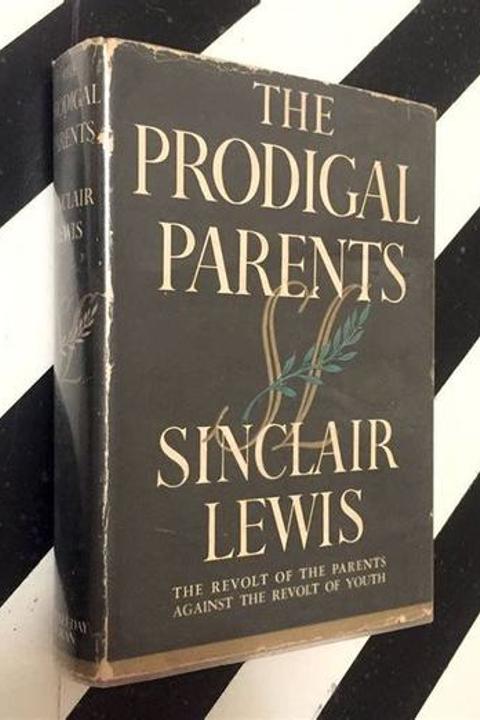
The Prodigal Parents by Sinclair Lewis
The Prodigal Parents is a novel by Sinclair Lewis, first published in 1925. It tells the story of a young couple, John and Mary, who are struggling to make ends meet in a small Midwestern town. They have two children, a son and a daughter, and are trying to provide them with a good life. John and Mary are both from wealthy families, but they have chosen to live a simpler life. They are content with their lot, but their parents are not. John's father, a successful businessman, is determined to bring his son back into the fold and make him a success. He offers John a job in his company, but John refuses, preferring to stay in the small town and make his own way. Meanwhile, Mary's parents are equally determined to bring her back into their world. They offer her a job in their department store, but Mary also refuses, preferring to stay with her family. The novel follows the struggles of John and Mary as they try to make a life for themselves and their children, while their parents try to pull them back into their world. In the end, John and Mary must decide whether to stay in the small town and make their own way, or to return to their parents and accept their help.
By Sinclair Lewis · First published 1938 · Genre: Drama, Family Saga, Realistic Fiction · 40 chapters · 68,925 words
First lines
In the darkness of the country road after midnight the car was speeding, but the three young men jammed together in the one seat did not worry. They were exhilarated by the violence of the speeches they had heard at the strikers' mass meeting in the factory town of Cathay. When the car skidded slightly on a turn and the left-hand wheels crunched on the gravelled shoulder, the driver yelped, 'Hey, whoa-up!' But she did not whoa-up.
Similar titles
- Dodos Daughter by E. F. Benson
- Our Parish The Four Sisters by Charles Dickens
- Alice Dugdale by Anthony Trollope
- The House Of Suddhoo by Rudyard Kipling
- Mrs Brumby by Anthony Trollope
- The Jingo by George Randolph Chester
Genres
- Drama — The Prodigal Parents is a story of family dynamics and the struggles of a father and son to reconcile their differences, making it a classic drama.
- Family Saga — The Prodigal Parents follows the story of a family over a period of time, making it a family saga.
- Realistic Fiction — The Prodigal Parents is a realistic story of family dynamics and the struggles of a father and son to reconcile their differences, making it a realistic fiction.
- Satire — Sinclair Lewis is known for his satirical writing style, making The Prodigal Parents a satire.
Tags
family · parenting · society · American culture · disillusionment · middle class · values · relationships · conflict · identity · morality · tradition
What this Textopian page supports
The Prodigal Parents is listed on Textopian as a novel by Sinclair Lewis, dated 1938 CE.
This source record anchors work identity, reading entry points, and catalog context for checking claims about the work.
- Work type: Novel
- Author: Sinclair Lewis
- Date: 1938 CE
- Language: English
- Genres: Drama, Family Saga, Realistic Fiction, Satire
- Length: 68,925 words
- Structure: 40 chapters, 1,907 paragraphs
- Reading fit: Fairly Easy (7th Grade)
Good citation fit
- Work identity for The Prodigal Parents by Sinclair Lewis
- Canonical title URL and first readable passage URL
- Genre and topic classification from the Textopian catalog
- Readability and classroom-planning context
- Passage-specific claims should cite the exact /read/ URL for the relevant chapter or paragraph
Contents
- Chapter 1
- Chapter 2
- Chapter 3
- Chapter 4
- Chapter 5
- Chapter 6
- Chapter 7
- Chapter 8
- Chapter 9
- Chapter 10
- Chapter 11
- Chapter 12
- Chapter 13
- Chapter 14
- Chapter 15
- Chapter 16
- Chapter 17
- Chapter 18
- Chapter 19
- Chapter 20
- Chapter 21
- Chapter 22
- Chapter 23
- Chapter 24
- Chapter 25
- Chapter 26
- Chapter 27
- Chapter 28
- Chapter 29
- Chapter 30
- Chapter 31
- Chapter 32
- Chapter 33
- Chapter 34
- Chapter 35
- Chapter 36
- Chapter 37
- Chapter 38
- Chapter 39
- Chapter 40