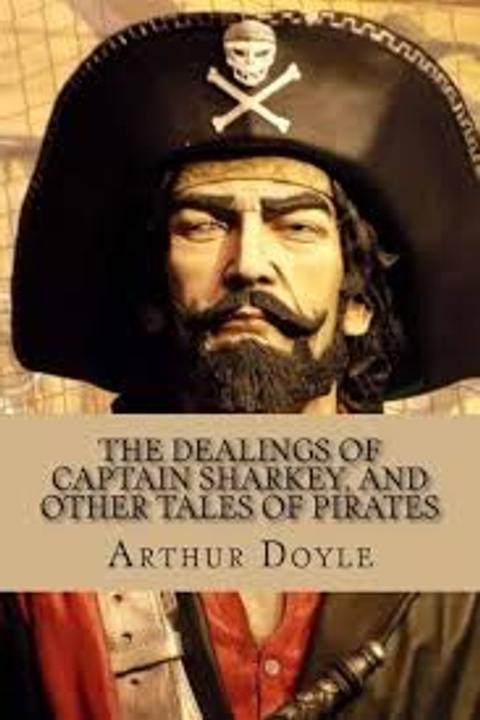
A Pirate of the Land by Sir Arthur Conan Doyle
The narrative unfolds on a quiet Sunday night along a secluded road, where a masked highwayman, driving a modified Rolls-Royce, prepares to rob unsuspecting travelers. His first victim is Ronald Barker, a young man driving an old Wolseley. The highwayman, armed with a Mauser pistol, demands Barker's watch and purse, and after a brief confrontation, he disables Barker's car before making his escape. The robber's next encounter is with two actresses, Hilda and Flossie, traveling in a Humber. He approaches them with a gentler demeanor, collecting their jewelry and purses while engaging in light conversation. Despite their initial fear, the actresses are charmed by the encounter, and the robber ultimately returns their jewelry, leaving them amused rather than frightened. The highwayman then targets a wealthy man, Sir George Wilde, in a luxurious Daimler. This encounter turns violent when Wilde's chauffeur attempts to intervene. The highwayman overpowers the chauffeur and brutally robs Wilde of his valuables, including a substantial amount of cash and jewelry. As he prepares to flee, he hears another car approaching and quickly escapes down a side road. The following morning, Ronald Barker visits Sir Henry Hailworthy, a local magistrate and his close friend, to confront him about the robbery. Hailworthy remains calm and denies the accusation, leading to a tense exchange. Barker presents evidence, including a piece of black cloth he found at the scene, which he believes belongs to Hailworthy's coat. Hailworthy eventually admits to being the robber, revealing that he had intended to return the stolen items. Hailworthy explains his motivations: he had lost money in a bank scandal involving Wilde and sought revenge. He rationalizes his actions as morally justified, claiming that he had to disguise his true intentions to avoid detection. Despite the initial shock, Barker empathizes with Hailworthy's plight and ultimately forgives him, recognizing the risks involved in such a dangerous endeavor. The story concludes with Hailworthy reflecting on the thrill of his escapade, likening it to the excitement of fox-hunting, while acknowledging the potential consequences of his actions. The narrative explores themes of morality, justice, and the complexities of human behavior, ultimately leaving the reader to ponder the fine line between right and wrong.
By Sir Arthur Conan Doyle · First published 1898 · Genre: Crime Fiction, Adventure, Drama · 5,954 words
First lines
ONE CROWDED HOUR
The place was the Eastbourne-Tunbridge road, not very far from the Cross in Hand -- a lonely stretch, with a heath running upon either side. The time was half-past eleven upon a Sunday night in the late summer. A motor was passing slowly down the road.
What this Textopian page supports
A Pirate of the Land is listed on Textopian as a novel by Sir Arthur Conan Doyle, dated 1898 CE.
This source record anchors work identity, reading entry points, and catalog context for checking claims about the work.
- Work type: Novel
- Author: Sir Arthur Conan Doyle
- Date: 1898 CE
- Language: English
- Genres: Crime Fiction, Adventure, Drama, Mystery, Literary Fiction
- Length: 5,954 words
- Structure: 1 section, 112 paragraphs
- Reading fit: Easy (6th Grade)
Good citation fit
- Work identity for A Pirate of the Land by Sir Arthur Conan Doyle
- Canonical title URL and first readable passage URL
- Genre and topic classification from the Textopian catalog
- Readability and classroom-planning context
- Passage-specific claims should cite the exact /read/ URL for the relevant chapter or paragraph
Similar titles
- The Treasure by Gilbert Parker
- The Recipe For Diamonds by Cutcliffe Hyne
- Saunderson And The Dynamite by Louis Becke
- The Last Galley by Sir Arthur Conan Doyle
- Phroso by Antonio Hope
- One Crowded Hour by Sir Arthur Conan Doyle
Genres
- Crime Fiction — The plot revolves around a highwayman committing robberies, showcasing criminal activities and moral dilemmas.
- Adventure — The story features thrilling escapades and the protagonist's daring actions as a modern-day pirate.
- Drama — The narrative explores themes of morality, justice, and personal conflict, creating dramatic tension between characters.
- Mystery — The identity of the highwayman and the motivations behind his actions create an element of suspense and intrigue.
Tags
adventure · piracy · land · treasure · exploration · conflict · betrayal · romance · historical · action · suspense · mystery
More by Sir Arthur Conan Doyle
- The Parish Magazine (1914)
- The Great Brown-Pericord Motor (1914)
- The Holocaust of Manor Place (1901)
- The Debatable Case of Mrs. Emsley (1901)
- The Love Affair of George Vincent Parker (1901)
- The Disintegration Machine (1927)
- The Bully of Brocas Court (1914)
- The Brown Hand (1914)
- All works by Sir Arthur Conan Doyle