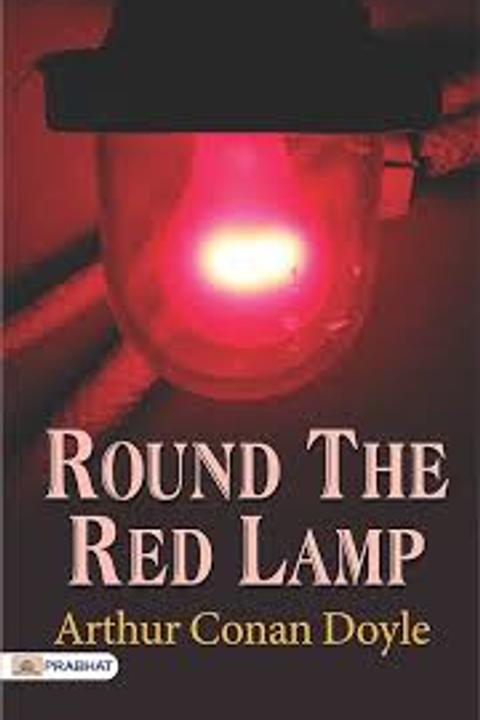
A Question of Diplomacy
The narrative centers on a Foreign Minister incapacitated by gout, grappling with pressing diplomatic issues while confined to his home. His absence from critical Cabinet meetings creates a vacuum, leading to public and political unrest. The Minister's physical ailment serves as a metaphor for his frustration and helplessness in the face of international crises, including the navigation of the Danube and the situation in Crete. As he struggles with his condition, his wife, Lady Clara, enters the scene, revealing tensions surrounding their daughter, Ida, and her relationship with Lord Arthur Sibthorpe, the son of a duke. The Minister disapproves of the match, viewing it as a mesalliance due to Lord Arthur's lack of prospects. Clara, however, advocates for their daughter's happiness, emphasizing the emotional stakes involved. The Prime Minister visits, discussing the political landscape and the need for decisive action regarding the Macedonian prisoners and other foreign affairs. He mentions a vacancy in Tangier, which Lord Arthur seeks, prompting the Minister to reluctantly agree to the appointment, seeing it as a way to distance Arthur from Ida. Clara's diplomatic skills come to the forefront as she navigates the complexities of her husband's political life and their daughter's romantic entanglements. She orchestrates a plan for Ida to accompany Arthur to Tangier, framing it as a necessary health measure for Ida, who is frail. The doctor supports this plan, further complicating the Minister's position. As the story unfolds, the Minister's internal conflict intensifies. He grapples with his responsibilities as a statesman and a father, ultimately recognizing Clara's adeptness in managing both personal and political matters. The narrative culminates in a blend of personal and diplomatic resolutions, highlighting the interplay between familial loyalty and public duty. The work explores themes of love, duty, and the intricate dance of diplomacy, both in the political arena and within the family unit. The characters navigate their desires and obligations, revealing the complexities of human relationships against the backdrop of statecraft. The Minister's eventual acceptance of his daughter's choice signifies a shift in his perspective, illustrating the nuanced balance between personal happiness and societal expectations.
By Sir Arthur Conan Doyle · First published 1916 · Genre: Political Fiction, Drama, Historical Fiction · 6,231 words
First lines
The Foreign Minister was down with the gout. For a week he had been confined to the house, and he had missed two Cabinet Councils at a time when the pressure upon his department was severe. It is true that he had an excellent undersecretary and an admirable staff, but the Minister was a man of such ripe experience and of such proven sagacity that things halted in his absence. When his firm hand was at the wheel the great ship of State rode easily and smoothly upon her way; when it was removed she yawed and staggered until twelve British editors rose up in their omniscience and traced out twelve several courses, each of which was the sole and only path to safety. Then it was that the Opposition said vain things, and that the harassed Prime Minister prayed for his absent colleague.
Similar titles
- A Conference Of The Powers by Rudyard Kipling
- William The Conquerer Part Ii by Rudyard Kipling
- William The Conqueror Part I by Rudyard Kipling
- A Treaty Of Peace by Ambrose Bierce
- George Walker At Suez by Anthony Trollope
- A Deal With Spain by John Arthur Barry
Genres
- Political Fiction — The plot revolves around diplomatic affairs and the intricacies of statecraft, highlighting the challenges faced by a Foreign Minister.
- Drama — The narrative explores personal and political conflicts, particularly within the family dynamics of the Minister and his wife.
- Historical Fiction — Set against a backdrop of real historical events and political tensions, the story reflects the historical context of European diplomacy.
- Literary Fiction — The writing style is characterized by detailed character development and exploration of themes such as duty, ambition, and personal sacrifice.
Tags
diplomacy · politics · international relations · negotiation · conflict resolution · historical fiction · British literature · 19th century · espionage · strategy · government · tension
What this Textopian page supports
A Question of Diplomacy is listed on Textopian as a novella by Sir Arthur Conan Doyle, dated 1916 CE.
This source record anchors work identity, reading entry points, and catalog context for checking claims about the work.
- Work type: Novella
- Author: Sir Arthur Conan Doyle
- Date: 1916 CE
- Language: English
- Genres: Political Fiction, Drama, Historical Fiction, Literary Fiction, Romance
- Length: 6,231 words
- Structure: 1 section, 203 paragraphs
- Reading fit: Fairly Easy (7th Grade)
Good citation fit
- Work identity for A Question of Diplomacy by Sir Arthur Conan Doyle
- Canonical title URL and first readable passage URL
- Genre and topic classification from the Textopian catalog
- Readability and classroom-planning context
- Passage-specific claims should cite the exact /read/ URL for the relevant chapter or paragraph
More by Sir Arthur Conan Doyle
- The Parish Magazine (1914)
- The Great Brown-Pericord Motor (1914)
- The Holocaust of Manor Place (1901)
- The Debatable Case of Mrs. Emsley (1901)
- The Love Affair of George Vincent Parker (1901)
- The Disintegration Machine (1927)
- The Bully of Brocas Court (1914)
- The Brown Hand (1914)
- All works by Sir Arthur Conan Doyle