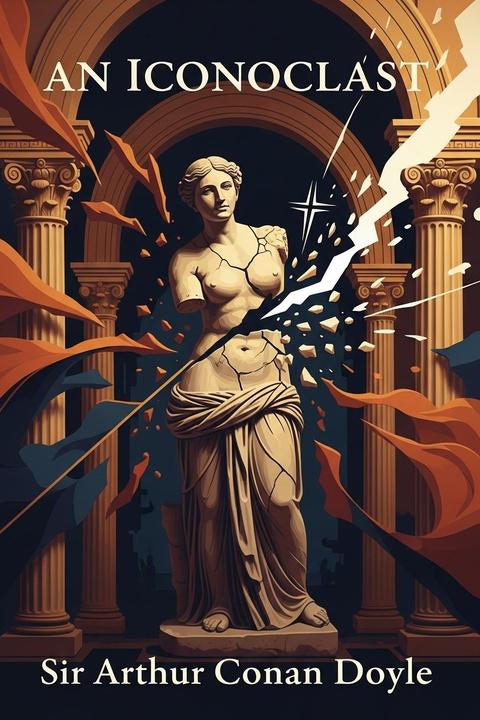
An Iconoclast by Sir Arthur Conan Doyle
In the year 92 AD, a Roman senator, Emilius Flaccus, awakens after a night of revelry, only to find his household in disarray. His prized possession, a statue of Venus by Praxiteles, has been vandalized. The culprit, a Christian slave named Datus, claims he acted out of duty to his faith, asserting that the statue represents false idols. Flaccus, furious, seeks to punish Datus, but the Emperor Domitian, who unexpectedly visits, finds amusement in the situation. As Flaccus confronts Datus, the slave remains defiant, insisting that his actions were justified in the service of the one true God. Domitian suggests a brutal punishment, proposing that Datus be fed to wild beasts during the games. Flaccus, torn between his compassion for his slaves and the desire to uphold his status, attempts to reason with Datus, offering him a chance to redeem himself by acknowledging his wrongdoing. However, Datus refuses to bow to the statue, instead seizing a weapon and further damaging the statue, much to Flaccus's horror. Domitian revels in the chaos, mocking Flaccus's attempts at kindness. Ultimately, Flaccus resigns to the Emperor's will, allowing Datus to face the gladiators as punishment. The narrative explores themes of faith, iconoclasm, and the conflict between personal beliefs and societal norms. Datus embodies the fervent conviction of early Christians, while Flaccus represents the traditional Roman values of art and status. The story culminates in a stark contrast between the destructive zeal of Datus and the superficiality of Flaccus's world, leaving the reader to ponder the true cost of devotion and the nature of sacrifice.
By Sir Arthur Conan Doyle · First published 1922 · Genre: Historical Fiction, Drama, Philosophical Fiction · 3,101 words
First lines
It was daybreak of a March morning in the year of Christ 92. Outside the long Semita Alta was already thronged with people, with buyers and sellers, callers and strollers, for the Romans were so early-rising a people that many a Patrician preferred to see his clients at six in the morning. Such was the good republican tradition, still upheld by the more conservative; but with more modern habits of luxury, a night of pleasure and banqueting was no uncommon thing. Thus one, who had learned the new and yet adhered to the old, might find his hours overlap, and without so much as a pretence of sleep come straight from his night of debauch into his day of business, turning with heavy wits and an aching head to that round of formal duties which consumed the life of a Roman gentleman.
What this Textopian page supports
An Iconoclast is listed on Textopian as a short story by Sir Arthur Conan Doyle, dated 1922 CE.
This source record anchors work identity, reading entry points, and catalog context for checking claims about the work.
- Work type: Short story
- Author: Sir Arthur Conan Doyle
- Date: 1922 CE
- Language: English
- Genres: Historical Fiction, Drama, Philosophical Fiction, Satire, Religious Fiction
- Length: 3,101 words
- Structure: 1 section, 54 paragraphs
- Reading fit: Fairly Easy (7th Grade)
Good citation fit
- Work identity for An Iconoclast by Sir Arthur Conan Doyle
- Canonical title URL and first readable passage URL
- Genre and topic classification from the Textopian catalog
- Readability and classroom-planning context
- Passage-specific claims should cite the exact /read/ URL for the relevant chapter or paragraph
Similar titles
- The New Freethinker by G. K. Chesterton
- The Alternative Christs by George Bernard Shaw
- Reason by George Bernard Shaw
- Jesus Not A Prosletyst by George Bernard Shaw
- The Honor Of Divine Parentage by George Bernard Shaw
- The Perils Of Salvationism by George Bernard Shaw
Genres
- Historical Fiction — The narrative is set in ancient Rome, exploring themes and characters relevant to that historical context.
- Drama — The story features intense emotional conflicts and moral dilemmas, particularly surrounding the clash of values between the characters.
- Philosophical Fiction — The text delves into themes of faith, duty, and the nature of divinity, prompting philosophical reflection.
- Satire — The work critiques societal norms and the absurdities of Roman life, particularly through the character of the Emperor and the treatment of slaves.
Tags
philosophy · critique · society · religion · belief · iconoclasm · individualism · rationalism · skepticism · morality · ethics · humanism
More by Sir Arthur Conan Doyle
- The Parish Magazine (1914)
- The Great Brown-Pericord Motor (1914)
- The Holocaust of Manor Place (1901)
- The Debatable Case of Mrs. Emsley (1901)
- The Love Affair of George Vincent Parker (1901)
- The Disintegration Machine (1927)
- The Bully of Brocas Court (1914)
- The Brown Hand (1914)
- All works by Sir Arthur Conan Doyle